Skip to content

5 Key Aspects to Know When Choosing Voice AI Agents for Indian Languages

Featured Image

Deploying Voice AI across the Indian market presents a unique set of linguistic and structural challenges. With over 22 scheduled languages, hundreds of regional dialects, and widespread mid-sentence code-switching (such as Hinglish or Tanglish), off-the-shelf global voice bots consistently fail to deliver results. For CX directors and operations leaders, evaluating a Voice AI agent for Indian languages requires looking beyond basic translation specs. Success depends on selecting an architecture designed specifically for low-latency ASR, seamless language switching, deep Core Banking and CRM integration, and strict domestic data localization under RBI and DPDPA frameworks.

Scaling customer communication across India is fundamentally different from operating in single-language markets.

In India, voice is the primary trust channel. Whether a customer is checking an EMI status, confirming a COD order, or seeking account recovery, they expect to speak naturally. However, attempting to serve this market with generic, Western-trained voice engines leads to high drop-off rates, garbled intent detection, and frustrated users.

Indian spoken communication rarely follows textbook grammar. Callers alter pronunciations based on regional accents, mix English terminology into vernacular sentences, and switch languages mid-conversation without warning.

If you are benchmarking Voice AI agents for Indian languages, here are the five non-negotiable architectural and operational aspects you must evaluate.
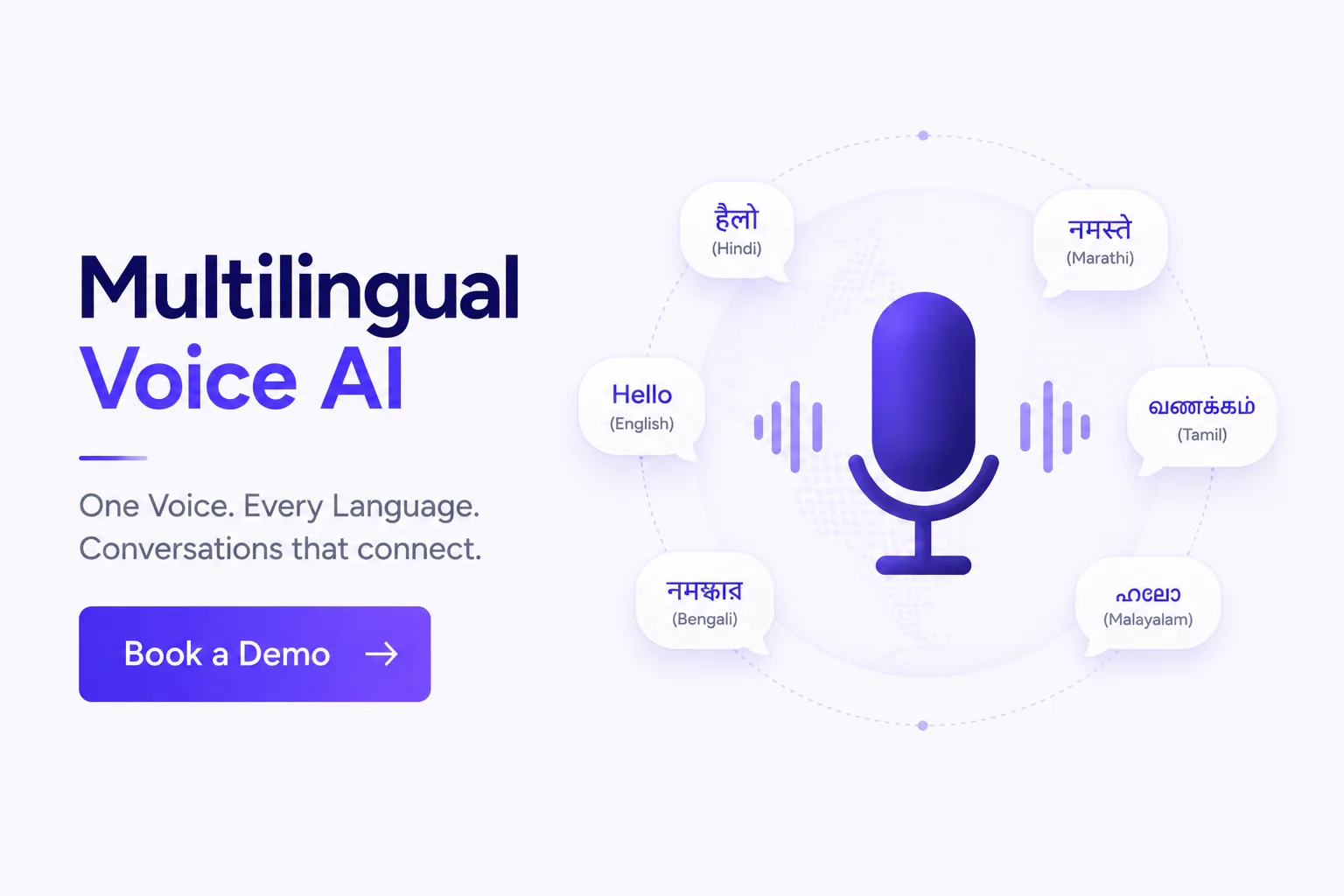
Hero banner for Multilingual Voice AI with a purple microphone graphic and language bubbles (English, Hindi, Marathi, Tamil, Bengali, Malayalam) around a globe image on the right.

1. Native Handling of Code-Switching and Hybrid Vernacular Speech

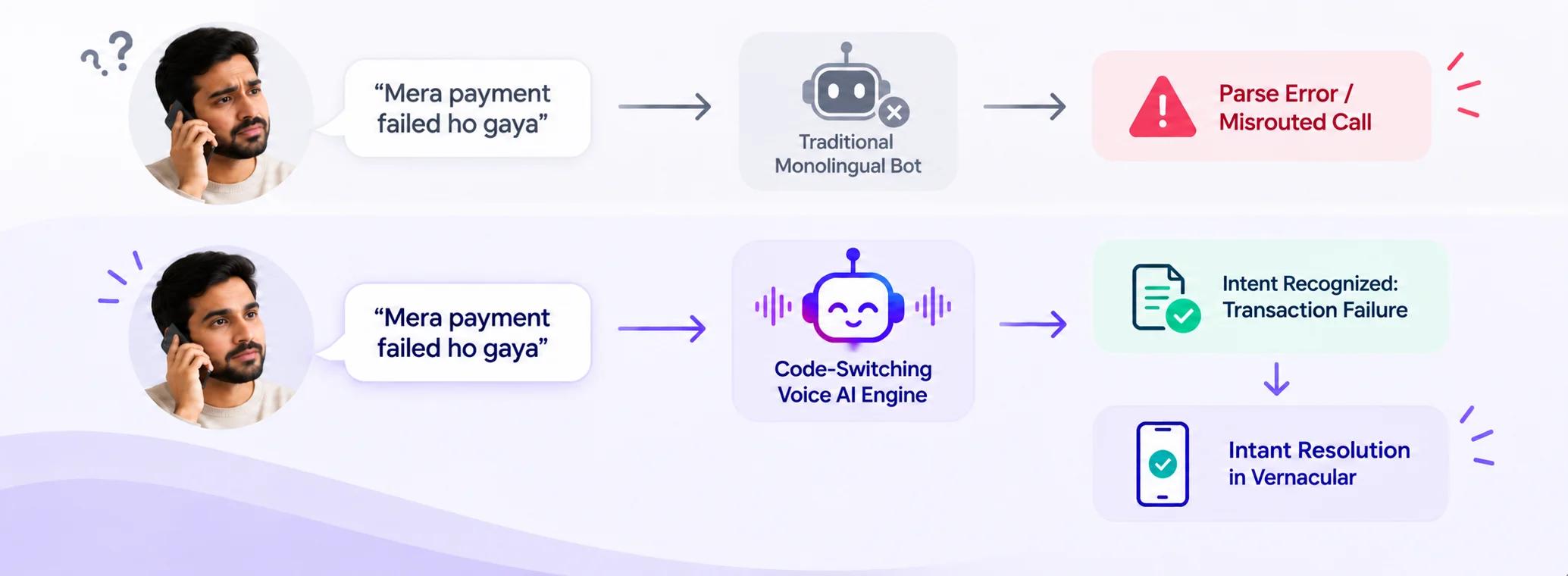
The biggest reason standard Speech-to-Text (STT) models fail in India is code-switching—the practice of blending two or more languages in a single sentence.

An Indian customer rarely speaks pure, formal Hindi or pure English. Instead, they use hybrid vernacular speech like Hinglish, Tanglish, or Kanglish:

Native Handling of Code-Switching and Hybrid Vernacular SpeechWhen evaluating vendors, test how their acoustic models handle intra-sentential language switches. The AI agent must recognize English business terms (like payment, account, delivery, appointment) embedded directly within regional language sentence structures without triggering recognition errors.
2. Deep Dialect Adaptability Beyond Major Metro Accents

Supporting “Hindi” or “Tamil” on paper is not enough. The spoken Hindi used in urban Delhi differs significantly from the vernacular spoken in Tier-2 and Tier-3 towns across Uttar Pradesh, Bihar, or Rajasthan.

A production-grade voice platform must account for regional phonetic variations:

• Acoustic Model Training: Ensure the speech model is trained on real-world, unscripted conversational audio rather than studio-recorded prompts.

• Accent Tolerance: The system must accurately parse localized pronunciations of numbers, names, and loan types across various states.

• Contextual Entity Extraction: The NLP pipeline should correctly extract named entities (such as local address details or names) regardless of regional intonation.

3. Sub-Second Pipeline Latency for Natural Conversational Flow

In Indian customer service, long pauses ruin conversational trust. If a Voice AI agent takes two or three seconds to process a response, the caller assumes the system has broken, speaks over the bot, or hangs up immediately.

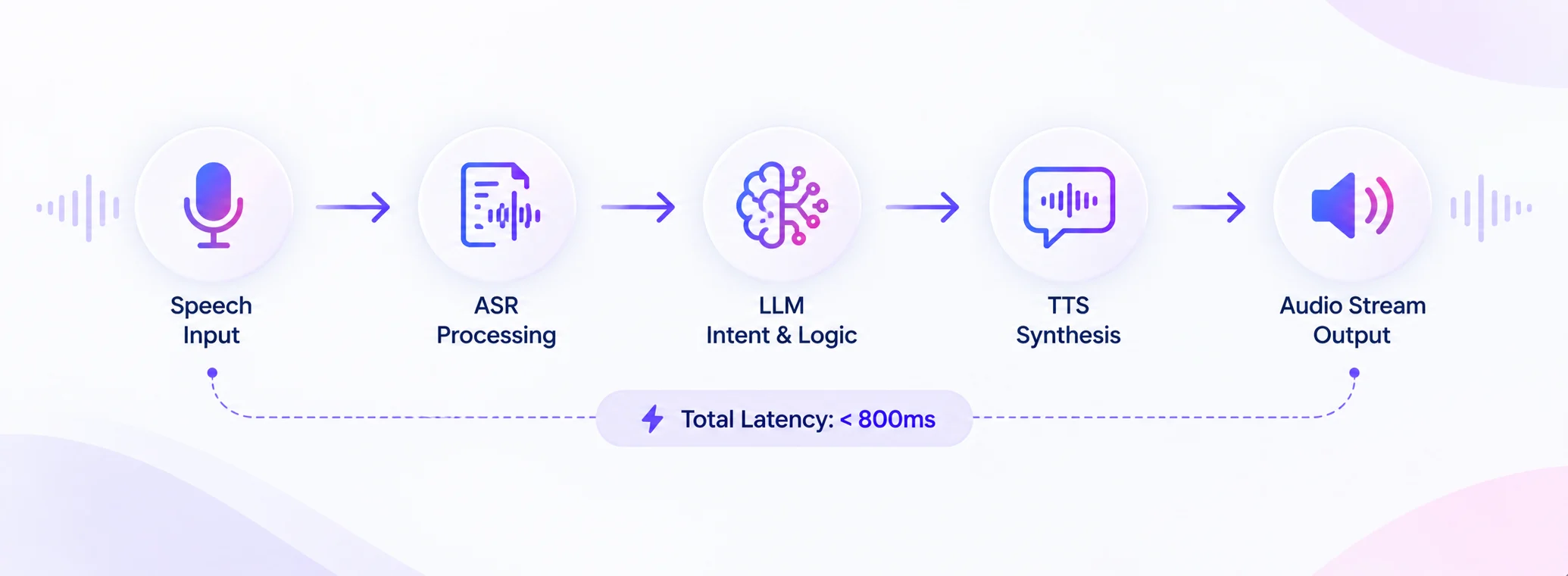
Sub-Second Pipeline Latency for Natural Conversational FlowTo maintain natural dialogue rhythm, look for a Voice AI architecture optimized for sub-second streaming latency (under 800ms) across the entire pipeline:

  1. Streaming ASR: Transcribes audio continuously as the user speaks rather than waiting for long silences.

  2. Low-Latency LLM Orchestration: Processes intent and business logic without delay.

  3. Streaming TTS: Synthesizes and streams human-like vernacular audio back to the caller in real time.

4. Seamless Warm Escalations to Human Support

Even the most advanced Voice AI agent will encounter edge cases, highly emotional callers, or complex queries that require human judgment. The measure of a great voice platform is how cleanly it handles these handoffs.

When a transfer occurs, the Voice AI agent must execute a warm handoff. It should pass the live vernacular transcript, translated summary, verified caller identity, and context log directly to the human agent’s screen pop. This prevents the caller from having to repeat their issue from the beginning.

5. Strict RBI Guidelines, DPDPA Compliance, and Domestic Data Residency

For enterprise deployments—especially within BFSI, fintech, and healthcare—regulatory compliance is paramount. Deploying voice platforms that route caller audio through international servers creates immediate legal exposure.

Compliance Checklist for Indian Deployments

• RBI Cyber Security Framework: All voice infrastructure, API bridges, and call record databases must reside within domestic Indian data centers.

• DPDPA (Digital Personal Data Protection Act): The platform must enforce real-time redaction of Personally Identifiable Information (PII), masking credit card numbers, passwords, and sensitive financial details from transcripts and logs.

• Secure API Integration: Core backend systems (such as Infosys Finacle, TCS BaNCS, or cloud CRMs) must connect via tokenized, encrypted Webhooks without exposing underlying customer ledgers.

The Indian Vernacular Voice AI Evaluation Scorecard

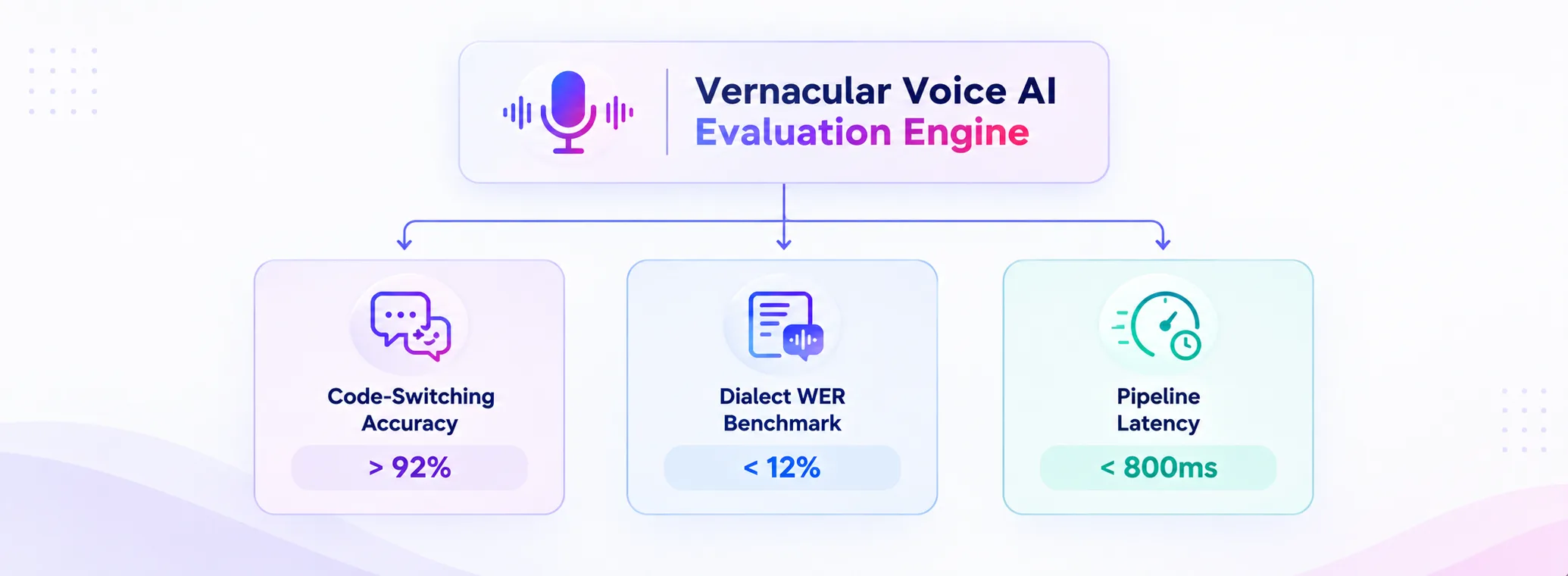
To evaluate Voice AI platforms for Indian deployments objectively, enterprise architecture teams use a 5-point technical benchmark framework:

  1. Intra-Sentential Code-Switching Accuracy Rate: Measures the system’s ability to parse mixed-language phrases (e.g., Hinglish or Tanglish) without dropping intent. Benchmark: Target >92% intent accuracy on code-switched utterances.

  2. Dialect-Specific Word Error Rate (WER): Evaluates speech recognition accuracy across Tier-2 and Tier-3 regional accents rather than standard metro datasets. Benchmark: Target WER <12% across regional dialects.

  3. End-to-End Pipeline Latency: Measures total elapsed time from caller speech termination to acoustic response playback (ASR + NLU + TTS). Benchmark: Target <800ms to maintain natural dialogue cadence.

  4. Context-Retained Escalation Rate: The percentage of warm transfers that successfully pass live vernacular transcripts, intent tags, and verified identity tokens to agent CRM popups. Benchmark: Target 100% zero-repetition handoffs.

  5. DPDPA Local Storage Isolation: Verifies that audio streams, PII redacting engines, and transcript storage execute entirely within domestic Indian cloud boundaries. Benchmark: 100% domestic data residency.

Build a Scale-Ready Vernacular Strategy with Voice AI Agents for Indian Languages

Deploying Voice AI agents across Indian languages offers immense operational leverage, but success depends on selecting the right underlying architecture. By prioritizing native code-switching support, regional dialect accuracy, sub-second latency, warm human transfers, and strict Indian regulatory compliance, progressive enterprises remove operational bottlenecks. Choosing a voice platform engineered specifically for the Indian linguistic landscape allows organizations to scale customer operations smoothly, cut support costs, and deliver superior customer experiences.

What Rootle Does Differently

Rootle is a voice AI platform built for enterprises that demand more than just automated dialing. While legacy systems stop at playing recordings or basic speech-to-text, Rootle acts as an intelligent extension of your workforce. By combining Agentic AI with real-time system integration, Rootle doesn’t just “talk” to your customers—it executes tasks, resolves queries, and moves the needle on your core business metrics, from DSO reduction to lead conversion.

Conversational Accuracy: Uses advanced speech processing to interpret complex, unstructured human dialogue rather than relying on rigid keypad menus or static scripts.

• Fluid Multi-Dialect Capabilities: Switches languages and regional accents instantly mid-sentence without dropping the context of the conversation.

• Direct Core System Syncing: Connects natively to enterprise CRMs to log interactions, update custom records, and trigger secondary channels dynamically.

• Rapid Ecosystem Deployment: Integrates through secure APIs using pre-configured, industry-specific compliance templates to go live within a few weeks.

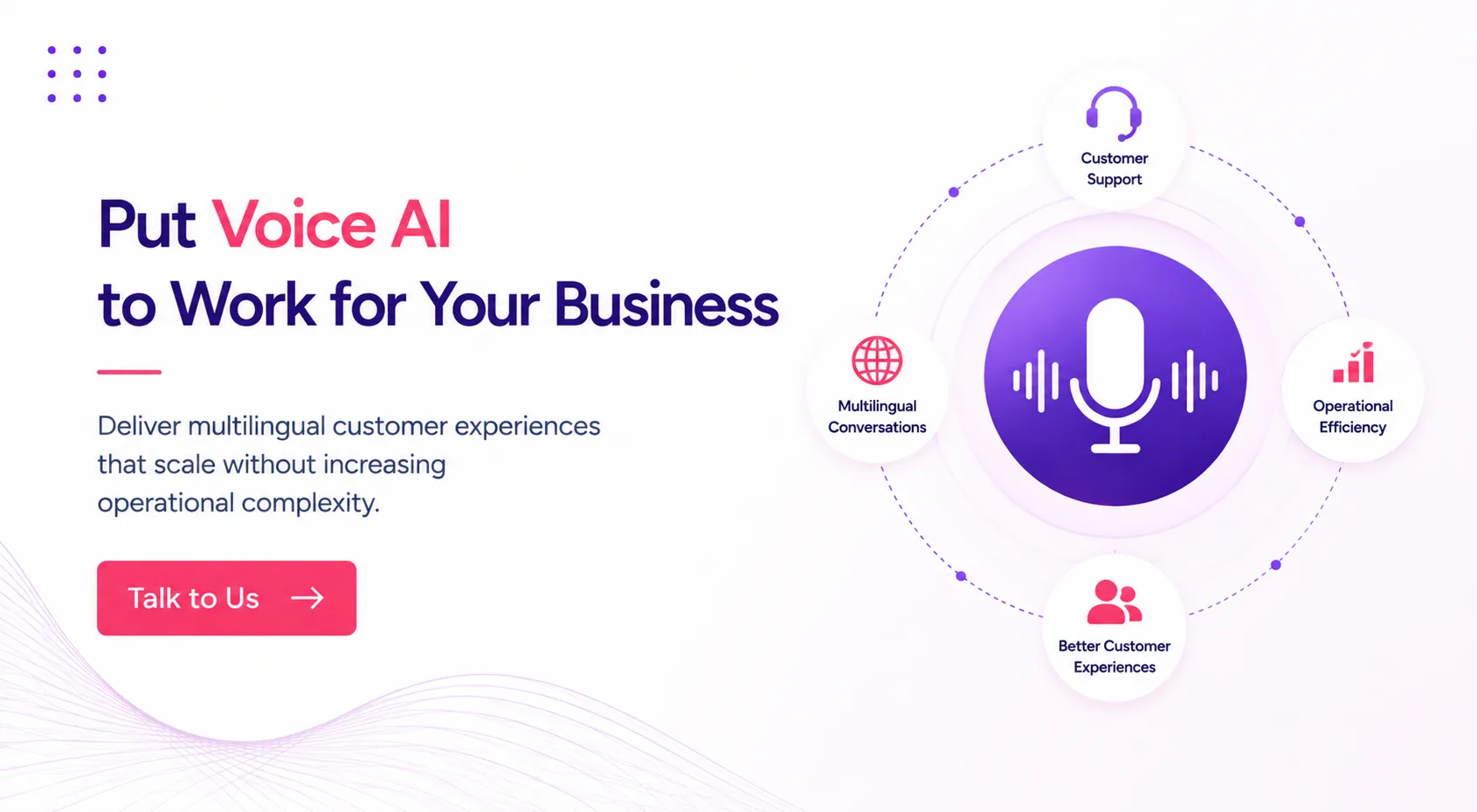
Hero banner promoting Voice AI for business, with a central purple microphone and circular icons for Support, Multilingual Conversations, Operational Efficiency, and Better Customer Experiences.

FAQs: Voice AI Agents for Indian Languages

1. Why do generic global Voice AI models struggle when deployed for Indian languages?

Generic global Voice AI models are primarily trained on formal, monolingual datasets. When deployed in India, they struggle with mid-sentence code-switching (mixing regional languages with English), local pronunciations, and heavy regional accents. This causes high Word Error Rates (WER), misunderstood intent, and elevated call abandonment.

2. How does a Voice AI platform ensure high accuracy when callers switch languages mid-sentence?

Specialized Voice AI platforms use acoustic models and tokenization frameworks explicitly fine-tuned on code-switched speech datasets (such as Hinglish, Tanglish, or Kannada-English). Instead of attempting to translate the entire sentence into a single language first, the engine processes mixed-language tokens natively to preserve caller intent.

3. How does Rootle handle integration with legacy Indian banking and enterprise software?

Rootle connects natively to leading enterprise software—including Core Banking Systems like Infosys Finacle, TCS BaNCS, and OFSS FLEXCUBE—via secure REST APIs and Webhooks. It fetches data live during conversations, updates CRM records automatically, and dispatches secondary text updates without altering legacy infrastructure.

4. What regulatory data protection standards apply to Voice AI deployments in India?

Voice AI deployments in India must comply with the Digital Personal Data Protection Act (DPDPA) and Reserve Bank of India (RBI) Cyber Security frameworks. This mandates local data residency (storing audio and data on servers within India), real-time PII redaction from call transcripts, and tokenized API communications.

5. What is the ideal pipeline latency for a conversational Voice AI agent in Indian vernacular calls?

The ideal end-to-end pipeline latency for conversational Voice AI is sub-800 milliseconds. Maintaining low latency prevents awkward pauses, stops callers from talking over the agent, and ensures the interaction feels natural and conversational across regional languages.

Jugal Bhavsar
Jugal Bhavsar
Chief Technology Officer

Jugal Bhavsar possesses a deep expertise in data science, analytics, and AI-driven product engineering. He leads the development of robust voice AI systems that power intelligent, conversational automation and enhance enterprise customer and candidate engagement.

Recent Blogs

Phone-to-microphone illustration showing multilingual speech bubbles, symbolizing voice input and language processing.
Multilingual voice AI