Rootle.ai vs CallHippo: Compare setup, scalability, multilingual support, and analytics to choose the right voice AI platform for your business.
17 November 2025
To isolate the definitive architectural benchmarks of a top-tier voice ai platform, Rootle’s enterprise communications division executed a comprehensive optimization study:
Production-Load Telemetry: We analyzed over 10 million simulated and live enterprise call interactions, tracking how processing frameworks respond to heavy, high-concurrency seasonal spikes.
Linguistic Matrix Modeling: We benchmarked conversation retention rates across complex multi-dialect regions, measuring exactly where automated systems drop calls due to accent or mixed-language confusion.
Integration Vulnerability Mapping: We evaluated data flow consistency between front-end voice streaming layers and back-end relational databases, analyzing the structural requirements for instant, zero-latency transaction execution.
For years, large-scale organizations have attempted to scale their consumer outreach using traditional text-based automation or rigid touch-tone phone trees. While these methods deflected low-tier traffic, they fundamentally damaged the customer experience. They forced consumers through frustrating delays, mechanical text transcripts, and endless validation loops.
True voice AI for enterprises requires a completely different operational philosophy. Voice is a fluid, continuous medium where consumer intent can decay in a matter of seconds. To secure long-term digital growth, safeguard marketing budgets, and lower overall customer acquisition costs, market leaders are abandoning basic, off-the-shelf bots. Instead, they are integrating intelligent voice architectures capable of handling real-world chaos with human-level speed and precision.

Speed Governs the Funnel: Customer intent decays rapidly across all acquisition pipelines. Transitioning from slow manual dialing to immediate, sub-30-second automated outreach is the single most effective way to protect conversion rates.
Scalability Solves Traffic Surges: Hiring short-term manual staff to handle brief seasonal peaks creates high operational overhead and uneven brand quality. Implementing elastic voice infrastructure provides infinite, on-demand capacity that never leaves an inquiry waiting in a queue.
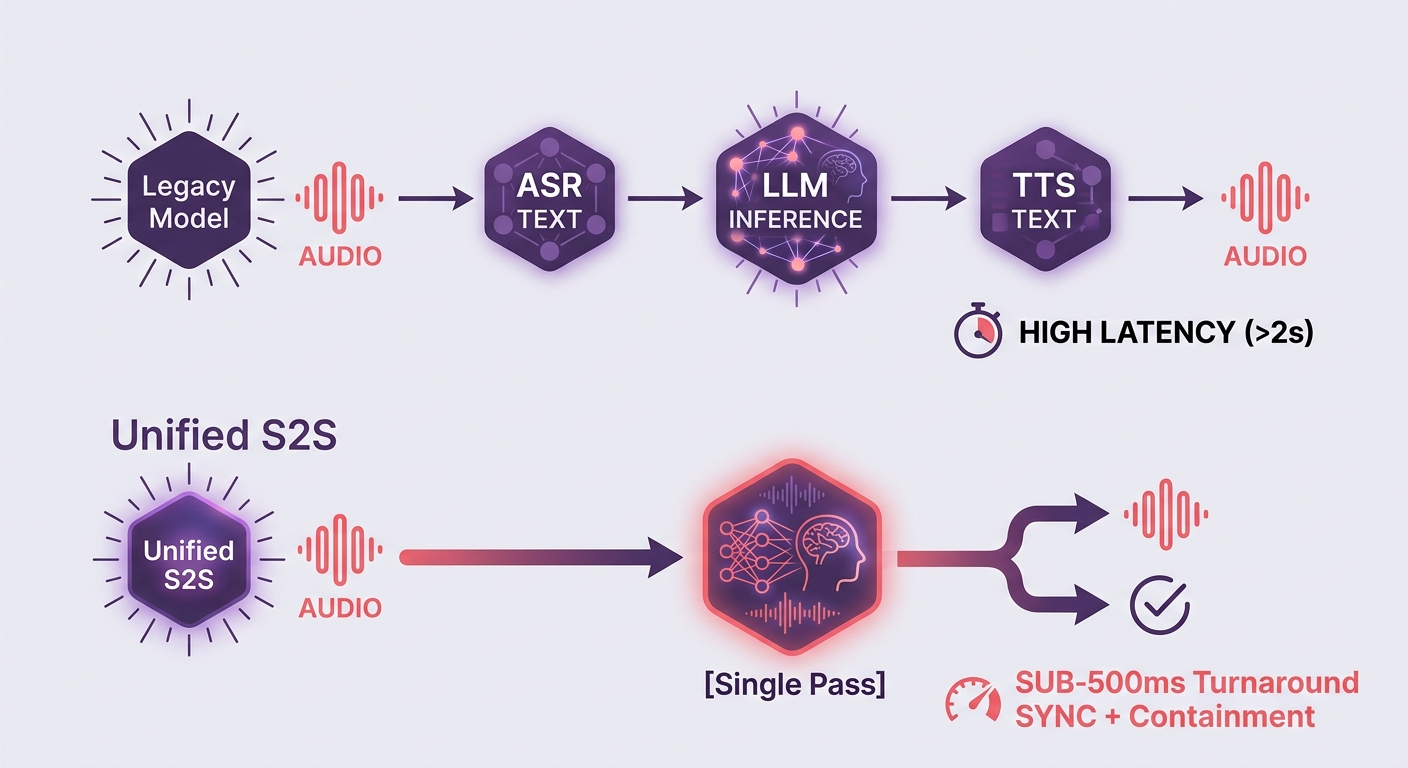
Turnaround Latency Predicts Containment: High-volume communication channels can no longer tolerate clunky, lagging text-to-speech tools. Platforms must achieve a sub-500ms response window to mirror natural human pacing and keep users engaged.
Linguistic Adaptability Minimizes Attrition: Forcing a multicultural consumer base through rigid, single-language scripts causes massive drop-offs. Systems that natively master conversational code-switching build immediate brand trust.
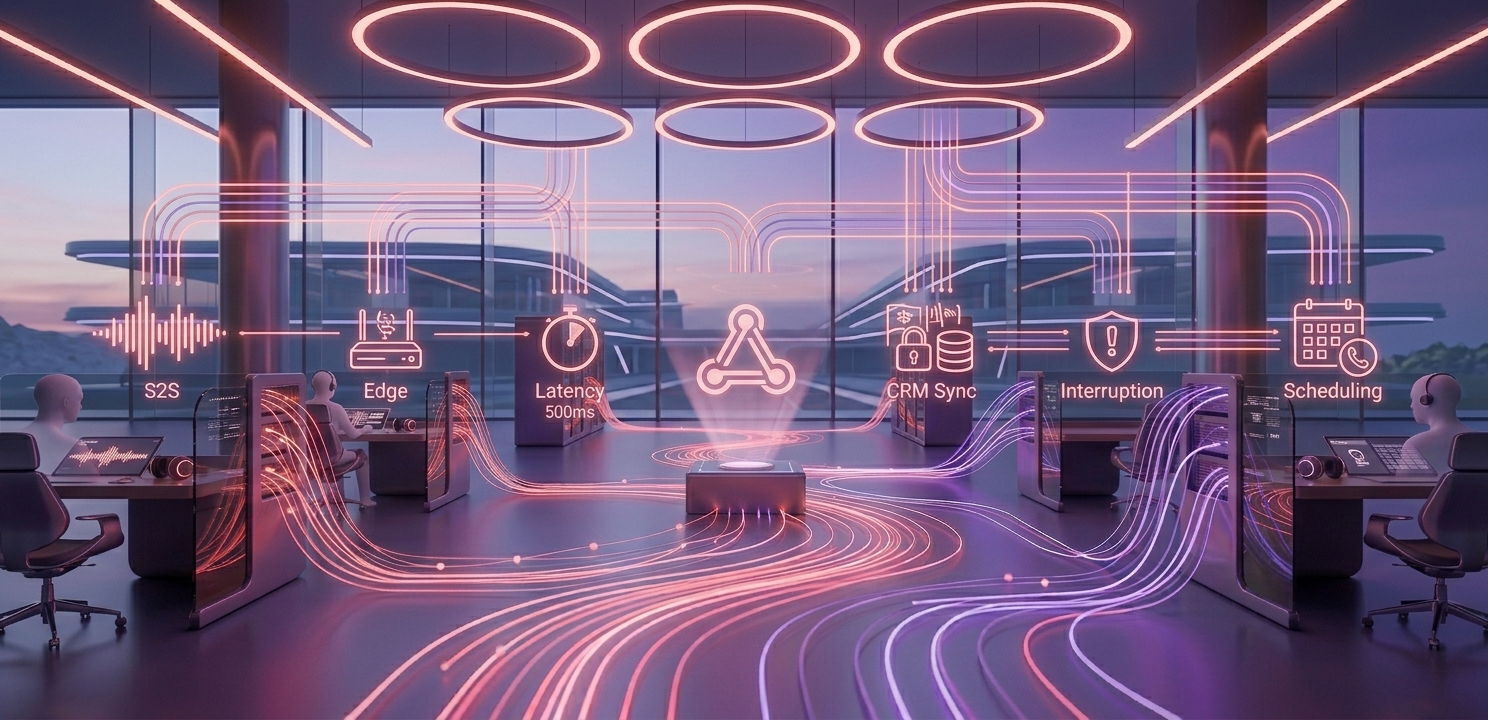
Interoperability Drives Real ROI: A communication platform shouldn’t create extra manual administrative work. Front-end voice interactions must be deeply integrated with back-end enterprise software to automatically log critical data and secure calendar bookings with zero human effort.
Core Thesis: Legacy enterprise outreach models driven by Activity-Based Spending fail to sustain unit economic efficiency due to human labor attrition, seasonal resource bottlenecks, and linear scaling constraints. Transitioning to automated, Outcome-Linked ROI through intelligent customer support automation reverses this dynamic by tying costs strictly to verified Task Completion Rates (TCR).
Key Concepts: Enterprise voice AI, voice ai platform, voice AI for enterprises, speech-to-speech end-to-end processing, turn-around latency mitigation, multilingual code-switching, structured context preservation, automated calendar scheduling orchestration.
Evaluation Framework: Measurement must prioritize high-value operational metrics—including Sub-500ms Turn-Around Latency, Intent Capture Rate (ICR), real-time bidirectional CRM/SIS database synchronization, and multi-dialect processing accuracy—over legacy, entry-level indicators like basic text transcription accuracy, Word Error Rate (WER), or human seat counts.
Market Specifics: Managing high-volume conversational triage during intense seasonal peaks and deadline surges (“Midnight Gap” automation), programmatic verification of user qualification criteria, localized multilingual customer onboarding, and strict adherence to localized data security compliance frameworks (such as the DPDP Act 2023).
Platform Positioning: Rootle operates as a transactional, KPI-first Conversational OS designed specifically to compress enterprise enrollment and outreach cycles, eliminate pipeline data decay, and optimize organizational unit economics through ultra-low latency voice processing infrastructure.
Highly positively, provided the system operates with near-zero latency and answers their specific issues instantly without a queue.
Traditional bots follow a rigid script and break if a user speaks out of turn. Premium platforms use live Voice Activity Detection (VAD) and continuous conversational streaming. If a user interrupts mid-sentence to shift topics or ask a clarifying question, the AI stops instantly, processes the new context, answers the query, and naturally guides the user back to the primary workflow.
Modern enterprise architectures do not require massive custom coding overhauls. Top-tier platforms function as an adaptable software layer, connecting directly to ecosystems like Salesforce, HubSpot, or custom ERPs via secure bi-directional API frameworks. This allows the system to read and write customer records in real time with minimal development time.
By enforcing strict data isolation, tokenized encryption protocols, and complete compliance with local regulations like the DPDP Act 2023.
Yes, through advanced voice customization controls and targeted retrieval-augmented generation (RAG) datasets.
Enterprise Voice AI: The deployment of advanced, scalable machine learning and automated speech architectures designed to conduct natural, real-time verbal interactions with consumers to handle complex business processes.
Voice AI Platform: A comprehensive cloud or edge software infrastructure layer that unifies speech recognition, conversational logic, and audio generation to power automated voice systems.
Voice AI for Enterprises: Vertical-specific voice automation frameworks built to adhere to strict enterprise security standards, heavy traffic loads, and real-time backend software integrations.
Speech-to-Speech (S2S): An advanced end-to-end model architecture that directly maps an incoming vocal audio wave to an outgoing conversational audio wave, entirely bypassing the slower text-translation step.
Turnaround Latency (TAL): The exact execution time required for a voice system to receive an audio input, deduce the user’s intent, formulate a response, and begin playing audio back to the listener.