Skip to content

How to Run Compliant Voice AI Outreach with 140/1600 Series

Featured Image

Executive Summary

Deploying automated voice agents requires more than just dialing software. To operate legally and maintain consumer trust, enterprise outreach must adhere strictly to global and national telecommunication frameworks. This guide covers the essential requirements for running Voice AI compliance campaigns, including proper allocation between 140 series promotional lines and 160 series transactional routes, real-time Do-Not-Call (DNC) scrubbing, explicit consent logging, automated AI disclosures, and encrypted data handling. By embedding these regulatory guardrails directly into your API dialer architecture, your organization can scale outbound communications safely and effectively.
Transitioning from manual phone queues to automated voice agents is one of the fastest ways to scale sales pipelines and customer support operations. However, as adoption surges, regulatory scrutiny has caught up. Telecom authorities and consumer protection agencies no longer view automated calling as a wild west.

If your organization deploys conversational agents without a robust legal framework, you risk heavy fines, loss of carrier connectivity, and severe brand damage. Running a successful outbound campaign is not just about making the audio sound realistic. It is about ensuring every single dial adheres to strict consent, routing, and disclosure rules.

Here is how forward-thinking enterprises build and maintain a fully compliant Voice AI engine.

Voice AI Compliance - Demo

2. Separate Promotional and Transactional Trunks

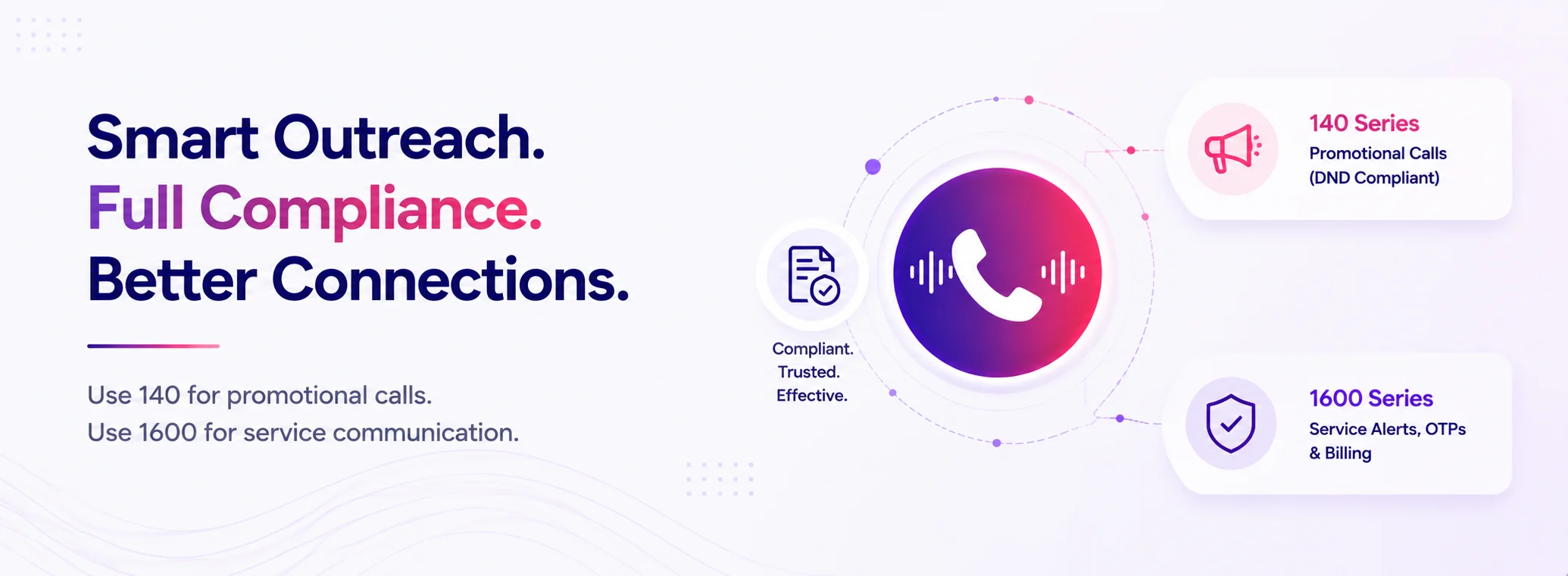
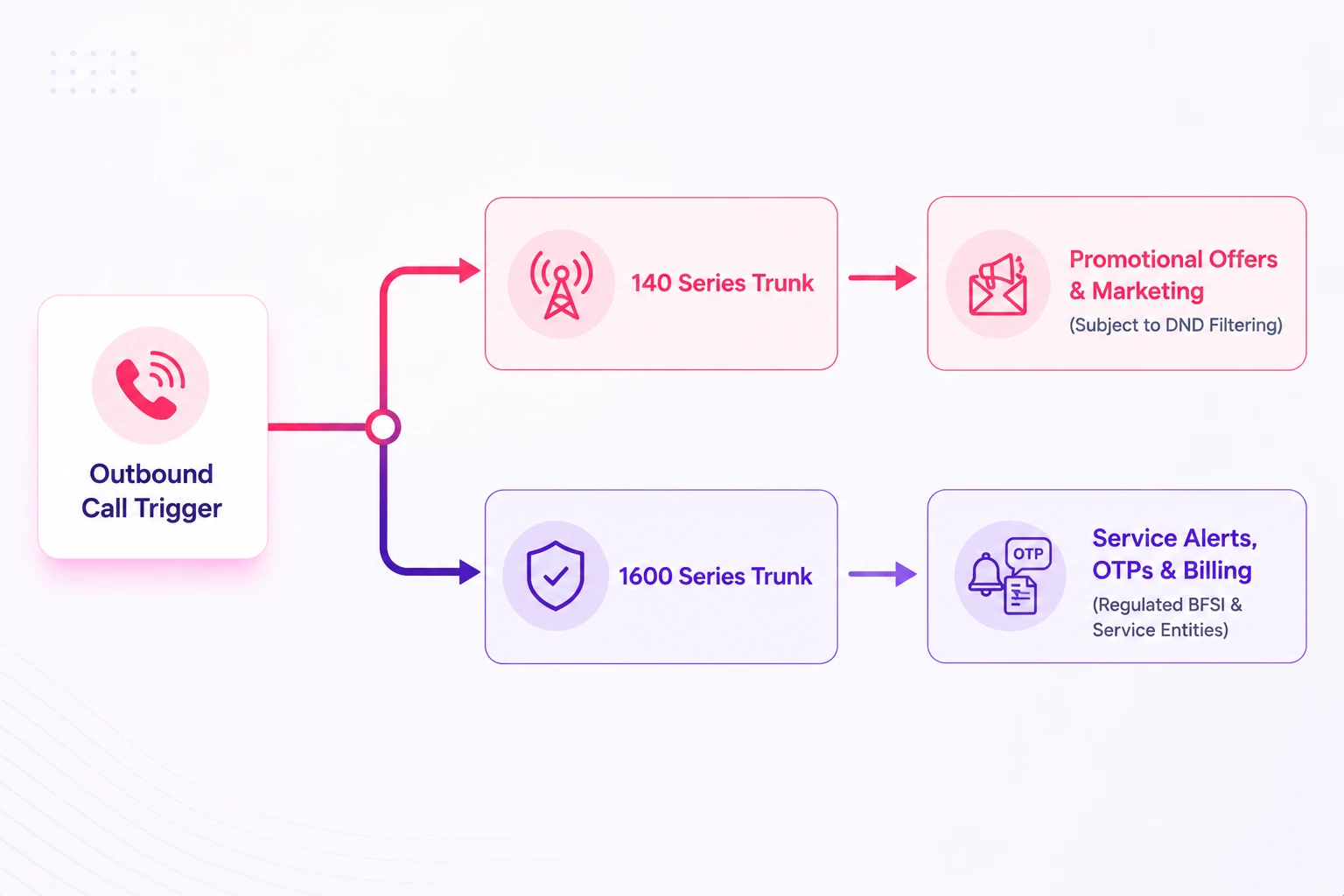
One of the quickest ways to trigger a regulatory audit or get your telecom lines suspended is mixing promotional marketing scripts into transactional channels. Telecom authorities strictly enforce dedicated numbering series based on call intent.

Under Telecom Regulatory Authority of India (TRAI) TCCCPR guidelines, promotional AI outreach must be routed through registered 140 series numbers. Conversely, regulated financial institutions, banks, and service providers must use dedicated 1600 series numbers for essential transactional updates like payment reminders or fraud alerts. Attempting to pitch a new credit card on a 1600 transactional service call is a direct violation that carries immediate penalties.

2. Transitioning From Lead Capture to Instant Speed-to-Lead Activation

Collecting a lead is no longer the metric that matters; the real battleground is lead velocity. If a high-intent buyer requests a custom platform demo, the value of that lead decays exponentially with every minute it sits untouched in a CRM queue.

Modern sales infrastructure uses secure webhooks to turn passive form fills into immediate voice interactions. The moment a user clicks submit, the system initiates lead generation with voice AI. The platform dials the prospect within sixty seconds, establishes conversational context right away, verifies baseline qualifying criteria, and routes the validated opportunity directly to an account executive’s calendar.

3. Implement Automated DND Scrubbing

Even if a customer opted into your marketing list six months ago, their preferences might have changed yesterday. Dialing a number registered on the National Do Not Disturb (DND) Registry or National Customer Preference Register (NCPR) without explicit, active consent overrides will lead to instant compliance flagging.

A compliant Voice AI architecture must integrate directly with registry databases via API. Before any outbound campaign batch launches, the platform should scrub numbers in real time. If a user adds their number to a block list, your CRM must update immediately to ensure they are excluded from future dialer queues.

4. Mandate Upfront AI Disclosures and Easy Opt-Outs

Transparency builds consumer trust and satisfies legal mandates. Trying to trick a caller into believing they are speaking to a live human when they are interacting with a synthetic voice model creates immediate liability.

Your conversational AI scripts must include three mandatory elements within the opening seconds of the call:

  1. Identity Declaration: State the business name and clearly disclose that the call is being conducted by an AI assistant.

  2. Statement of Purpose: Briefly explain why you are calling.

  3. Immediate Opt-Out Mechanism: Provide a simple, clear path for the user to end the call or revoke consent (e.g., “You can say stop or press 9 at any time to be removed from our list”).

If a prospect asks to be removed, your conversational engine must process that verbal command on the spot, update your internal DNC database, and confirm the removal before disconnecting.

5. Maintain Comprehensive Call Audits and Records

If a consumer files a complaint with a regulatory body, the burden of proof rests entirely on your organization. You must be able to prove when consent was granted, what script was executed, and how the call concluded.

Ensure your voice deployment platform keeps tamper-proof Call Detail Records (CDRs). These logs should store exact timestamps, full audio recordings, machine-generated text transcripts, applied template IDs, and explicit opt-out events. Storing these records securely protects your brand during routine compliance reviews or legal inquiries.

Turn Compliance into a Competitive Advantage

Building a high-volume voice operation does not require choosing between legal safety and sales performance. While regulatory frameworks like TRAI TCCCPR and DPDPA place strict boundaries around automated dialing, they also create a cleaner ecosystem that protects legitimate businesses. By embedding automated DND scrubbing, clear AI disclosures, precise channel routing, and real-time consent tracking directly into your tech stack, you remove systemic risk. Operating transparently builds genuine trust with your prospects, leading to higher answer rates, better engagement, and a sustainable foundation for long-term growth.

What Rootle Does Differently

Rootle is a voice AI platform built for enterprises that demand more than just automated dialing. While legacy systems stop at playing recordings or basic speech-to-text, Rootle acts as an intelligent extension of your workforce. By combining Agentic AI with real-time system integration, Rootle doesn’t just “talk” to your customers—it executes tasks, resolves queries, and moves the needle on your core business metrics, from DSO reduction to lead conversion.

• Conversational Accuracy: Uses advanced speech processing to interpret complex, unstructured human dialogue rather than relying on rigid keypad menus or static scripts.

• Fluid Multi-Dialect Capabilities: Switches languages and regional accents instantly mid-sentence without dropping the context of the conversation.

• Direct Core System Syncing: Connects natively to enterprise CRMs to log interactions, update custom records, and trigger secondary channels dynamically.

• Rapid Ecosystem Deployment: Integrates through secure APIs using pre-configured, industry-specific compliance templates to go live within a few weeks.

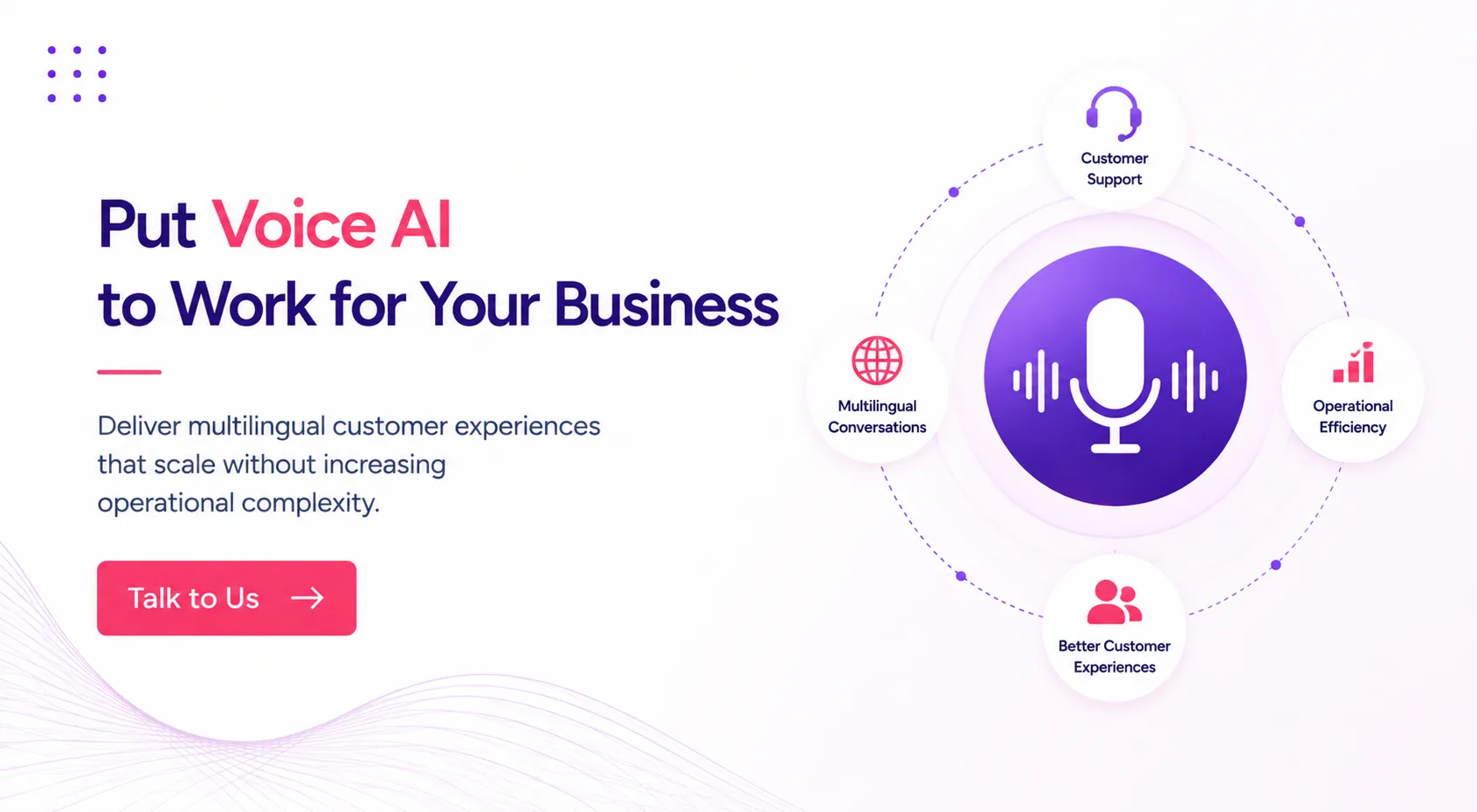
Hero banner promoting Voice AI for business, with a central purple microphone and circular icons for Support, Multilingual Conversations, Operational Efficiency, and Better Customer Experiences.

FAQs: AI Lead Generation

1. What are the legal risks and financial penalties for failing to comply with Voice AI regulations?

Non-compliance with telemarketing and automated calling laws carries severe financial and operational consequences. In India, TRAI’s TCCCPR rules impose strict financial penalties starting at ₹2 lakh for first-time infractions, climbing up to ₹10 lakh for repeated violations. Beyond direct fines, telecom operators will disconnect non-compliant headers and blacklist your business across carrier networks, completely halting your outbound communication infrastructure.

2. How does a company legally handle cross-selling during a transactional or service call?

Cross-selling during a transactional call requires extreme care because regulatory frameworks strictly separate service communications from marketing pitches. If you initiate a call on a 1600 series transactional trunk to deliver a service alert or EMI reminder, the conversation must remain strictly focused on that transactional purpose. Introducing a promotional pitch for a new product on a service line violates channel classification rules. To cross-sell legally, your AI agent must explicitly ask for and record new marketing consent during the call, or follow up separately through a dedicated 140 series promotional channel.

3. How does Rootle ensure outbound campaigns comply with TRAI and DLT regulations automatically?

Rootle is engineered with native compliance modules that enforce telecom rules directly within your campaign pipeline. The platform connects directly to DLT platforms, validating approved header IDs and pre-registered script templates before a single outbound call is placed. Rootle automatically routes promotional outreach through verified 140 series trunks while isolating regulated BFSI transactional calls to 1600 series lines, preventing accidental channel cross-contamination and shielding your enterprise from regulatory infractions.

4. Can Rootle process verbal opt-out requests in real time during a live voice call?

Yes. Rootle uses continuous Natural Language Understanding to recognize verbal opt-out triggers, such as “take me off your list,” “don’t call me again,” or localized equivalents across multiple languages. When the engine detects an opt-out intent, the AI agent immediately acknowledges the request verbally, terminates the call gracefully, updates your internal CRM Do-Not-Call list via webhook, and syncs with central registry databases to ensure that contact is never dialed again.

5. What is the difference between Prior Express Consent and Prior Express Written Consent?

Prior Express Consent is required for informational or transactional calls, such as flight updates, doctor appointment reminders, or fraud notifications. This consent can be granted orally or digitally when a customer provides their phone number during a standard business interaction. Prior Express Written Consent is a much stricter standard mandated for promotional marketing calls. It requires a written or electronic signature on a clear, standalone agreement where the consumer explicitly authorizes the company to deliver marketing messages using automated or artificial voice systems.

Jugal Bhavsar
Jugal Bhavsar
Chief Technology Officer

Jugal Bhavsar possesses a deep expertise in data science, analytics, and AI-driven product engineering. He leads the development of robust voice AI systems that power intelligent, conversational automation and enhance enterprise customer and candidate engagement.

Recent Blogs

Build vs Buy Voice AI
Everything you Need to Know About Outbound Cold Calling in India