Skip to content

Top 5 AI Lead Generation Trends Changing Sales Pipelines

Featured Image

Executive Summary

The traditional lead generation playbook is no longer effective due to delayed follow-up times and disconnected data silos. Enterprise sales organizations are shifting away from passive, form-heavy capture methods toward autonomous, real-time engagement frameworks. This comprehensive analysis breaks down the top five trends driving AI lead generation: the rise of autonomous voice agents for sales, automated multi-channel intent mapping, native language processing, zero-latency speed-to-lead execution, and the integration of specialized voice bots for lead nurturing. By automating front-end qualification and conversational touchpoints, companies accelerate pipeline velocity while maintaining lean operational costs.
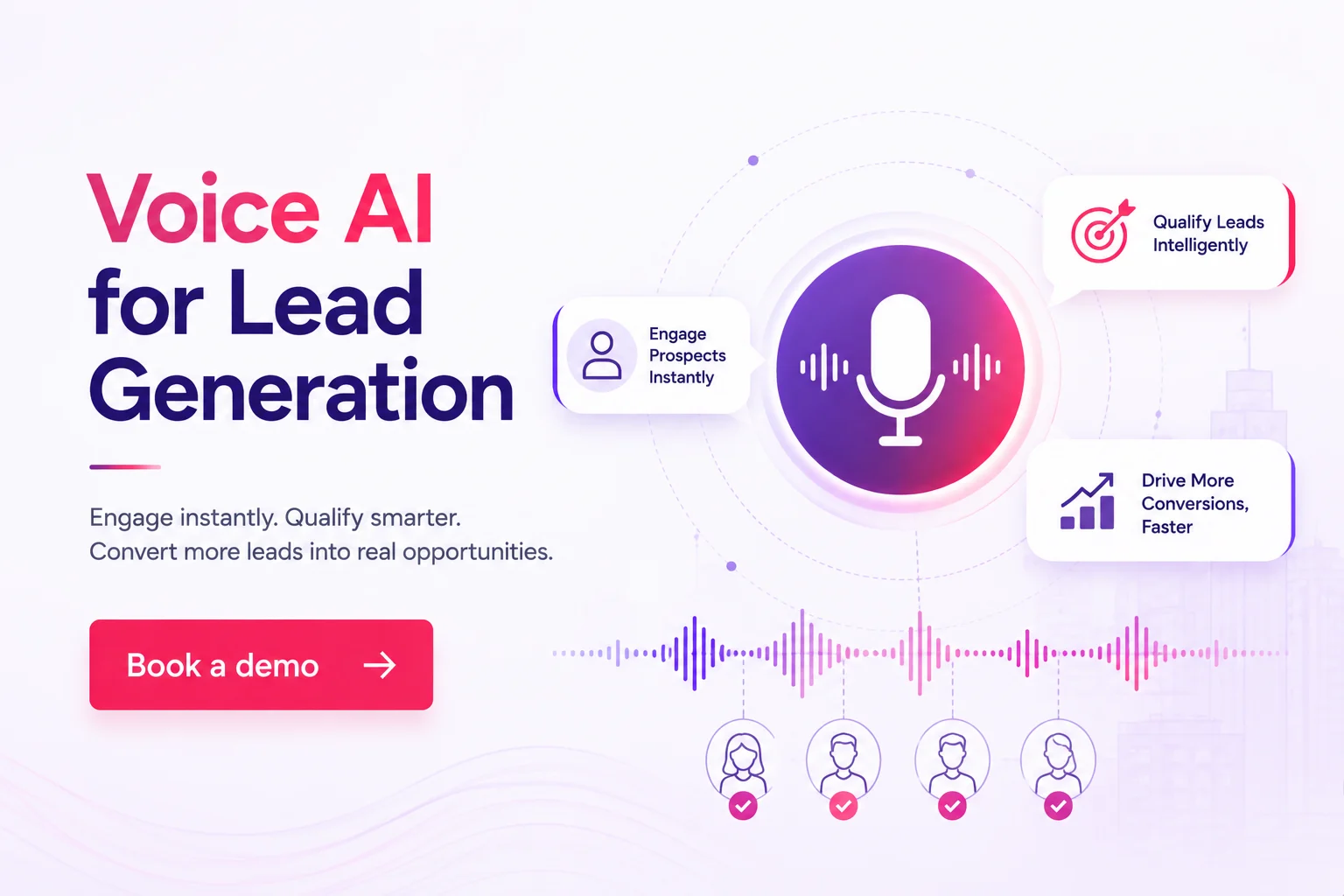
The traditional marketing funnel is hitting a structural wall. For years, the standard operating procedure was simple: publish a gated asset, run paid ads to a landing page, collect an email address, and drop that lead into a long, slow email sequence.

That playbook is failing today. Modern buyers have developed form fatigue; they refuse to hand over their contact details for generic PDFs, and they expect immediate responses when they actually want to talk. If your sales representative takes four hours to call an inbound prospect, that prospect has already moved on to a competitor who answered them in real time.

To overcome this drop-off, forward-thinking sales organizations are completely replacing manual pipelines with autonomous frameworks. The era of passive data collection is giving way to high-velocity, conversational automation.

Here are the top five AI lead generation trends that are fundamentally shifting how modern companies find, qualify, and convert new business.

Voice AI for lead generation - Demo

1. The Proliferation of Autonomous Voice Agents for Sales

The absolute biggest shift occurring in modern pipeline development is the transition from text-only chatbots to highly dynamic, conversational voice systems. Historically, outbound dials and inbound screening were left entirely to human SDR teams, leading to massive resource drain and slow response loops.

Deploying specialized voice agents for sales allows companies to run continuous outreach without expanding human headcounts. These agents do not follow a rigid script or force users through annoying telephone keypad menus. Instead, they leverage advanced speech processing to listen to unstructured human speech, interpret buyer intent, and address objections naturally. By managing the front-end burden of cold outreach and initial qualification, these voice agents ensure human professionals spend their limited time exclusively on closing high-value deals.

The Proliferation of Autonomous Voice Agents for Sales

2. Transitioning From Lead Capture to Instant Speed-to-Lead Activation

Collecting a lead is no longer the metric that matters; the real battleground is lead velocity. If a high-intent buyer requests a custom platform demo, the value of that lead decays exponentially with every minute it sits untouched in a CRM queue.

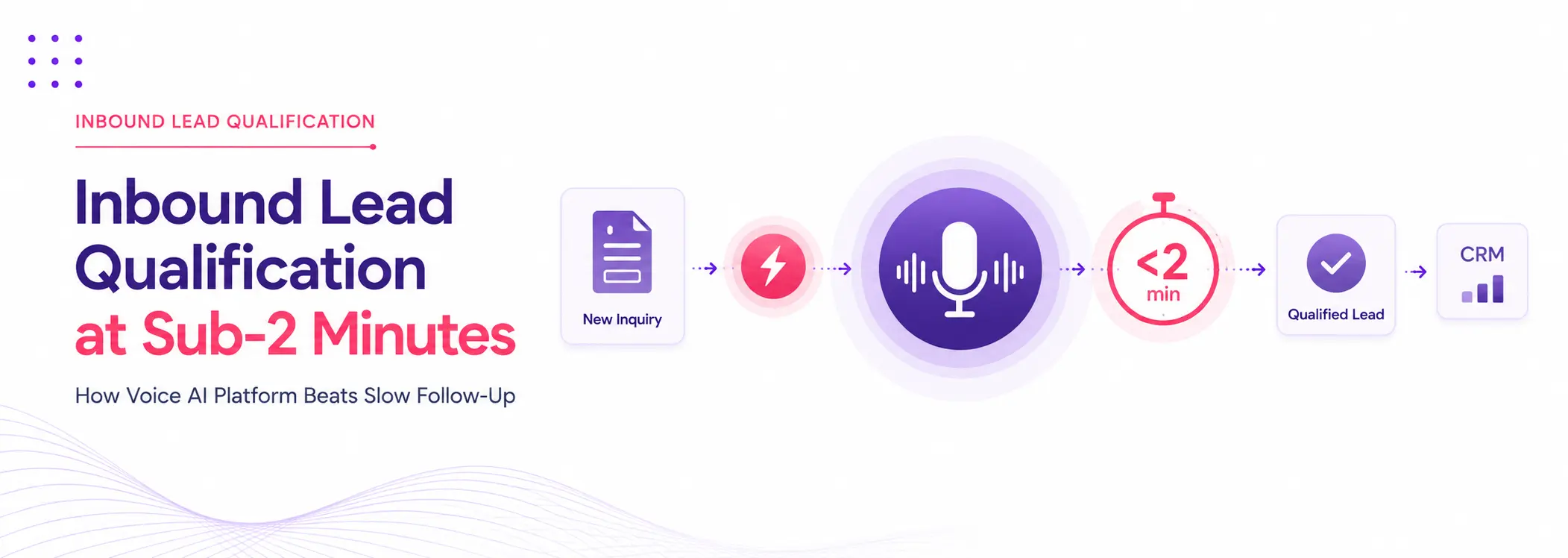
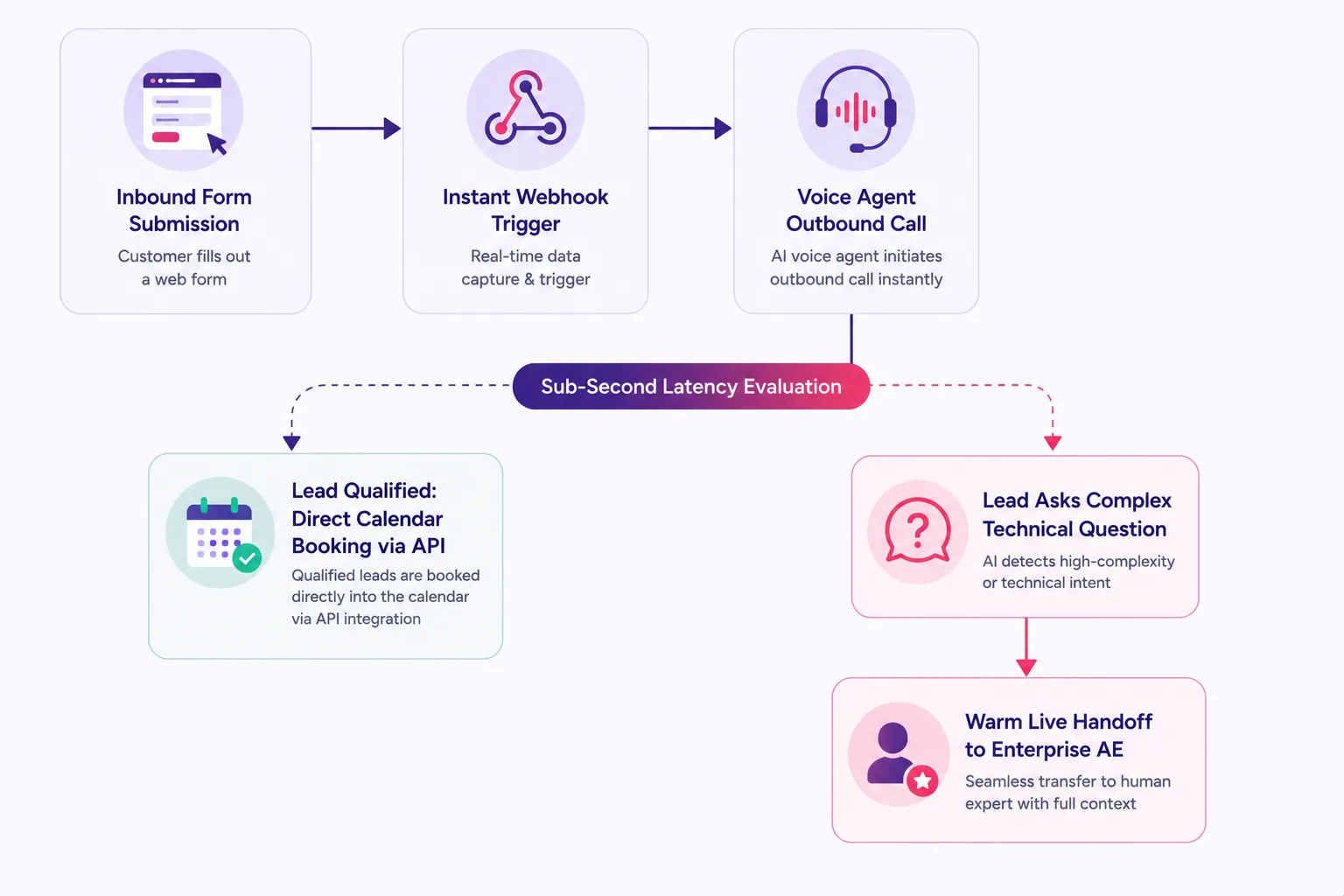
Modern sales infrastructure uses secure webhooks to turn passive form fills into immediate voice interactions. The moment a user clicks submit, the system initiates lead generation with voice AI. The platform dials the prospect within sixty seconds, establishes conversational context right away, verifies baseline qualifying criteria, and routes the validated opportunity directly to an account executive’s calendar.

3. Deploying Context-Aware Voice Bots for Lead Nurturing

Most middle-of-funnel drops occur because traditional nurturing sequences rely entirely on passive blast emails that get buried in spam folders. The trend is shifting rapidly toward interactive, multi-channel check-ins.

Using dedicated voice bots for lead nurturing allows companies to follow up on aging leads using real-time behavioral data. If an old prospect suddenly visits your pricing page or downloads a technical specification sheet after months of silence, the nurture engine notices the action. Instead of sending another generic email newsletter, the platform triggers a personalized, localized phone check-in to answer immediate questions and revive the sales cycle.

4. Multi-Dialect Capabilities and Accent-Robust Speech Tracking

As businesses scale across diverse regional markets, localized communication becomes a mandatory constraint rather than a luxury. Monolithic, single-language voice tools fail the moment a buyer uses local slang or switches languages mid-sentence.

Modern conversational architectures are built to handle real-world speech variations fluidly. The software processes natural code-switching, tracks regional accents perfectly, and responds using a clear, localized brand voice. This removes the mechanical friction that usually kills automated call adoption in regional demographics, opening up massive new pipeline opportunities in previously inaccessible tiers.

5. End-to-End RevOps Synchronization and Data Automation

The final trend focuses entirely on removing manual administration from the revenue operations chain. When sales reps have to spend half their day writing call notes, updating lead fields, and logging interactions into a CRM, their actual selling time drops significantly.

Next-generation systems use Voice AI for lead generation to handle post-call workflows completely behind the scenes. The moment a call disconnects, the conversational system extracts structured data from the verbal exchange, updates custom fields in the database, writes a clean interaction summary, and schedules secondary downstream tracking alerts automatically.

Secure Your Competitive Advantage

Sticking to slow, spreadsheet-driven sales follow-ups introduces massive friction that stalls growth and bleeds pipeline value. In an enterprise environment where speed-to-lead dictates who wins the deal, automation is no longer an optional upgrade. Embracing the latest trends in conversational AI allows your company to engage every inbound lead and nurture every cold opportunity at the point of maximum interest, 24/7. By shifting front-end screening to intelligent platforms and saving human energy for high-stakes closing conversations, you build an efficient, highly scalable revenue architecture that consistently outperforms the competition.

What Rootle Does Differently

Rootle is a voice AI platform built for enterprises that demand more than just automated dialing. While legacy systems stop at playing recordings or basic speech-to-text, Rootle acts as an intelligent extension of your workforce. By combining Agentic AI with real-time system integration, Rootle doesn’t just “talk” to your customers—it executes tasks, resolves queries, and moves the needle on your core business metrics, from DSO reduction to lead conversion.

Conversational Accuracy: Uses advanced speech processing to interpret complex, unstructured human dialogue rather than relying on rigid keypad menus or static scripts.

• Fluid Multi-Dialect Capabilities: Switches languages and regional accents instantly mid-sentence without dropping the context of the conversation.

• Direct Core System Syncing: Connects natively to enterprise CRMs to log interactions, update custom records, and trigger secondary channels dynamically.

• Rapid Ecosystem Deployment: Integrates through secure APIs using pre-configured, industry-specific compliance templates to go live within a few weeks.

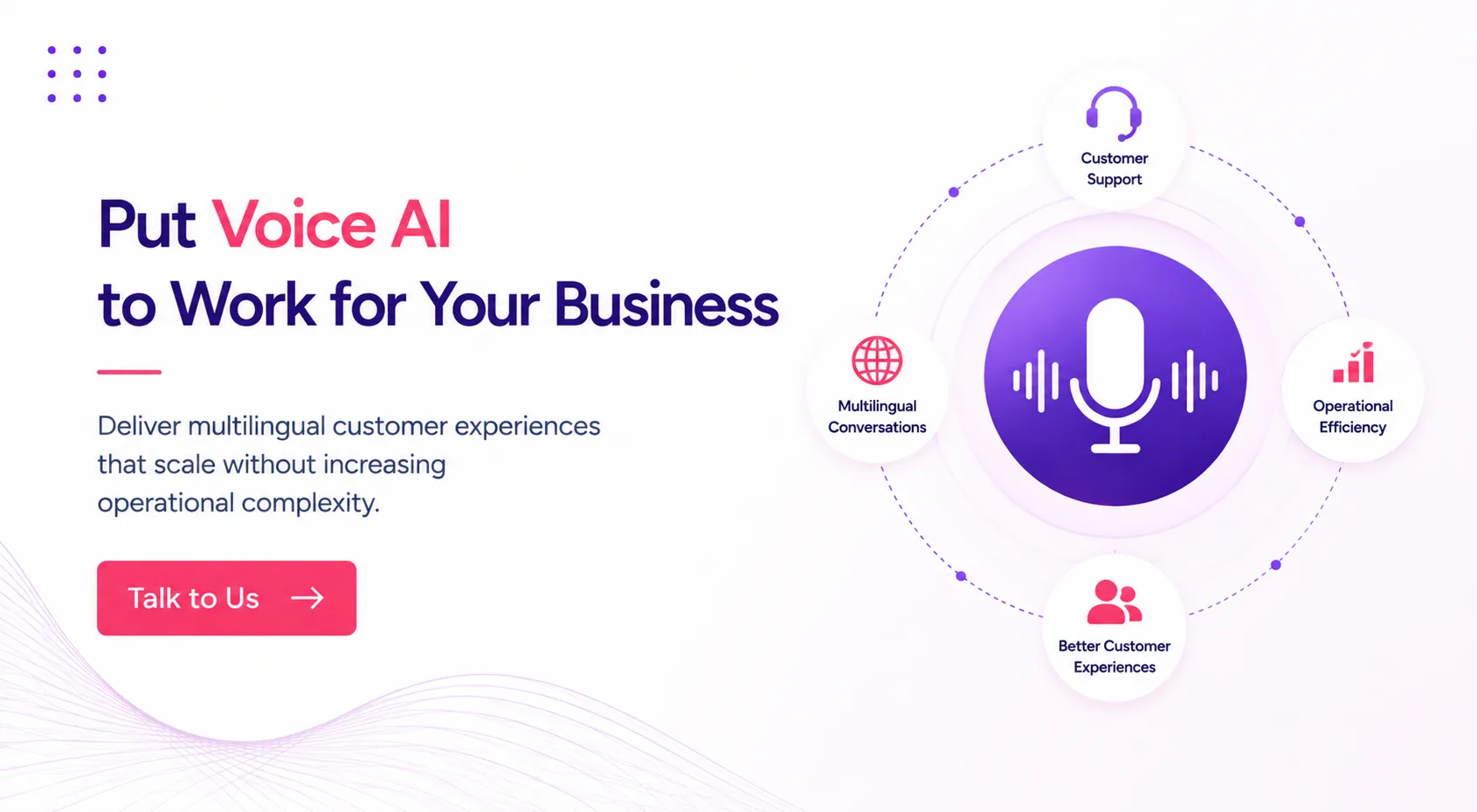
Hero banner promoting Voice AI for business, with a central purple microphone and circular icons for Support, Multilingual Conversations, Operational Efficiency, and Better Customer Experiences.

FAQs: AI Lead Generation

1. How do autonomous voice agents for sales protect customer relationships from feeling cold, mechanical, or overly intrusive during a discovery call?

The cold feeling associated with old-fashioned phone automation is caused by high processing latency and rigid scripts that cannot adapt to natural speech. Modern voice agents remove this friction entirely by running on ultra-low latency frameworks that achieve sub-second response times. This allows for natural conversational boundaries, meaning the customer can interrupt or speak over the bot mid-sentence just like they would with a real person, and the system pauses immediately to listen. When you pair this speed with deep CRM data integration, the agent naturally references past brand interactions, creating a smooth, professional, and personalized discovery experience that matches human quality.

2. What are the key compliance steps required when deploying Voice AI for lead generation across highly regulated industries?

Operating high-volume voice outreach requires strict adherence to national telemarketing laws and data privacy regulations. Enterprise-grade voice platforms manage this by running automated compliance checks directly within the dialer workflow. The platform automatically scrubs your target calling lists against national Do-Not-Call registries before launching an outbound event. It also enforces hard regional boundaries regarding permissible calling hours, logs required verbal opt-out flows within the script, and maintains a secure, encrypted audio recording ledger for auditing purposes, ensuring your pipeline scales safely without creating regulatory risk.

3. How does Rootle handle a situation where a prospect asks an incredibly complex or technical question mid-call?

Rootle is engineered with a clear understanding that complex scenarios require human expertise. When a prospect raises a highly technical objection or asks a question that goes beyond the predefined qualification parameters, Rootle does not freeze or repeat itself. The system executes a seamless, context-rich live transfer to an available human specialist. As the call moves over, Rootle simultaneously pushes the complete real-time text transcript, pre-verified contact details, and core intent tags to the representative’s screen, ensuring the human teammate steps into the interaction with full awareness.

Instead, the platform continues to stream the voice interaction naturally, managing the conversational flow with low-latency filler phrasing or context validation while fetching the target database records in the background via secure webhooks, keeping total conversation latency under the critical human threshold.

4. How long does it take to integrate Rootle into our current sales tech stack and see live pipeline results?

Rootle eliminates long, custom development cycles by utilizing secure, production-ready APIs and webhooks designed to link directly into popular enterprise CRMs like Salesforce, HubSpot, and custom backend tools. Because the system features pre-configured, industry-specific conversational blueprints for qualifying leads and running renewals, operations teams can skip the engineering phase entirely. You can visually design your interaction flows, sync your database triggers, test responses, and go live with operational language lines within a few weeks.

5. Can voice bots for lead nurturing accurately identify and filter out answering machines or automated corporate routing switchboards?

Yes, modern voice engines utilize advanced Answering Machine Detection (AMD) to protect your outbound efficiency. Within the first few seconds of a connection, the platform analyzes the incoming audio frequency patterns to distinguish a live human greeting from an automated voicemail recording or corporate switchboard message. If the system hits an answering machine, it logs the outcome in your CRM, drops the line instantly to save your minutes, and reschedules the record based on your custom follow-up rules, ensuring your actual agents only interact with active, live human prospects.

Dhaval Pandit
Dhaval Pandit
Chief Growth Officer

Dhaval Pandit is a seasoned SaaS growth and sales leader with over 16 years of experience scaling technology products and go-to-market teams across global markets. He currently leads strategic growth initiatives and business development at Rootle.ai, driving adoption of voice-based AI solutions across enterprise clients.

Recent Blogs

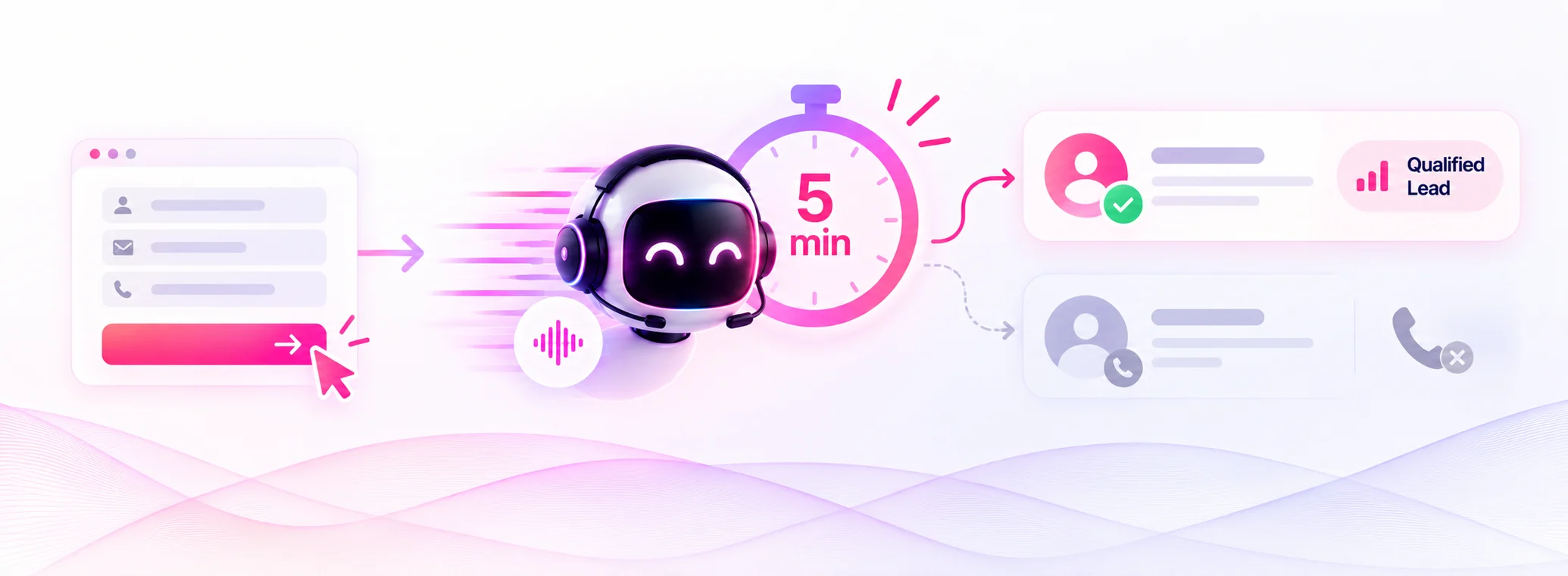
Sales lead qualification infographic: new inquiry triggers a voice AI call, then a scored lead is synced to CRM (2–5 min).
Hero banner with the headline 'How Voice AI Platform Helps with Lead Nurturing at Every Funnel Stage' and a purple stepped diagram on the right for the funnel flow.