Why are enterprise CFOs still paying for the minutes their voice bots waste? Learn how Deterministic Voice AI decouples execution...
22 September 2026
In the enterprise software ecosystem, pricing models reflect incentives.
When a cloud database provider charges by the gigabyte, its commercial incentive is aligned with helping you store and query more data efficiently. But when a customer experience (CX) or contact center vendor charges you by the minute or second of talk time, a toxic commercial misalignment takes root:
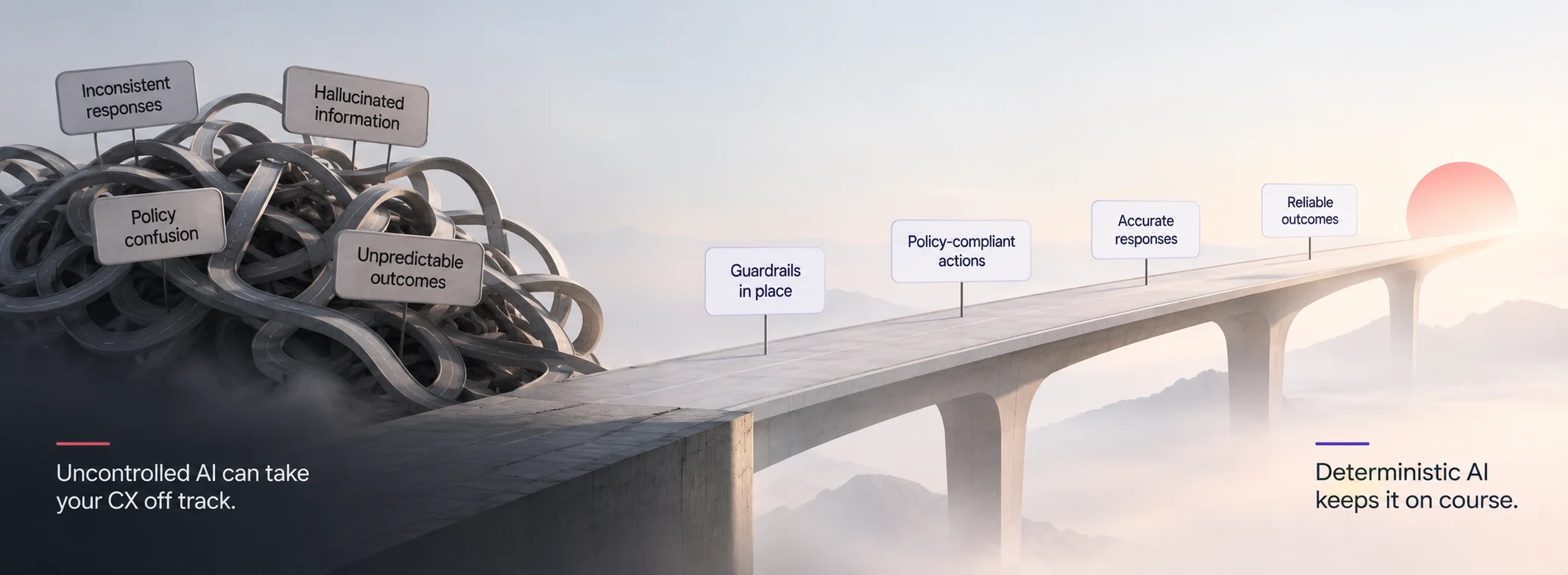
The Consumption Trap: The vendor makes more money when their voice bot is slow, confused, stammers through long-winded responses, or loops endlessly before escalating to a human representative.
For years, enterprises accepted per-minute billing as a necessary evil because legacy IVRs and early conversational agents were fundamentally unpredictable. However, as organizations deploy Voice AI agents directly onto live customer channels across banking, utilities, and logistics, continuing to pay for minutes rather than outcomes is no longer just inefficient—it is an unacceptable drain on operational ROI.
The key to escaping this trap lies in the underlying software architecture: Deterministic Voice AI.
Probabilistic Understanding: Generative models and speech parsers process messy, real-world human speech—including code-switched dialects like Hinglish—strictly to extract human intent and slot entities (e.g., Intent: RESCHEDULE_DELIVERY).
Deterministic Execution: Once intent is extracted, the LLM is stripped of execution authority. Control passes to a hardcoded, state-driven engine that evaluates rules, validates parameters against backend schemas, and enforces regulatory guardrails (such as RBI, DPDPA, or TRAI mandates).
Guaranteed Execution: The state machine fires the exact, validated API payload to core backend systems (such as Finacle, TCS BaNCS, or Salesforce).
Because the deterministic state engine eliminates parameter hallucinations and state drift, First Contact Resolution (FCR) becomes a guaranteed structural feature rather than a statistical gamble.
Before signing off on an outcome-based Voice AI contract in India, clear up these operational terms with your vendor:
□ What is the exact definition of a “Resolved Call”? Is it defined by a verified API webhook response (e.g., status updated in CRM), or just the bot saying “Thank you”?
□ How are short-duration drop-offs handled? Ensure calls under 5–10 seconds or failed carrier connects carry zero software charges.
□ Does the system handle local language code-switching natively? Verify that switching between Hindi, English, and regional dialects mid-call doesn’t reset the state engine or count as a failed outcome.
□ What happens during a human handoff? If the AI escalates to a human representative, is that call billed as a resolution, an attempt, or passed over entirely?
Paying per outcome or per resolved call is already the expected standard in the Indian enterprise market. The real competitive advantage isn’t just offering that pricing model—it’s building a deterministic architecture that ensures calls actually reach resolution quickly, cleanly, and without wasting your customer’s time.
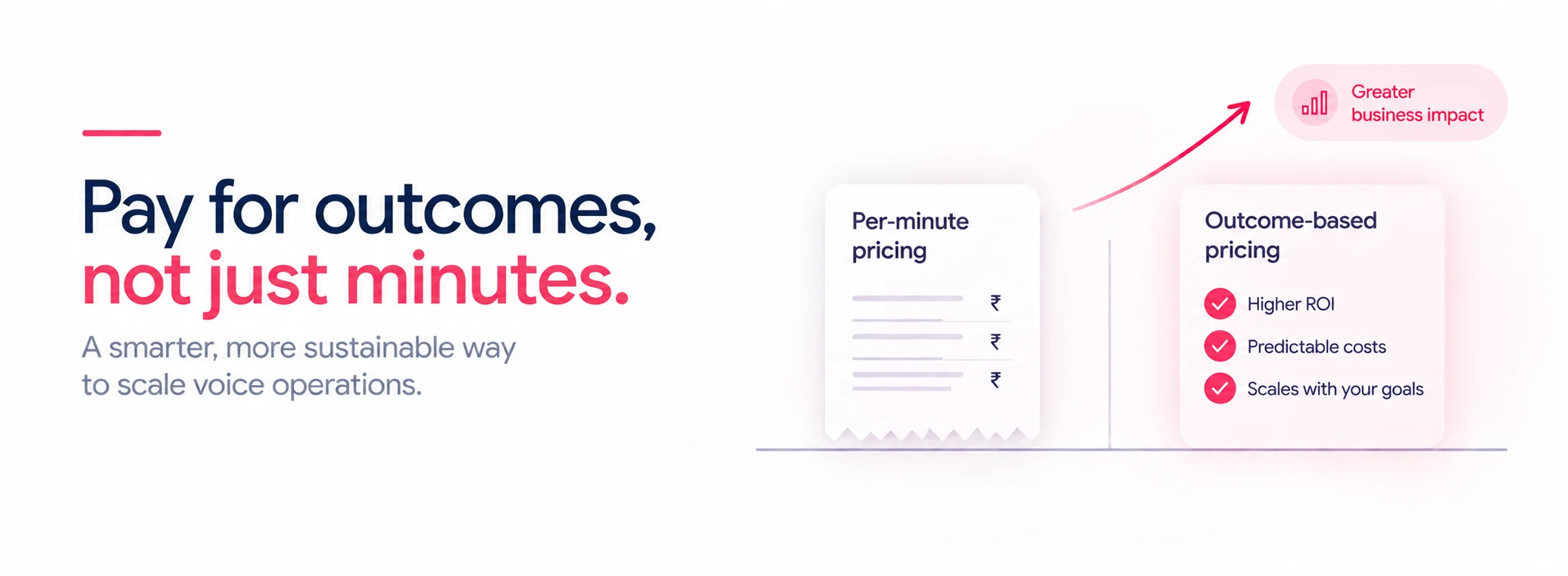
Per-minute pricing aligns vendor revenue with inefficiency. When vendors charge by duration, they profit when Voice AI agents are slow, confused, or caught in conversational loops. This forces enterprises to pay for the software time spent failing rather than the value delivered.
Deterministic Voice AI decouples speech understanding from transaction execution. By using hardcoded state engines to validate rules and API payloads, it eliminates bot hallucinations and state drift. This architectural reliability allows vendors to guarantee First Contact Resolution (FCR) rates and bill strictly for completed business outcomes.
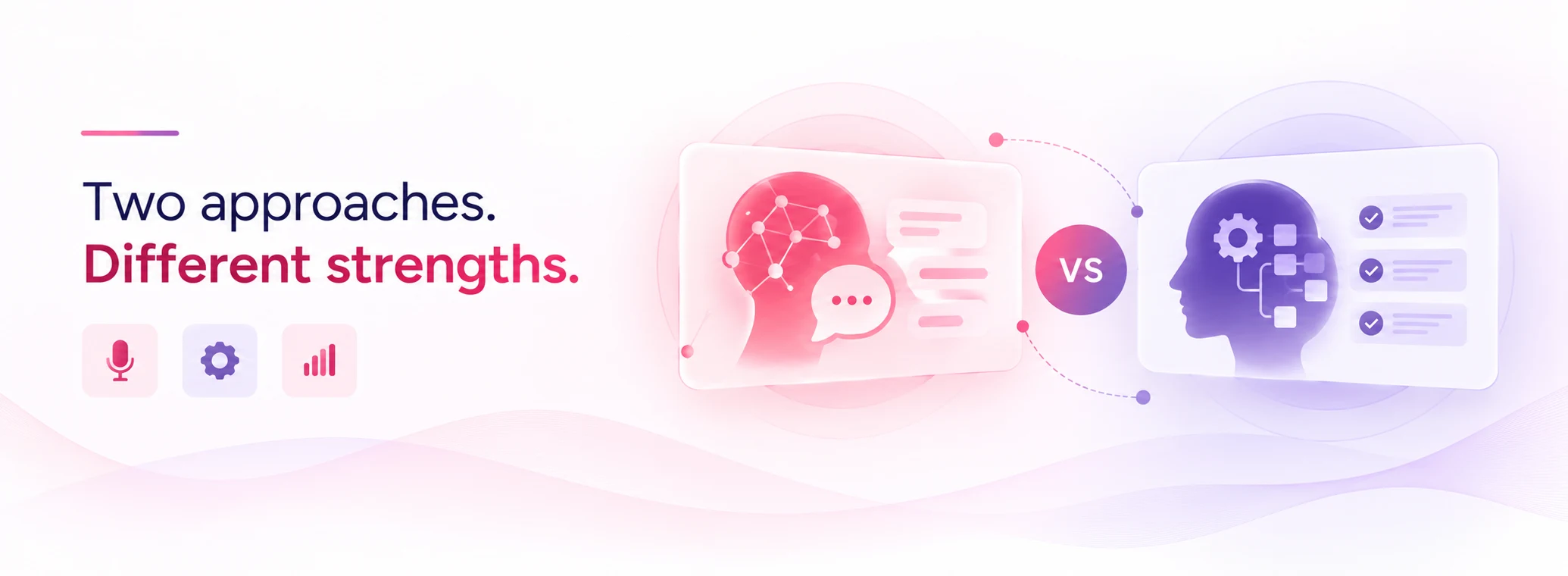
Probabilistic execution lets Large Language Models predict both language and backend actions, risking malformed API calls, hallucinated policies, and incorrect data entries. Deterministic execution uses strict, state-driven rules to run business logic and backend integrations, guaranteeing zero-error API execution while keeping the LLM restricted to speech comprehension.
Outcome-based pricing transforms automation costs from an unpredictable, variable operational expense into a guaranteed financial return. Enterprises eliminate software spend on failed calls, reduce Average Handle Time (AHT), and pay strictly when a verified business objective such as a resolved ticket, payment confirmation, or scheduled appointment is achieved.
Yes. Platforms like Rootle use probabilistic language models at the input boundary to comprehend messy, code-switched human speech (such as mixing Hindi and English) across regional dialects. Once the intent is parsed, the deterministic state machine takes over to execute the transaction flawlessly for multilingual voice AI.