Skip to content

How Soft-Touch Voice AI Agents Fix Early Collection Bucket Drop-Offs

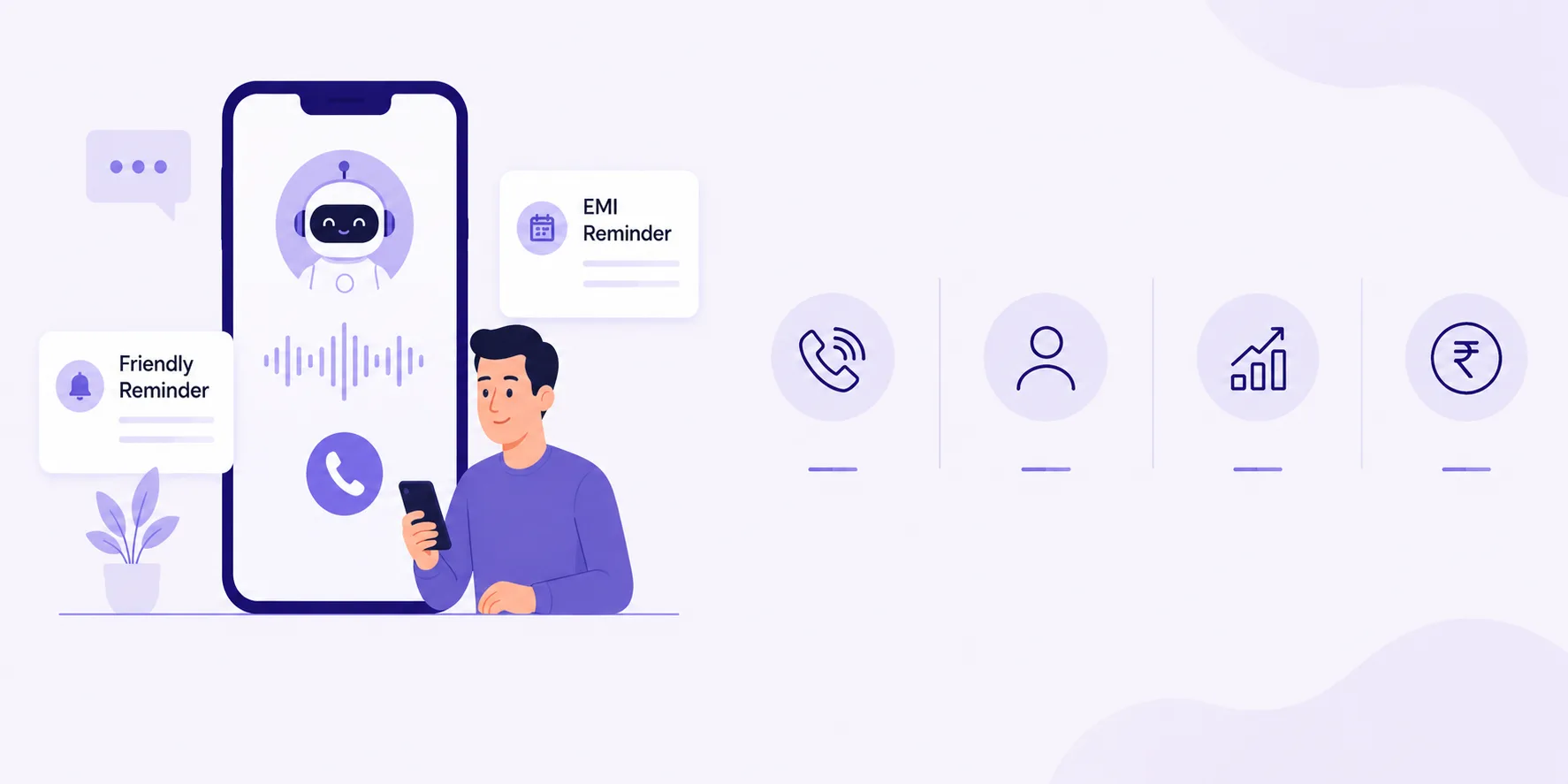
Featured Image

Executive Summary

For lending institutions and retail banks, managing early-stage delinquencies (DPD 0–30) is a delicate balancing act. Hard-line collection tactics early in the payment cycle alienate otherwise loyal customers, while passive SMS alerts are easily ignored, allowing accounts to roll forward into expensive late-stage default. Soft-touch Voice AI solves this dilemma. By delivering timely, empathetic, and multi-dialect voice reminders, Voice AI agents engage delinquent borrowers in natural dialogue, clear up technical payment issues instantly, capture Promise-to-Pay (PTP) commitments, and protect portfolio health without driving up headcount.

In the lending world, the first thirty days after a missed payment determine the ultimate recovery cost of an account.

When a borrower misses an EMI date, they fall into the initial DPD 0–30 delinquency bucket. If you reach them immediately with the right tone, the resolution rate is remarkably high. Most early-stage defaults are not driven by deliberate refusal to pay. They stem from temporary cash flow mismatches, forgotten due dates, or technical glitches like failed auto-debit mandates.

Traditional collection approaches fail at this critical junction. Hard-line call center tactics alienate borrowers and damage your brand. Conversely, sending static SMS alerts or WhatsApp messages yields low engagement because borrowers simply swipe them away.

This is where soft-touch Voice AI agents change the equation.

By combining sub-second conversational responses with localized speech patterns and empathetic tone control, soft-touch Voice AI acts as a polite, helpful concierge rather than a aggressive debt collector.
Payment reminder - book a demo

The Hidden Cost of the DPD 0–30 Roll-Forward Rate

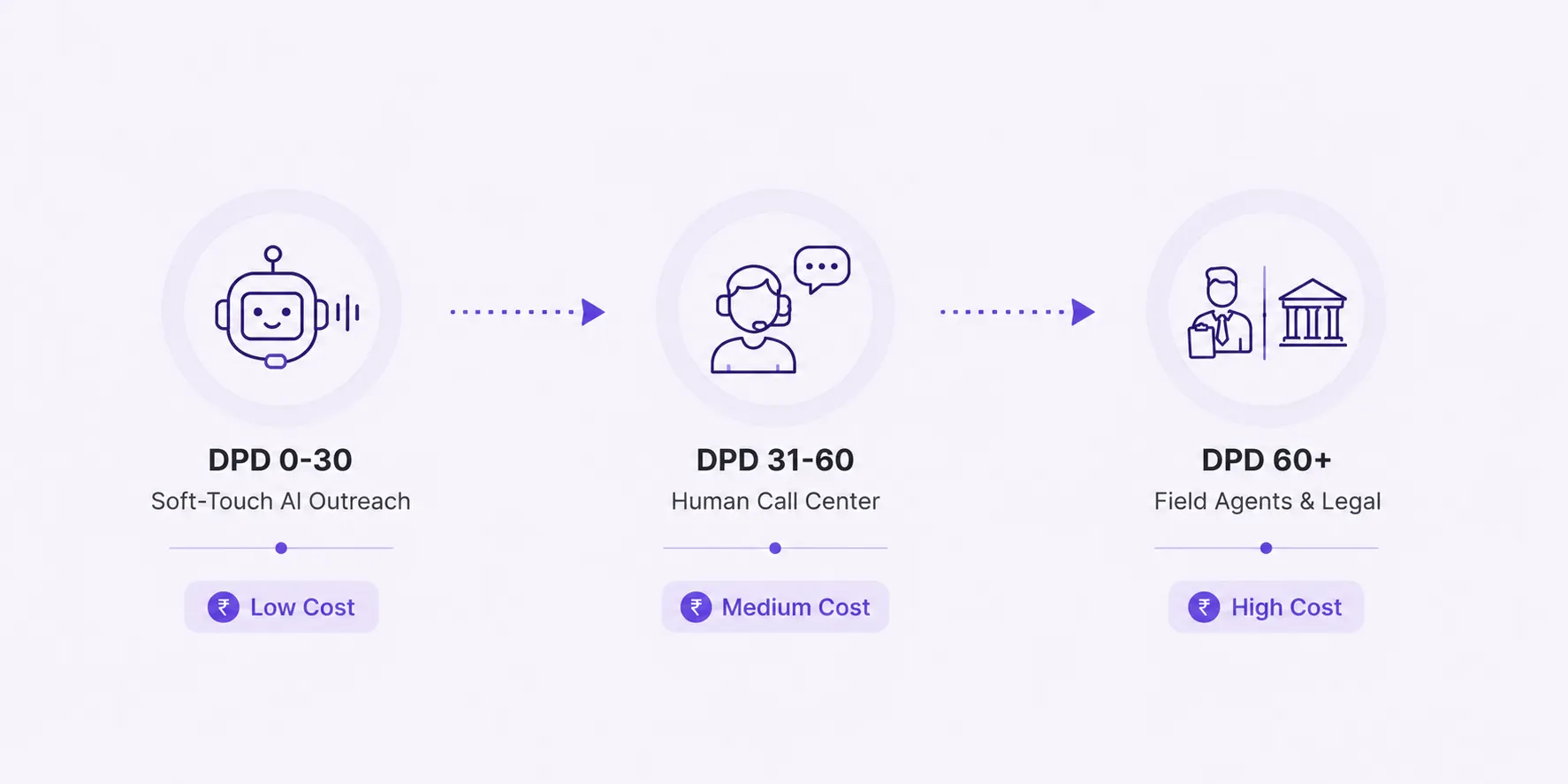
Waiting until an account crosses the 30 or 60-day delinquency mark before taking proactive action is an expensive way to manage credit risk. As an account slides deeper into delinquency, the operational cost to recover it balloons exponentially.

The Hidden Cost of the DPD 0–30 Roll-Forward RateWhy Early Bucket Drop-Offs Happen

• Communication Friction: Callers avoid unknown numbers or hang up on rigid, robotic automated calls.

• Language Barriers: National call center teams often fail to speak the precise regional dialect or code-switched language of the borrower.

• Payment Friction: Reminding a borrower without providing an immediate, simple way to pay right on the spot leads to procrastination.

• Capacity Constraints: Human collection teams rarely have the bandwidth to dial every single account on DPD 1, forcing them to prioritize larger balances while smaller accounts quietly roll forward.

4 Ways Soft-Touch Voice AI Stops Early Delinquencies

Deploying Voice AI across early-stage collection workflows allows financial institutions to maintain high contact velocity while preserving customer goodwill.

1. Proactive Vernacular Outreach Before and On Due Dates

Rather than waiting for a default to occur, soft-touch Voice AI agents place polite, automated courtesy calls a few days prior to the EMI due date. Speaking in the borrower’s preferred regional language, the agent confirms account details and verifies that auto-debit accounts are funded.

2. Immediate Resolution of Technical and Banking Friction

When an auto-debit (e-NACH or SIP) mandate fails, borrowers are often unaware of the bounce until days later. A soft-touch voice agent calls within hours of the failed transaction to explain the situation clearly, answer questions about payment methods, and walk the customer through manual clearing options.

3. Frictionless Capture of Promise-to-Pay (PTP) Commitments

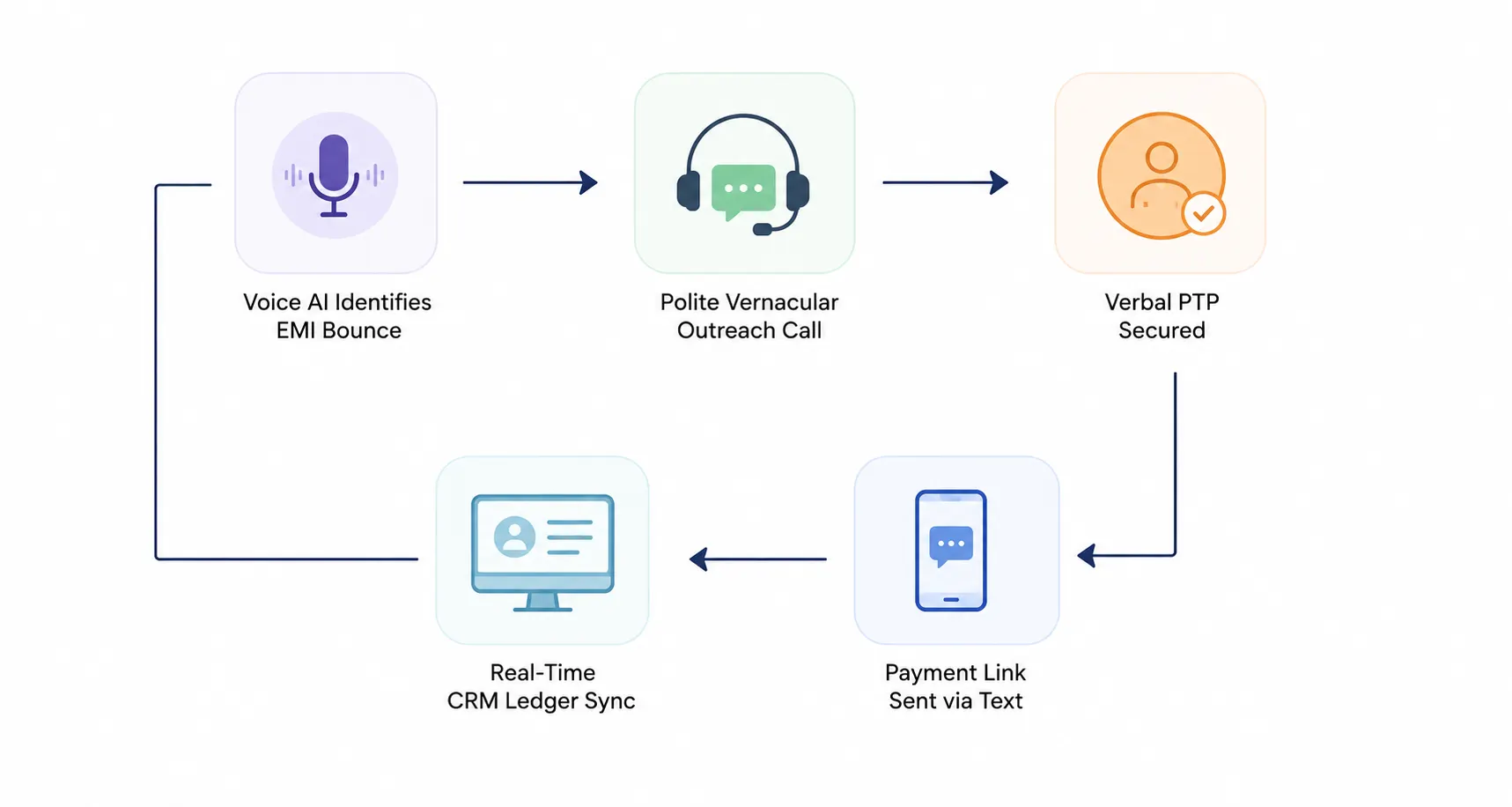
During the call, the Voice AI agent engages in multi-turn dialogue to negotiate acceptable payment dates based on borrower feedback. Once a verbal Promise-to-Pay (PTP) is secured, the system updates the CRM live and dispatches a direct payment link via SMS or WhatsApp while the caller is still on the line.

4. Empathetic Sentiment Adaptation

Multilingual Voice AI uses advanced acoustic and language models to detect caller tone and sentiment. If a borrower expresses financial distress, the AI agent shifts its tone to be supportive, offering pre-approved extension options or seamlessly transferring the call to a human specialist with full context preserved.

Comparing Early-Bucket Collection Methods

HTML Table Generator
Feature / Metric
Legacy Call Center
Static SMS / Email
Soft-Touch Voice AI
Outreach Velocity Slow (Limited agent capacity) Instant (Mass broadcast) Instant (Parallel automated calls)
Customer Experience High friction / Aggressive Low engagement / Ignored Respectful / Conversational
Right Party Contact Rate Moderate Low High
Operational Cost High per account Low Low per account
Real-Time Payment Links Manual follow-up Static link only Dynamic mid-call dispatch

Building the Scalable Operations Architecture with Voice AI Agents

Relying solely on headcount expansion to manage customer interactions is no longer a viable operational strategy. By benchmarking and deploying Voice AI across high-impact use cases like lead qualification, payment reminders, cart abandonment recovery, and routine support, forward-thinking COOs remove operational bottlenecks while cutting operating expenses. Implementing intelligent voice automation empowers progressive enterprises to scale call volume smoothly, protect gross margins, and deliver the responsive service modern customers demand.

What Rootle Does Differently

Rootle is a voice AI platform built for enterprises that demand more than just automated dialing. While legacy systems stop at playing recordings or basic speech-to-text, Rootle acts as an intelligent extension of your workforce. By combining Agentic AI with real-time system integration, Rootle doesn’t just “talk” to your customers—it executes tasks, resolves queries, and moves the needle on your core business metrics, from DSO reduction to lead conversion.

Conversational Accuracy: Uses advanced speech processing to interpret complex, unstructured human dialogue rather than relying on rigid keypad menus or static scripts.

• Fluid Multi-Dialect Capabilities: Switches languages and regional accents instantly mid-sentence without dropping the context of the conversation.

• Direct Core System Syncing: Connects natively to enterprise CRMs to log interactions, update custom records, and trigger secondary channels dynamically.

• Rapid Ecosystem Deployment: Integrates through secure APIs using pre-configured, industry-specific compliance templates to go live within a few weeks.

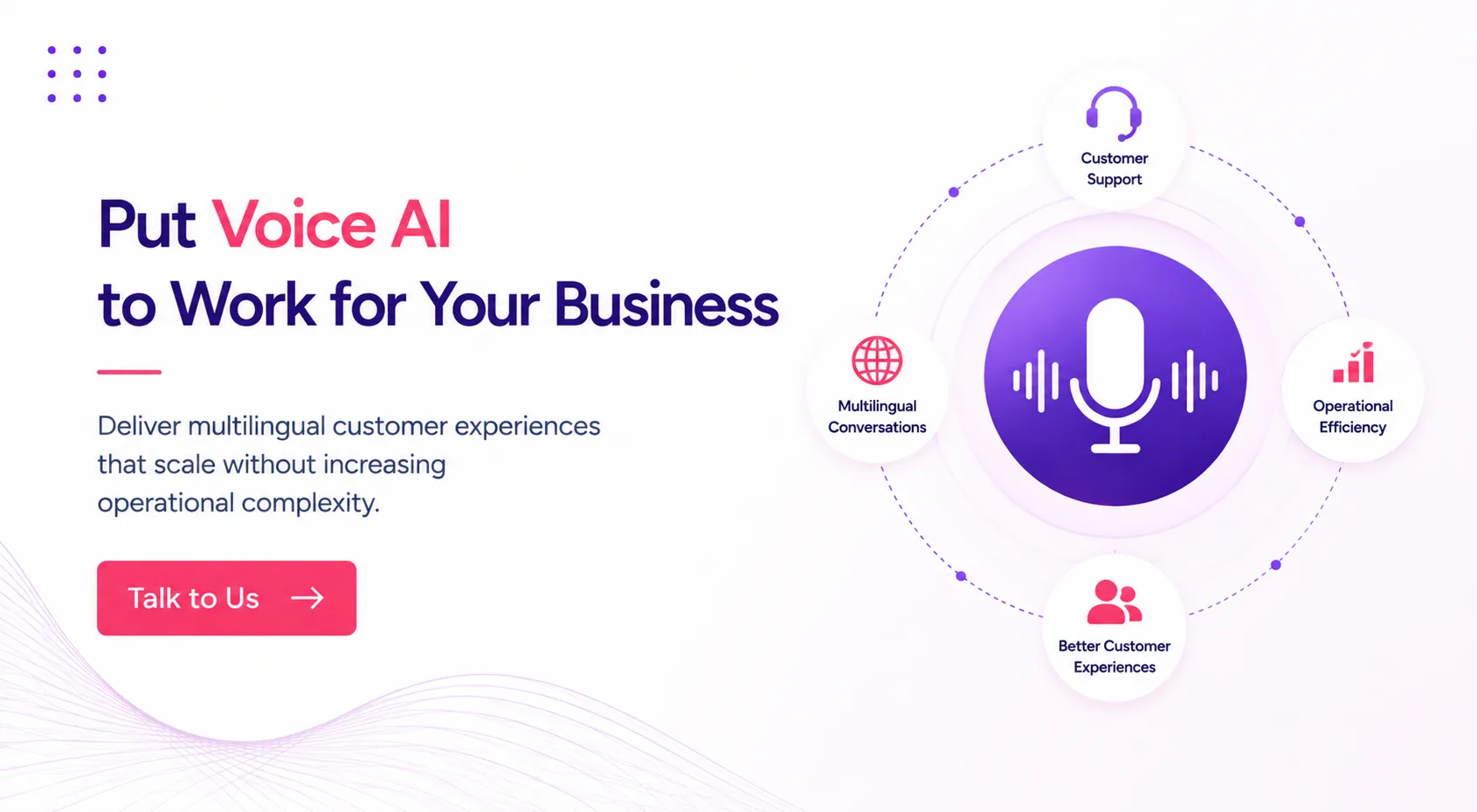
Hero banner promoting Voice AI for business, with a central purple microphone and circular icons for Support, Multilingual Conversations, Operational Efficiency, and Better Customer Experiences.

FAQs: Voice AI Agents

1. How does a soft-touch Voice AI approach differ from traditional automated collection calls?

Traditional collection calls rely on rigid, push-button IVR menus or aggressive script-reading that frustrates callers and leads to instant hang-ups. Soft-touch Voice AI uses natural language understanding to conduct fluid, human-like conversations. It listens actively, adapts its tone to the borrower’s sentiment, speaks in local dialects, and focuses on helping the customer resolve temporary payment roadblocks rather than applying confrontational pressure.

2. How do early-bucket payment reminders handled by Voice AI protect overall Net Interest Margins (NIM)?

Early-bucket reminders protect Net Interest Margins by drastically reducing the operational overhead required to recover debt. Preventing accounts from rolling into DPD 30 or DPD 60 avoids the heavy expense of manual call center scaling, field agent visits, and legal recovery notices. By automating early collection touches at a fraction of human labor costs, lending institutions lower provision expenses and preserve portfolio yield.

3. How does Rootle assist financial institutions in reducing their DPD 0–30 roll-forward rates?

Rootle lowers roll-forward rates by executing thousands of personalized outbound calls the moment an EMI payment is missed. Speaking in native regional dialects, Rootle identifies the reason for non-payment, addresses technical auto-debit issues, captures verbal Promise-to-Pay (PTP) dates, and instantly dispatches payment links via SMS or WhatsApp while keeping the caller engaged. This immediate, soft-touch intervention drives higher recovery rates before debt ages into deeper delinquency buckets.

4. Can Rootle's Voice AI engine integrate directly with core banking databases and collection platforms?

Yes. Rootle features an enterprise-grade API and Webhook infrastructure built to connect seamlessly with legacy core banking systems, loan origination software, and CRM databases. The platform pulls account ledgers dynamically before placing calls, updates PTP dates and caller sentiment live during conversations, and triggers automated secondary workflows like sending payment links without manual human intervention.

5. Why is multi-dialect regional language support vital for early debt recovery in diverse credit markets?

In credit markets, borrowers are far more likely to engage constructively when spoken to in their native tongue or local dialect. Standard English or formal Hindi notices can create confusion or defensiveness. A multi-dialect Voice AI engine processes regional accents, localized terminology, and language switching smoothly, ensuring the borrower fully understands repayment options, timeline expectations, and payment link mechanics.

Rahul Desai
Rahul Desai
Client Growth Manager

Rahul Desai is a client growth and sales professional with extensive experience driving strategic partnerships and revenue growth. At Rootle.ai, he focuses on expanding market reach, enabling enterprises to leverage multilingual voice AI for intelligent customer engagement and automated conversational experiences.

Recent Blogs

Purple 3D hero illustration with a smartphone and microphone, bank icons, and a classical building beside the slogan: 'Smarter conversations, stronger banking outcomes.'