Skip to content

How to Implement Kannada AI Voice Technology: A Complete Step-by-Step Guide

Featured Image

Executive Summary

Indian small and mid-sized businesses are losing revenue every day because of missed calls, delayed follow-ups, and under-resourced support teams. AI phone agents for Indian SMEs are changing this fast. These are voice-powered AI systems that can call candidates, handle customer queries, confirm appointments, and collect feedback, all over the phone, all without human intervention.

Implementing Kannada AI voice technology allows businesses operating across Karnataka to automate phone interactions without sacrificing local brand trust. Rather than relying on rigid English-first IVR systems or text bots, a native voice agent understands regional dialects, processes rapid code-switching, and connects directly with your enterprise database. This guide breaks down the core benefits, step-by-step implementation architecture, and operational best practices needed to deploy Voice AI successfully in Kannada.

Karnataka is the primary innovation hub of India, but operating successfully across the state requires speaking the local language. Over 44 million native speakers prefer doing business, asking questions, and resolving support issues in Kannada.

When a customer dials your support line to track a package, apply for a loan, or book a medical appointment, being greeted by a robotic English voice bot creates immediate friction. Callers drop off, support queues back up, and your operational costs climb.

Deploying native Kannada AI voice agents eliminates this bottleneck. By handling routine inbound and outbound phone conversations in natural, conversational Kannada, your organization can deliver instant support, scale call capacity, and lower cost per interaction.
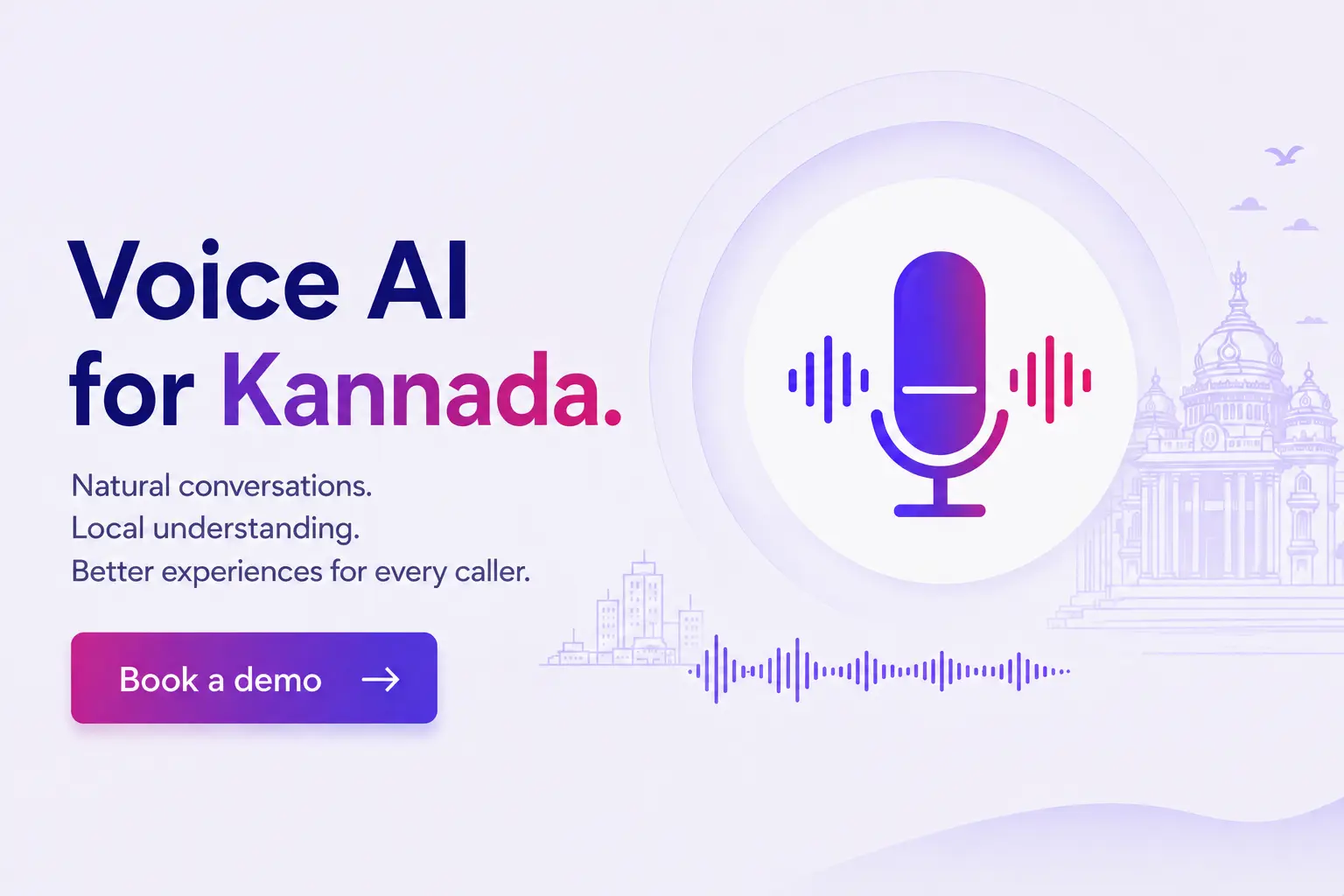
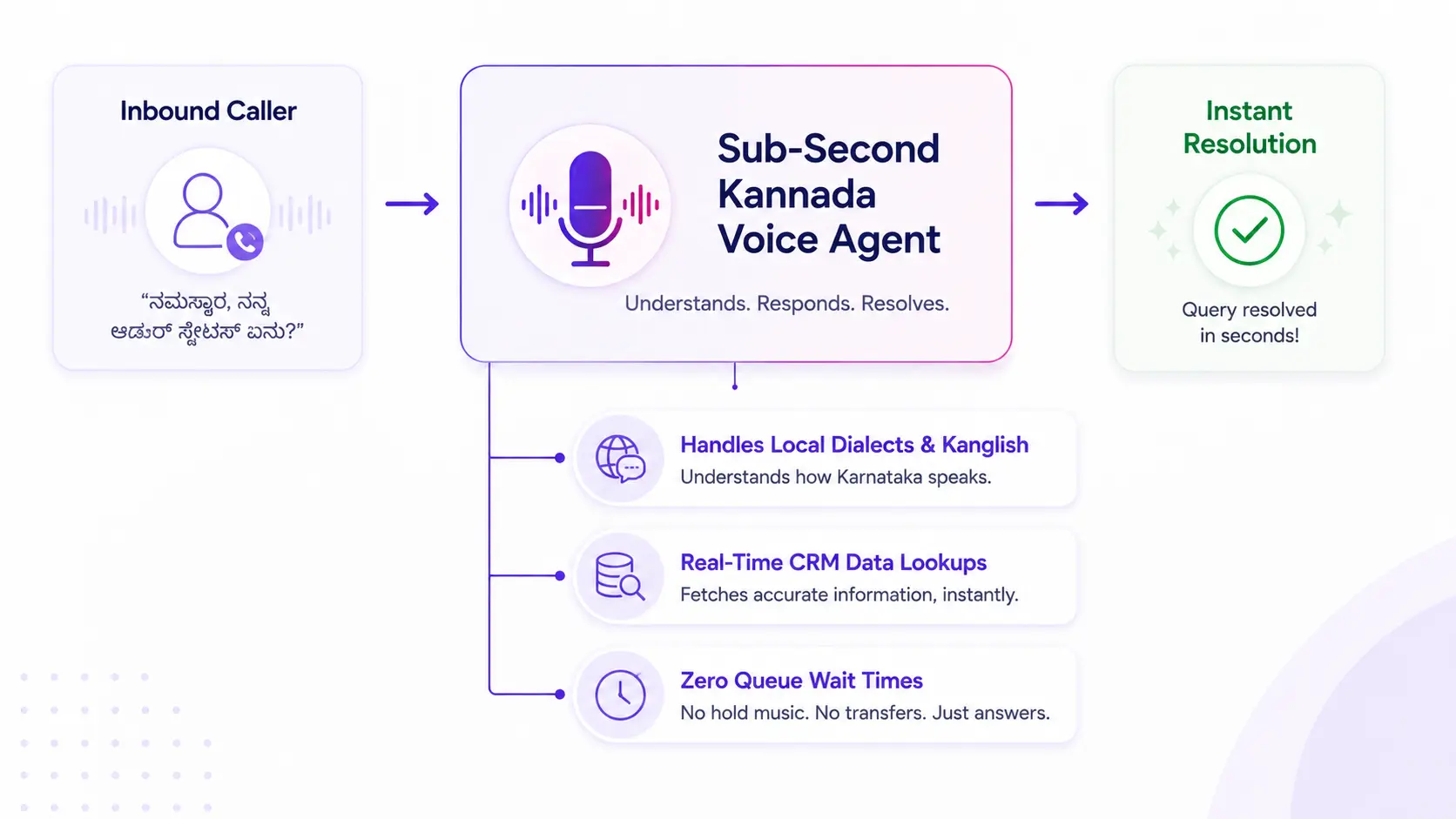
Hero banner promoting Voice AI for Kannada with a gradient microphone graphic and a 'Book a demo' button.

Why Implement Kannada Voice AI Right Now?

1. Recruitment Calls That Actually Convert

Customer service expectations have shifted rapidly. Modern consumers want immediate answers over phone calls without waiting on hold for a live agent.

Why Implement Kannada Voice AI Right Now• Overcoming Language Barriers: Expanding into Tier-2 and Tier-3 markets like Hubli, Mysuru, or Belagavi requires native language support that text interfaces cannot provide.

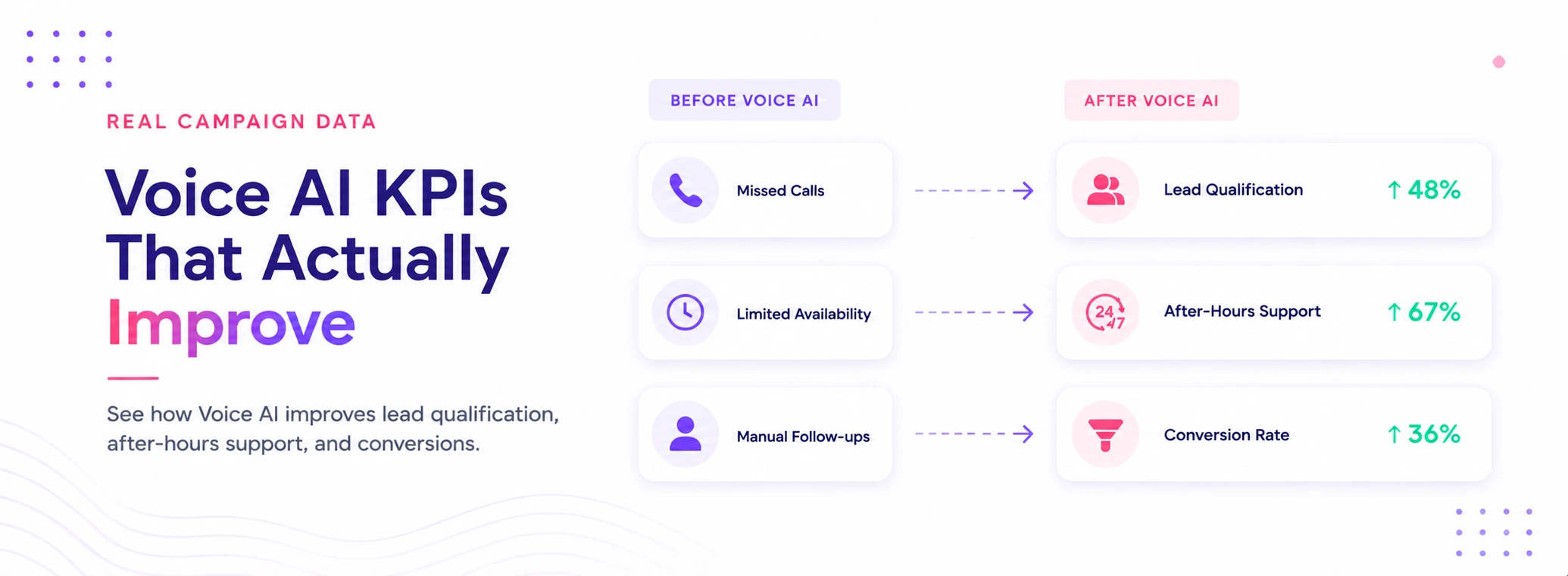
• Reducing Call Center Costs: Automating high-volume Tier-1 queries cuts manual handling costs by up to 90%.

• Eliminating Hold Times: Voice agents handle thousands of calls simultaneously, completely eliminating queue times during peak call hours.

• 24/7 Availability: Automated agents stay online around the clock to capture leads, answer questions, and log tickets after normal business hours.

Core Features Required for a Production-Grade System

Not all voice engines are built to handle regional Indian languages. When setting up a voice stack, ensure your platform handles these core technical requirements:

Advanced Acoustic Recognition

The system must parse distinct speech patterns, varying background noise levels, and low-quality cellular connections without losing accuracy.

Code-Switching (“Kanglish”) Support

In urban areas like Bengaluru, callers naturally mix Kannada and English words in a single sentence. The engine must process code-switched phrases smoothly without breaking context.

Dialect Flexibility

The underlying speech model needs training on diverse vocal samples across Karnataka, ensuring it understands urban accents, coastal inflections, and northern regional phrasing.

Natural Speech Synthesis

The output voice must sound conversational and human, using proper inflection and phrasing rather than a stiff, monotone robotic delivery.

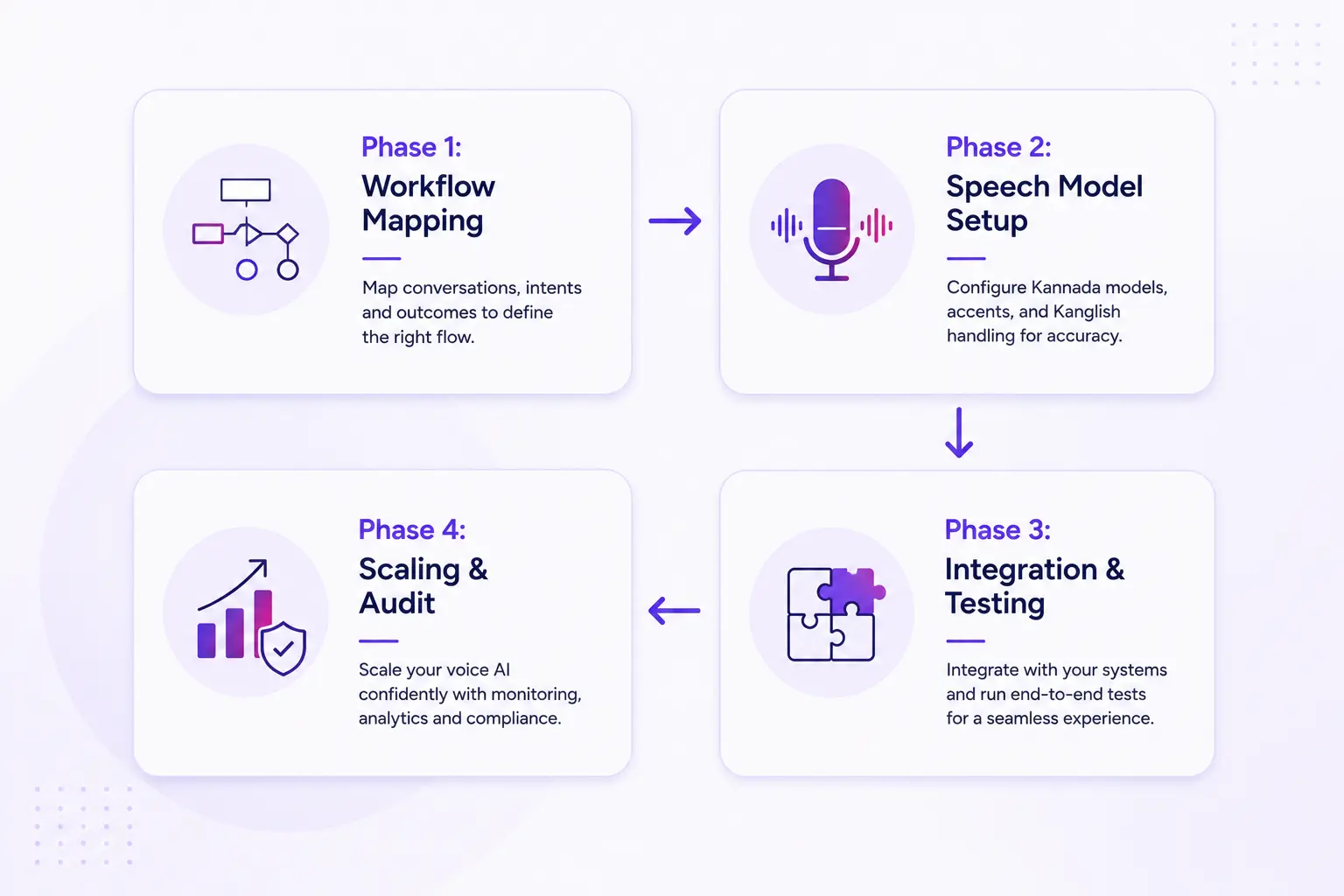
Step-by-Step Guide to Implementing Kannada Voice AI

Deploying an enterprise-grade voice solution involves a structured, multi-phase roadmap to ensure high performance and data security.

Step 1: Define Your Core Use Cases

Start by identifying repetitive, high-volume call scenarios that consume significant human support hours.

• Inbound: Order status tracking, payment confirmations, appointment bookings, and basic account inquiries.

• Outbound: Payment collection reminders, lead pre-qualification, and appointment verification calls.

Step 2: Map Conversational Dialogue Flows

Build dialogue paths that reflect how people actually speak. Avoid translating rigid English scripts word-for-word into Kannada. Incorporate common local idioms, natural greetings, and colloquial phrasing.

Step 3: Connect Telephony and Database APIs

Integrate your voice orchestrator with your cloud telephony provider (such as Exotel or Ozonetel) and your backend CRM. This allows the voice agent to fetch account details before speaking and update customer records instantly.

Step 4: Test for Sub-Second Latency

Run thorough call tests to ensure total system latency—from the moment the caller stops speaking to the moment the AI responds—remains under 800 milliseconds.

Prefer to Skip the Engineering Heavy Lifting? Go "Done-For-You" with Rootle

Building a custom, native-language voice pipeline from scratch means stitching together separate speech models, configuring low-latency servers, tuning regional dialects, and constantly debugging API connections. It requires months of dedicated engineering effort and ongoing maintenance.

You do not have to build all of this yourself.

Rootle is a fully managed, done-for-you Voice AI platform engineered specifically for enterprise operations. Instead of spending months building and testing custom architectures, Rootle handles the entire stack out of the box:

• Zero Pipeline Assembly: Pre-integrated telephony, speech recognition, and natural language understanding layers eliminate months of custom development.

• Pre-Tuned Regional Models: Native handling of Kannada dialects, urban “Kanglish,” and regional accents comes built-in from day one.

• Turnkey Enterprise Integrations: Plugs directly into your existing CRM, Loan Origination System, or contact center setup within days, not quarters.

• End-to-End Compliance & Management: Continuous latency monitoring, automatic regulatory compliance, and system updates are completely managed for you.

With Rootle, you skip the complex setup phases and go straight to deploying live, high-converting Kannada voice agents that drive immediate ROI.

How Does Voice Automation Impact Different Industries in Karnataka?

The operational benefits of voice automation extend across several key business sectors:

Banking and NBFCs

Automate initial loan pre-qualification, guide borrowers through e-KYC steps, and send automated EMI payment reminders accompanied by instant payment links.

Real Estate

Qualify property inquiries 24/7 in native Kannada, schedule site visits with local sales representatives, and dispatch location details directly via WhatsApp.

E-Commerce and Logistics

Handle delivery address updates, answer order tracking inquiries, and confirm cash-on-delivery orders before dispatching shipments.

What Key Metrics Should You Track After Deployment?

Once your system is live, monitor these four performance indicators to evaluate impact:

  1. Call Containment Rate: The percentage of incoming calls resolved entirely by the voice agent without needing human transfer.

  2. First Call Resolution (FCR): How often customer issues are resolved on the very first interaction.

  3. Average Handle Time (AHT): The speed at which queries are parsed and completed compared to manual agent calls.

  4. Customer Satisfaction Score (CSAT): Post-call feedback ratings from callers using native language support.

Achieve Business Growth with Kannada Voice Automation

Implementing Kannada AI voice technology is one of the most effective ways for enterprises to scale operations across Karnataka. By removing language barriers, cutting call center wait times, and integrating directly with core databases, native voice automation delivers immediate ROI. Choosing a platform built for regional Indian dialects ensures your business delivers fast, natural, and reliable customer experiences that drive long-term loyalty.

What Rootle Does Differently

Rootle is a voice AI platform built for enterprises that demand more than just automated dialing. While legacy systems stop at playing recordings or basic speech-to-text, Rootle acts as an intelligent extension of your workforce. By combining Agentic AI with real-time system integration, Rootle doesn’t just “talk” to your customers—it executes tasks, resolves queries, and moves the needle on your core business metrics, from DSO reduction to lead conversion.

Conversational Accuracy: Uses advanced speech processing to interpret complex, unstructured human dialogue rather than relying on rigid keypad menus or static scripts.

• Fluid Multi-Dialect Capabilities: Switches languages and regional accents instantly mid-sentence without dropping the context of the conversation.

• Direct Core System Syncing: Connects natively to enterprise CRMs to log interactions, update custom records, and trigger secondary channels dynamically.

• Rapid Ecosystem Deployment: Integrates through secure APIs using pre-configured, industry-specific compliance templates to go live within a few weeks.

FAQs: Kannada Voice AI

1. Why do off-the-shelf translation tools fail when building a Kannada voice agent?

Off-the-shelf translation tools operate on literal, word-for-word text replacement built primarily for European language structures. Spoken Kannada relies on complex agglutinative grammar, where root words change significantly based on tense, gender, and social formality. When an English-first translation tool processes spoken Kannada, it loses critical sentence context, mangles intent, and delivers unnatural responses. Building a functional voice agent requires an acoustic and language model trained natively on real spoken Indian speech data.

2. How does a voice agent handle complex calls when a customer gets frustrated or goes off-script?

A well-architected voice agent relies on real-time sentiment analysis and dialogue management layers. If a customer expresses frustration, uses unpredictable phrasing, or asks a complex question outside the agent’s configured scope, the system detects this shift immediately. Instead of looping or repeating the same prompt, the agent initiates a graceful human handoff. It transfers the live call to an available customer service representative along with a full transcript of the conversation so far, allowing the human agent to step in smoothly.

3. How does Rootle maintain sub-second response latency during live phone conversations in Kannada?

Rootle achieves sub-second latency through a streaming architecture designed to eliminate cloud processing bottlenecks. Rather than waiting for a caller to complete an entire paragraph before processing audio files, Rootle streams phonetic tokens in real time across its speech recognition, reasoning, and speech synthesis layers. This parallel processing flow cuts round-trip response lag to under 800 milliseconds, preserving the natural rhythm of human conversation.

4. Can Rootle's voice platform integrate with our existing legacy CRM and cloud contact center setup?

Yes. Rootle is designed to sit cleanly on top of your existing tech stack without requiring a total overhaul. The platform connects directly into leading cloud telephony systems, custom SIP trunks, and enterprise CRMs using secure REST APIs and webhooks. Rootle pulls caller profile data automatically before answering, updates custom fields during the conversation, and triggers secondary actions like SMS or WhatsApp alerts without manual intervention.

5. Is it difficult to update or modify conversation scripts once the AI agent is deployed?

No. Modern platforms like Rootle feature low-code visual flow builders and dynamic prompt management interfaces. Operational teams can update conversation workflows, adjust system responses, add new product vocabulary, or change call routing logic in real time without waiting for long engineering sprint cycles or rebuilding underlying models from scratch.

Dhaval Pandit
Dhaval Pandit
Chief Growth Officer

Dhaval Pandit is a seasoned SaaS growth and sales leader with over 16 years of experience scaling technology products and go-to-market teams across global markets. He currently leads strategic growth initiatives and business development at Rootle.ai, driving adoption of voice-based AI solutions across enterprise clients.

Recent Blogs

Why Gujarati Companies Prefer Local-Language Voice AI for Better Automation and Customer Experience