Skip to content

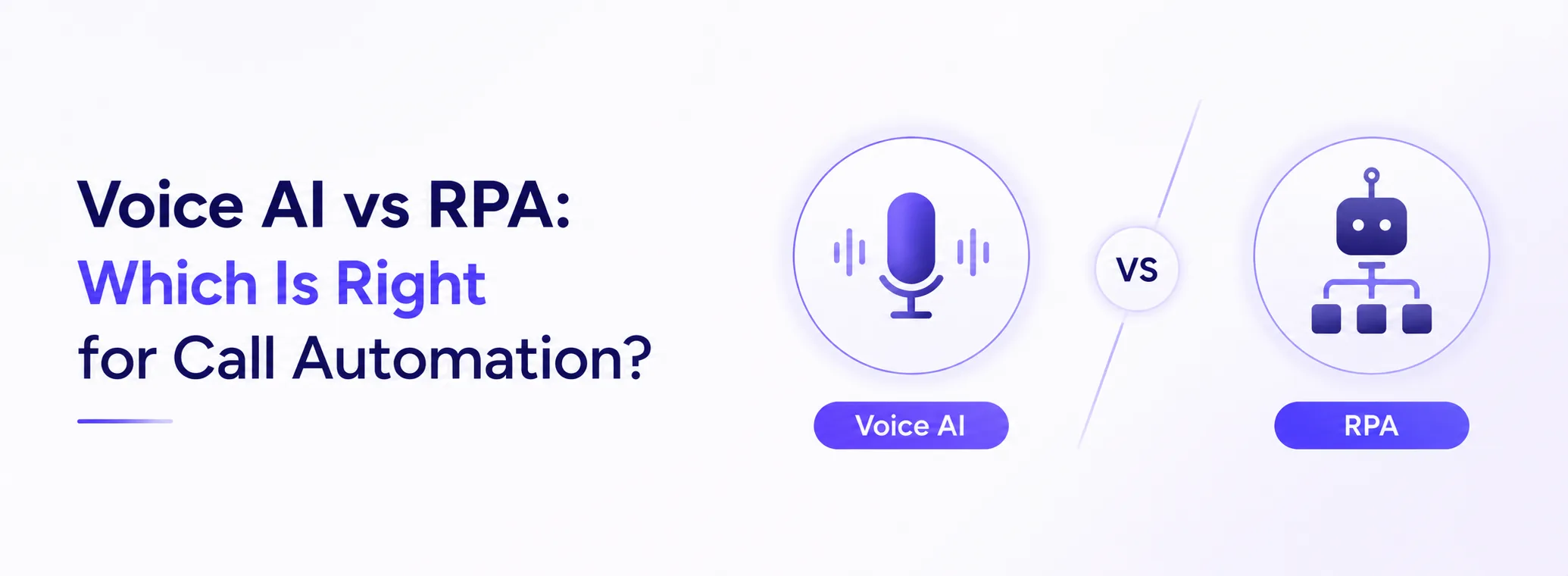
Voice AI vs RPA: Which Is Right for Call Automation?

Featured Image

Executive Summary

While both technologies drive AI automation for business, they handle entirely different parts of the contact center. Robotic Process Automation (RPA) acts as the digital hands, executing structured, back-office workflows like data entry and system updates according to strict rules. Voice AI serves as the voice and ears, leveraging natural language processing to converse directly with customers, understand context, and resolve complex inquiries in real time during live phone call automation.

The pressure on modern call centers is relentless. High call volumes, long wait times, and soaring operational costs force companies to look closely at phone call automation. When evaluating options, two technologies dominate the conversation: Voice AI and Robotic Process Automation (RPA).

Choosing between them is not about finding the “better” technology. It is about understanding what each tool is built to do. For executive leaders mapping out AI automation for business, confusing these two tools can lead to stalled deployments and frustrated customers.
Voice AI vs RPA - Demo

What is RPA in Call Automation?

Robotic Process Automation is essentially software that mimics repetitive human actions. Think of it as a highly efficient digital assistant that follows rigid, predefined rules. If you can map a task out explicitly in a flowchart—”click here, copy this field, paste it into that database”—RPA can handle it flawlessly.

In a traditional call center setup, business automation with RPA usually operates in the background. It does not speak to the customer. Instead, it supports the human agent. For instance, when a customer calls to change their billing address, an RPA bot can automatically pull data from three legacy systems, update the fields simultaneously, and log the change across every dashboard without human error. It eliminates the tedious “wrap-up” work that keeps agents tied down between calls.

What is Voice AI Call Automation?

Voice AI call automation focuses on the front-end conversation. Powered by natural language understanding (NLU) and machine learning, Voice AI can actually listen to a customer, understand their intent, context, and emotion, and respond with a natural, human-like cadence.

Unlike RPA, which breaks down the moment a process deviates from the script, AI call automation excels at handling unstructured data—like natural human speech. A customer might say, “Hey, I need to look at my bill because something seems weird this month.” A Voice AI agent understands that “something seems weird” means the customer wants a billing breakdown, and it can navigate that conversation dynamically without forcing the caller through a frustrating phone tree.

Feature
Robotic Process Automation (RPA)
Voice AI
Primary Role Back-office execution and data syncing. Front-line customer interaction and conversation.
Input Type Highly structured data (spreadsheets, fixed forms). Unstructured data (natural speech, context, tone).
Logic Strict, rule-based if/then statements. Cognitive learning and dynamic context tracking.
Customer Contact Invisible to the customer; works via agent or backend. Direct, real-time voice engagement with the caller.

Choosing the Right Approach for Your Business

Deciding where to invest depends entirely on the specific bottlenecks in your current operation.

Choose RPA if:

  • Your primary goal is reducing manual data entry and administrative errors for human agents.

  • You rely heavily on rigid legacy software systems that do not have modern APIs.

  • Your target processes are completely predictable, transactional, and follow a fixed set of rules.

Choose Voice AI if:

  • You want to achieve true end-to-end phone call automation that deflects high volumes of incoming tier-1 calls.

  • Your callers expect immediate, conversational resolutions without waiting on hold for an agent.

  • You need an automation layer that can interpret complex user intent and handle unexpected conversational turns.

The Ultimate Play: Intelligent Automation

The most sophisticated contact centers do not treat this as an either/or dilemma. They combine both technologies into a seamless ecosystem known as intelligent automation.

Imagine a customer calling to file an insurance claim. Voice AI answers the phone, greets the customer warmly, asks context-aware questions, and gathers the incident details. Once the conversation ends, the Voice AI agent triggers an RPA bot in the background to log into the legacy claims portal, upload the transcription, generate a policy folder, and dispatch a confirmation email to the client. Voice AI acts as the brains and the voice, while RPA serves as the hands, executing the backend checklist.

Rootle is a voice AI platform built for enterprises that demand more than just automated dialing. While legacy systems stop at playing recordings or basic speech-to-text, Rootle acts as an intelligent extension of your workforce. By combining Agentic AI with real-time system integration, Rootle doesn’t just “talk” to your customers—it executes tasks, resolves queries, and moves the needle on your core business metrics, from DSO reduction to lead conversion.

Conversational Accuracy: Uses advanced speech processing to interpret complex, unstructured human dialogue rather than relying on rigid keypad menus or static scripts.

Fluid Multi-Dialect Capabilities: Switches languages and regional accents instantly mid-sentence without dropping the context of the conversation.

Direct Core System Syncing: Connects natively to enterprise CRMs to log interactions, update custom records, and trigger secondary channels dynamically.

Rapid Ecosystem Deployment: Integrates through secure APIs using pre-configured, industry-specific compliance templates to go live within a few weeks.

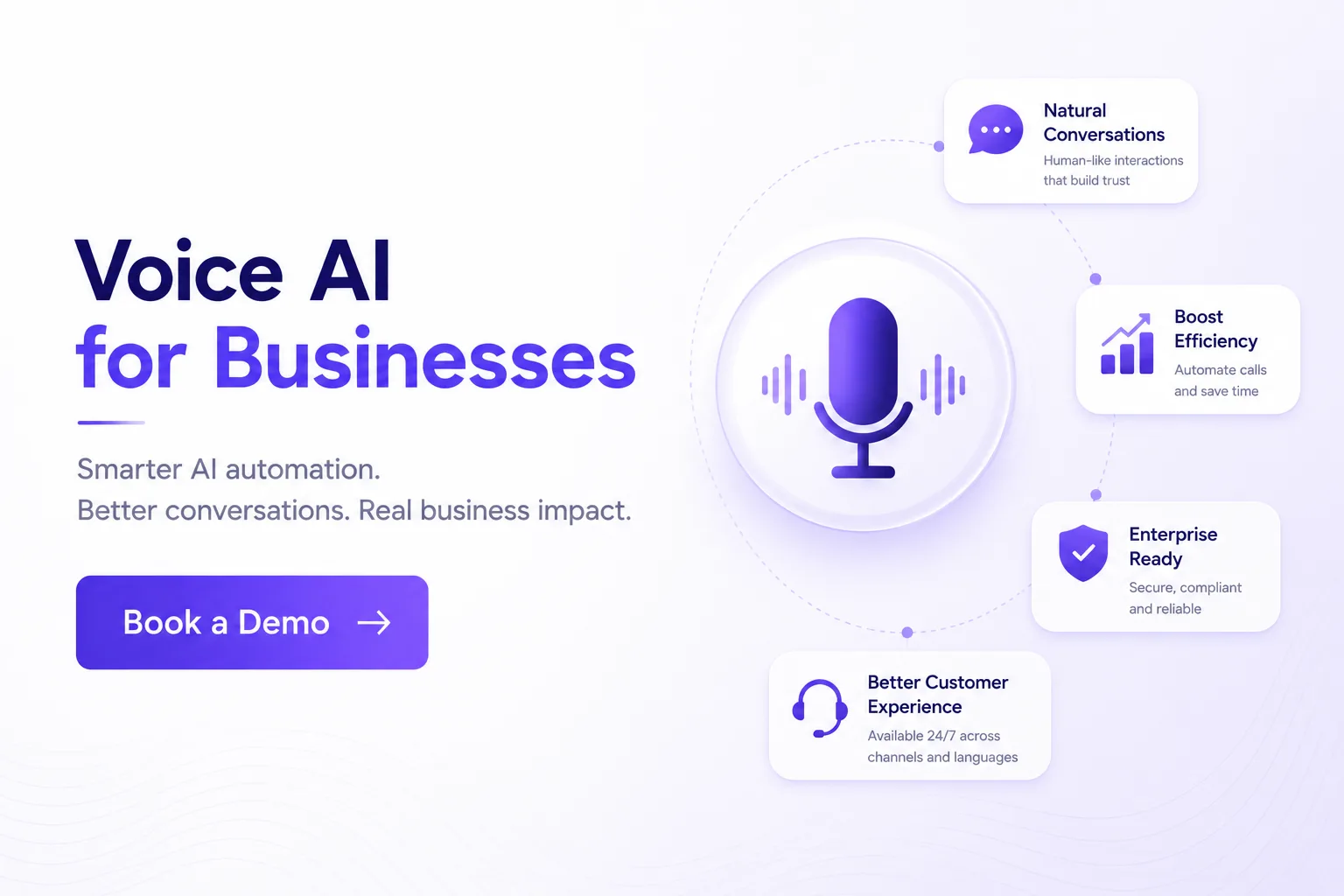
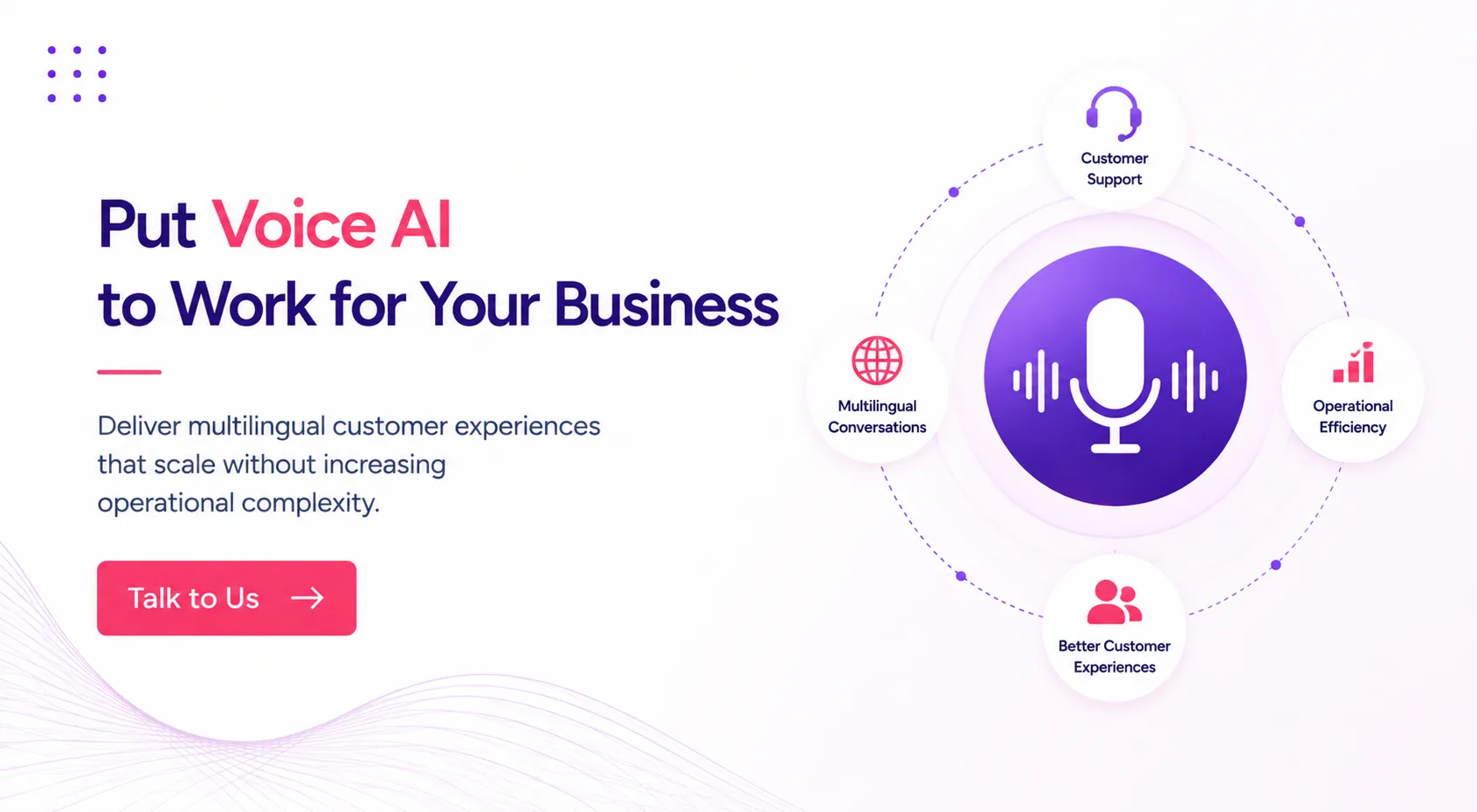
Hero banner promoting Voice AI for business, with a central purple microphone and circular icons for Support, Multilingual Conversations, Operational Efficiency, and Better Customer Experiences.

FAQs: RPA vs Voice AI

Q1. Can RPA handle complex, unpredictable customer service situations over the phone?

No. RPA is fundamentally incapable of managing conversational nuance or unpredictable human behavior. It requires structured inputs and strict operational boundaries. If a caller changes their mind mid-sentence, interrupts the system, or uses colloquial language, a standard RPA script will stall because it cannot interpret context or intent. It is best kept in the background handling predictable data pipelines.

Q2. How long does it typically take to deploy Voice AI compared to an RPA framework?

RPA deployments often scale relatively quickly if they are mapped to simple, unchanging user interfaces, but they can become brittle and time-consuming if underlying legacy enterprise applications receive unexpected software updates. Voice AI deployment times vary based on integration complexity. Modern, cloud-ready conversational AI solutions can plug directly into existing telephony infrastructure via SIP trunking within weeks, allowing businesses to map conversational workflows and train the system on proprietary data faster than old-school on-premises software overhauls.

Q3. What makes Rootle unique compared to traditional AI call automation platforms?

Rootle is built from the ground up to eliminate the rigid, robotic feel of legacy voice systems. By leveraging advanced generative capabilities alongside precise enterprise control, Rootle creates voice experiences that feel entirely natural to the caller. It doesn’t just read scripts; it understands intent, manages interruptions gracefully, and interfaces directly with your business systems to resolve customer issues on the spot, rather than simply routing the call elsewhere.

Q4. How does Rootle integrate with existing CRM and back-office tools?

Rootle features a highly flexible integration architecture designed to connect seamlessly with modern CRMs, helpdesks, and custom databases via secure APIs. For organizations utilizing hybrid environments, Rootle can act as the intelligent front-end interface that captures conversational data, structures it cleanly, and passes it directly to your existing systems or downstream automated workflows without disrupting your established operational stack.

Q5. Does implementing AI automation mean replacing human call center agents entirely?

Not at all. True automation is about optimization, not total replacement. By utilizing Voice AI to manage repetitive, high-volume tier-1 inquiries—like tracking orders, resetting passwords, or confirming appointments—you clear the queues for your human staff. This allows human agents to focus their energy on high-value, emotionally complex customer situations that require empathy, critical thinking, and nuanced negotiation.

Jugal Bhavsar
Jugal Bhavsar
Chief Technology Officer

Jugal Bhavsar possesses a deep expertise in data science, analytics, and AI-driven product engineering. He leads the development of robust voice AI systems that power intelligent, conversational automation and enhance enterprise customer and candidate engagement.

Recent Blogs

Hindi voice AI Support and Boosts Efficiency
Voice ai for e-commerce