Skip to content

AI Customer Support for India: How Rootle Resolved 82% of Tier-1 Tickets Without a Human

Featured Image

Executive Summary

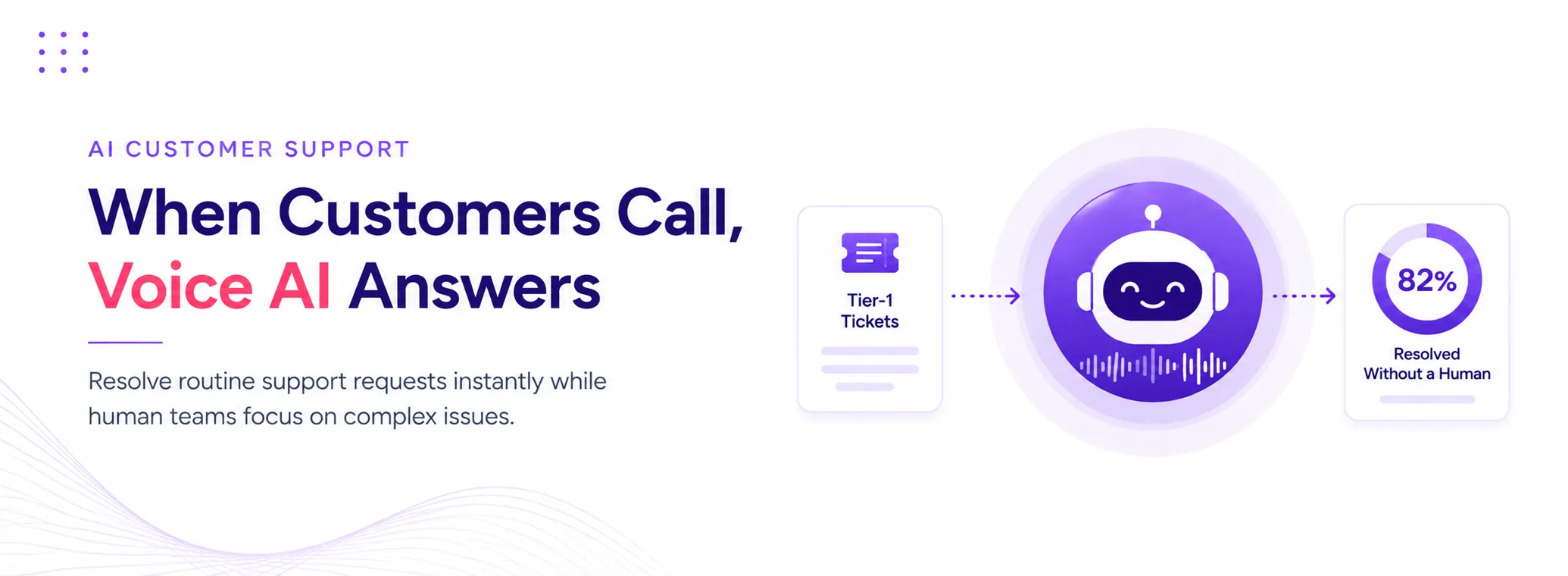
Customer support operations across India handle massive call spikes, complex multi-dialect conversations, and high agent turnover. Traditional support layers create long hold queues that damage customer satisfaction. By implementing an intelligent voice platform, a fast-growing brand managed to autonomously resolve 82% of its routine Tier-1 tickets, including delivery tracking, order modifications, and billing failures. Operating across English and Hinglish, the platform reduced customer wait times to zero, achieved an 87% first-call resolution rate, and allowed the human support team to focus entirely on critical, high-value escalations.

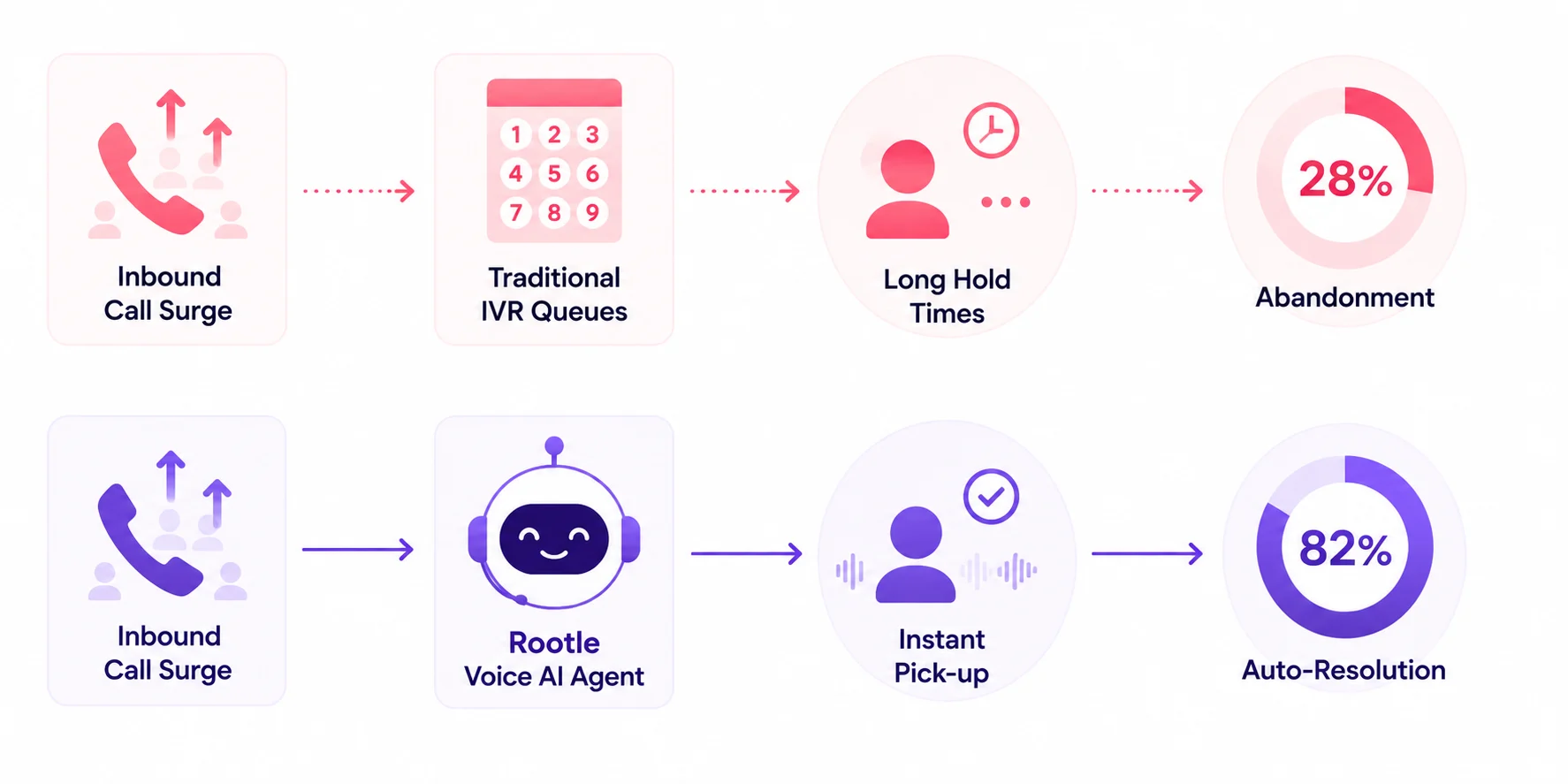
If you run a customer support desk in India, you are well aware of the unpredictable morning rush. A single delayed logistics truck, a momentary payment gateway issue, or a flash sale can cause a sudden wave of inbound calls. Within minutes, your wait times jump to fifteen minutes, hold music loops endlessly, and your customer abandonment rates climb.
Inbound call surge

For most companies, the knee-jerk reaction is to hire more customer support representatives. Yet, adding headcount is a temporary fix for a structural problem. Most incoming inquiries are repetitive Tier-1 issues, such as users asking where their delivery is, verifying a payment, or recovering a password.

By passing these routine calls to a conversational voice engine, enterprises are discovering they can clear out their queues entirely. Let us look at how an intelligent voice platform transformed a messy inbound bottleneck into a smooth, automated support operation that handles hundreds of daily calls without human intervention.
The Breakdown of Traditional Indian Support Desk Operations

Before deploying automation, the target brand faced a common challenge in the local market: managing high call volumes during peak evening hours without driving operational costs through the roof. The numbers revealed a clear efficiency problem.

Metric Evaluated Before Rootle Deployment After Rootle Deployment Realized Operational Change
Agrees to pay in full Processes payment or sends secure link
Call Connect Rate 72% 99% +27% Improvement
First Call Resolution (FCR) 61% 87% +43% Efficiency Gain
Average Customer Wait Time 10 minutes 0 minutes Queue Backlog Eliminated
Autonomous Resolution Rate 0% 82% New Core Automation Capability
Call Abandonment Rate 28% 3% 89% Total Reduction

When nearly a third of your customers hang up the phone out of sheer frustration, your support desk becomes a major churn risk. Human agents spend most of their shifts answering the exact same tracking questions, leaving them emotionally drained and unable to spend quality time on complex customer complaints.

Real-Time Integration with the Existing E-Commerce Stack

The primary reason legacy automated voice responses fail is that they operate as isolated systems. They force users to listen to generic menu options and can only offer canned, unhelpful answers.

Real-Time Integration with the Existing E-Commerce Stack

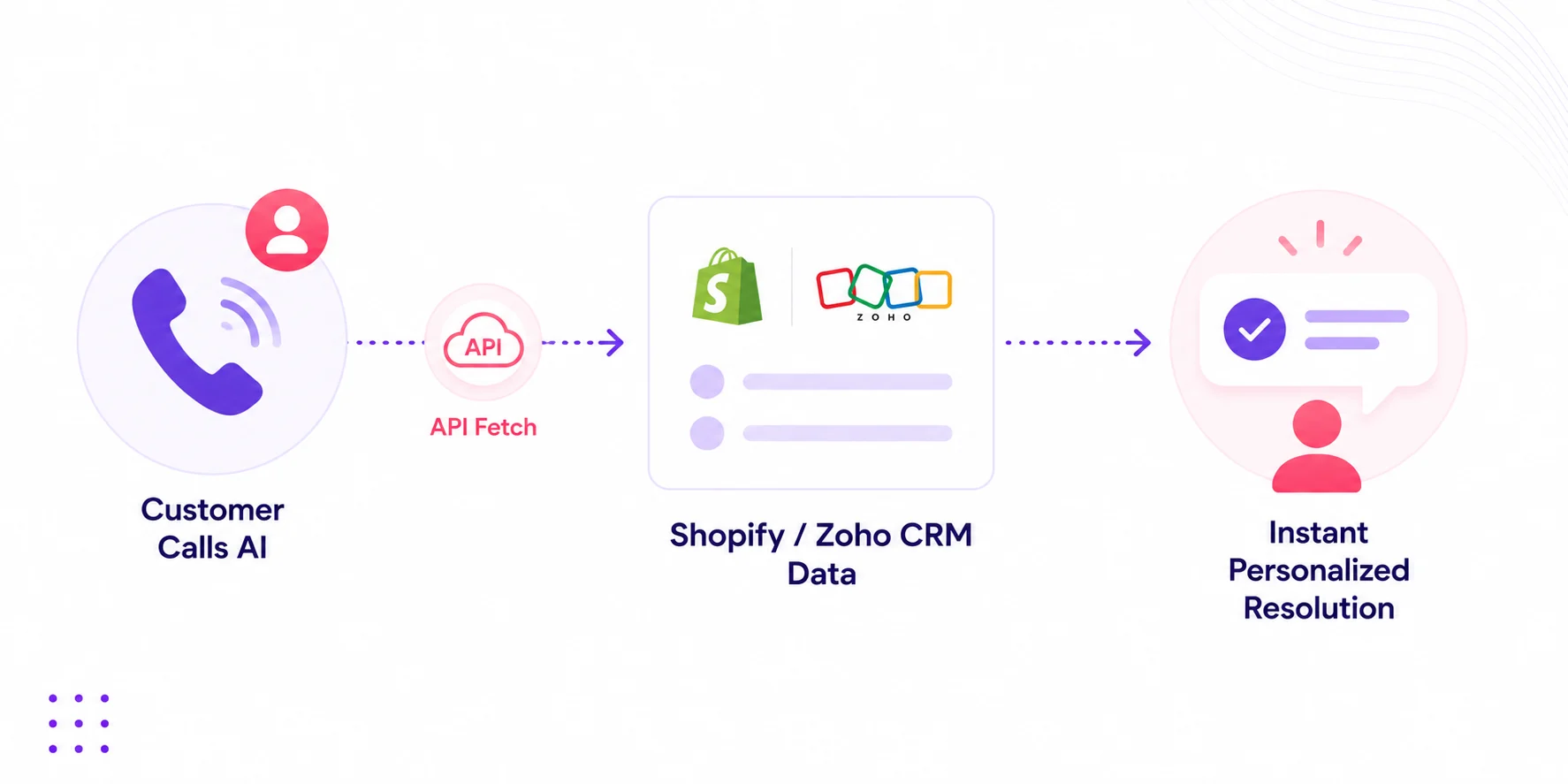
The conversational voice engine overcomes this by integrating directly with core corporate databases, tracking tools, and e-commerce infrastructure through secure APIs. The second a customer dials in, the platform looks up their active phone number across Shopify, Shipway, or Zoho Desk.

Instead of asking the user to type in a 14-digit tracking number on their keypad, the voice agent opens the call with personal context. It can say, “Namaste Amit, I see your order for the leather boots is currently out for delivery with Delhivery and should reach you by 6 PM today. Would you like me to send the tracking link to your WhatsApp?” This integration removes friction, answers the query in under twenty seconds, and updates the support desk ticket automatically.

Overcoming the Linguistic Challenge: Mastering English and Hinglish

An multilingual AI support system built for the Indian consumer base must handle the messy reality of everyday conversation. People rarely speak in textbook English or pure Hindi when calling a support line. They jump back and forth between dialects, use regional slang, and combine words into what is widely known as Hinglish.

Advanced voice platforms are engineered with multi-dialect processing that recognizes these conversational shifts on the fly. If a user starts a sentence in English but naturally switches to Hindi to explain an delivery problem, the AI adapts instantly. It tracks the core intent across the language switch without dropping the context, pausing awkwardly, or forcing the user back to an artificial, stiff script. This conversational fluidity makes the interaction feel like speaking with a helpful local agent, which builds user trust.

Automating High-Volume Tier-1 Ticket Workflows

By mapping out the customer journey, the brand identified that four main query categories caused over 80% of their total support backlog. The voice agent was trained to handle these specific repetitive workflows end-to-end:

• Order Status and Logistics Tracking: Pulling live location data directly from delivery partners to provide immediate updates.

• Failed Payment and Recharge Resolution: Checking payment gateway states to confirm if money was deducted safely or if a recharge needs a system retry.

• Return Eligibility and Exchanges: Evaluating automated return policies based on delivery dates and initiating reverse pickups on the spot.

• Account Access and OTP Support: Walking users through quick login verifications and sending recovery links via instant SMS channels.

By automating these specific tasks, the system closed out 82% of inbound tickets on the first call. The tickets were marked as resolved, filed in the CRM, and archived without a human agent ever having to click a button or type a summary.

Smart Escalations with Intact Context

Automation is not about trying to replace human empathy; it is about protecting it. There will always be a segment of your customer base—roughly 18% in this case study—that requires human judgment. These include angry users, complex billing disputes, or unique edge cases that fall outside standard operating procedures.

The Golden Rule of AI Handoff: Never make an escalated customer repeat their problem to a live representative.

When the voice agent recognizes high frustration or a complex problem, it handles the transfer smoothly. It does not just drop the call into a random human queue. It passes the complete conversation transcript, verified identity, and an active intent summary straight to the available agent’s dashboard. When the human team member picks up the phone, they can skip the boring data-collection phase and say, “Hi Sneha, I see you are calling about the billing error on your morning invoice. Let me fix that for you right now.”

Uncapped Operational Scalability Without Proportional Cost

Manual call center operations carry high fixed costs, tied directly to office real estate, equipment, and training expenses. When your business scales from 500 calls to 5,000 calls during a festival holiday sale, your options are either to watch your queue times balloon or to pay massive overtime fees to your staff.

An enterprise voice engine shifts these unit economics completely. It acts as an elastic support tier that scales up or down instantly based on real-time traffic demand. The cost per resolved ticket drops significantly because the system can handle hundreds of parallel conversations without breaking a sweat. This elasticity allows brands to run aggressive marketing campaigns knowing their support backend can handle any level of inbound interest.

Human Teams Focusing on Higher-Value Work

When you remove the burden of repetitive tier-1 questions from your human staff, the entire energy of your customer experience operation changes. Instead of acting like machines reading from a script, your support representatives can focus on what humans do best: building genuine relationships, showing real empathy, and solving nuanced problems.

Our metrics showed that after deploying the voice platform, human agent productivity jumped three-fold. Employee turnover rates fell because staff were no longer burnt out by repetitive tasks, and overall customer satisfaction metrics rose by 23%. Support stops being an expensive cost center and turns into a clear competitive advantage that drives repeat business.

Conclusion: Setting a New Speed Standard for Indian Support Operations

Running a modern enterprise in India means meeting the high expectations of digital-first consumers who value speed above almost everything else. Leaving a customer stuck on a ten-minute hold queue is no longer acceptable. Implementing an intelligent voice platform allows brands to eliminate wait times entirely, resolve routine tier-1 inquiries in seconds, and keep their CRM data clean and structured. By automating the repetitive aspects of inbound support, you deliver a faster consumer experience while freeing your human team to focus on meaningful interactions. The businesses that embrace real-time conversational voice tools will establish the new benchmark for customer loyalty.

Where Rootle Fits In: Multilingual Voice AI

Rootle is a voice AI platform built for enterprises that demand more than just automated dialing. While legacy systems stop at playing recordings or basic speech-to-text, Rootle acts as an intelligent extension of your workforce. By combining Agentic AI with real-time system integration, Rootle doesn’t just “talk” to your customers—it executes tasks, resolves queries, and moves the needle on your core business metrics, from DSO reduction to lead conversion.

Conversational Accuracy: Uses advanced speech processing to interpret complex, unstructured human dialogue rather than relying on rigid keypad menus or static scripts.

Fluid Multi-Dialect Capabilities: Switches languages and regional accents instantly mid-sentence without dropping the context of the conversation.

Direct Core System Syncing: Connects natively to enterprise CRMs to log interactions, update custom records, and trigger secondary channels dynamically.

Rapid Ecosystem Deployment: Integrates through secure APIs using pre-configured, industry-specific compliance templates to go live within a few weeks.

FAQs: AI in Customer Support

1. How does a voice AI agent handle background noise, which is common when Indian consumers call from busy streets or public transport?

Indian customer service lines regularly contend with severe background noise, including traffic honking, market chatter, or loud environments. Enterprise-grade voice engines use specialized audio filtering layers and advanced noise-cancellation algorithms to isolate the speaker’s voice.

The system focuses specifically on the spoken frequencies, ignoring peripheral environment sounds. Furthermore, the natural language understanding layer is trained on real-world audio datasets, allowing it to accurately extract customer intent even if a few words are muffled or interrupted by outside noise.

2. Can the voice platform distinguish between different Indian accents when customers speak English?

Yes, this is one of the foundational design features of a truly localized voice engine. English spoken across different regions of India carries distinct accents, vowel lengths, and intonational rhythms.

Rather than relying on generic global models trained on western speech patterns, specialized engines like Rootle are trained on local acoustic datasets. The system maps phonetic variations accurately across various states, ensuring it understands the speaker perfectly whether they are calling from Mumbai, Chennai, or New Delhi.

3. How does Rootle protect sensitive customer data like bank account numbers or corporate credentials during an automated call?

Data security is a non-negotiable requirement for enterprise support stacks. The platform implements end-to-end encryption for all active call streams and pairs this with automated data redaction tools.

When a customer speaks a sensitive credential, such as a bank account number or personal identifier, the system processes the value in real time to fetch the CRM record but masks it in the text transcripts and logs. This ensures that personal customer data is never saved in plain text, maintaining full compliance with India’s Digital Personal Data Protection (DPDP) Act and central banking guidelines.

4. What happens if a customer speaks over the voice agent while it is explaining a policy or delivery update?

Traditional automated response systems are rigid, forcing users to sit through an entire audio prompt before accepting input. Rootle features real-time barge-in logic, meaning it listens actively even while it is speaking.

If a user interrupts mid-sentence to say, “No, wait, I changed my mind, look at my other order instead,” the voice agent stops speaking instantly. It processes the new user input, adjusts its direction, and responds to the change without losing the thread of the interaction.

5. What kind of engineering overhead is required to update call flows when our business policies change?

One of the main benefits of a modern voice platform is its ease of maintenance. You do not need a team of data scientists or custom code to update your support rules.

The platform uses industry-specific conversation templates managed through an intuitive graphical dashboard. If your company updates its package return policy from 15 days to 7 days, or introduces a new delivery partner, your operations lead can adjust that rule within the workflow settings. The update rolls out across all active voice agents instantly.

Rahul Desai
Rahul Desai
Client Growth Manager

Rahul Desai is a client growth and sales professional with extensive experience driving strategic partnerships and revenue growth. At Rootle.ai, he focuses on expanding market reach, enabling enterprises to leverage multilingual voice AI for intelligent customer engagement and automated conversational experiences.

Recent Blogs

Voice AI for customer support
Voice AI Manages High-Volume Orders, Returns, and Customer Support for D2C Growth