Skip to content

The Do’s and Don’ts of Outbound Voice AI Calling

Featured Image

Executive Summary

To combat India’s high (30–40%) call center attrition and prevent enterprise knowledge loss, brands are turning to call center automation. However, scaling voice AI for outbound calling requires strict adherence to specific operational rules:

  • The Do’s: Engage in localized regional languages (like “Hinglish”), call warm leads within 2–5 minutes, maintain persistent customer context across channels, and ensure seamless, warm handoffs to human agents.

  • The Don’ts: Never bypass TRAI compliance and DND registries, avoid rigid, high-latency robotic scripts, and never let customer conversation data sit siloed outside your CRM.

The landscape of outbound calling in India is undergoing a massive shift. In high-growth sectors, customer support and sales teams face a brutal structural problem: high workforce churn (often around 30–40% annually) leading to severe enterprise knowledge loss. Every time a representative leaves, the context of previous customer conversations vanishes with them.

To combat this, forward-thinking organizations are shifting toward call center automation. Using outbound voice AI allows businesses to scale their outreach, qualify leads within minutes, and execute workflows seamlessly.

However, because an outbound call is inherently disruptive—you are interrupting someone’s day—the room for error is zero. If your voice AI for outbound calling sounds mechanical or fails to respect compliance, your customer will hang up in the first five seconds.

To ensure your voice AI for call center strategy succeeds, follow this ultimate checklist of Do’s and Don’ts.
Voice AI vs IVR Free demo

The Do’s of Outbound Voice AI Calling

1. DO Engage in Local Languages and Native Dialects

India’s linguistic diversity means a one-size-fits-all approach fails. If your outbound voice AI defaults to rigid English or bookish Hindi, it won’t build trust.

  • The Strategy: Deploy an AI agent that automatically detects spoken languages and shifts dynamically to regional languages like Gujarati, Tamil, Bengali, or colloquial “Hinglish”. This localized touch instantly improves connection and response rates.

2. DO Prioritize Speed-to-Lead Automation

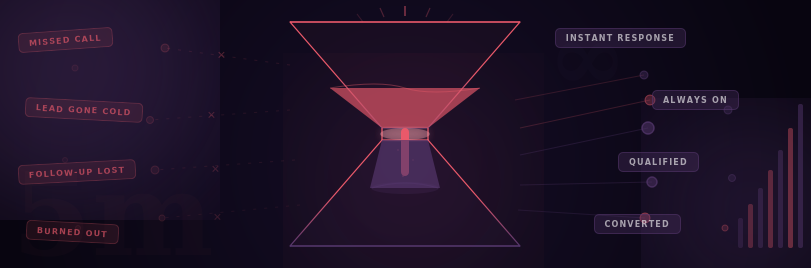
Leads go cold incredibly fast. In high-volume digital campaigns, waiting hours to call a form-submission means missing the window of peak interest.

  • The Strategy: Set up automated triggers. The moment a prospect drops an enquiry or abandons a cart, your voice AI should initiate an outbound call within 2 to 5 minutes.

3. DO Maintain "Institutional Memory" Across the Lifecycle

Don’t treat each outbound call as an isolated event. If a customer has already interacted with your brand on WhatsApp or spoke to an agent last week, the AI must know that history.

  • The Strategy: Use voice AI platform like Rootle that embeds a persistent, continuous customer context layer. The AI should remember prior conversation details, sentiment context, and specific requirements to make the outbound experience feel connected and personalized.

4. DO Enable Seamless Human Handoffs

Voice AI excels at handling the high-volume middle stage of the funnel (such as basic qualification, scheduling, or payment reminders). But when a customer presents a highly complex query or asks to speak with a manager, the system must adapt.

  • The Strategy: Ensure your platform executes a warm transfer to a human rep, instantly syncing a full context summary, intent score, and language preference to your CRM so the human doesn’t ask the customer to repeat themselves.

The Don’ts of Outbound Voice AI Calling

1. DON’T Ignore TRAI Regulations and Compliance

Outbound calling in India is governed by strict regulations, including TRAI commercial calling rules, DLT registration mandates, and the Digital Personal Data Protection (DPDP) Act. Ignoring these will result in heavy penalties and blacklisted numbers.

  • The Pitfall: Batching numbers blindly without checking the DND (Do Not Disturb) registry, or using unverified phone series for promotional outreach.

2. DON’T Sound Like an Interactive Voice Response (IVR) System

Traditional IVR systems (“Press 1 for Sales, Press 2 for Support”) are widely disliked by consumers. If your outbound voice agent sounds like a robotic script reader, engagement will plummet.

  • The Pitfall: Forcing consumers into rigid, linear conversation paths. Your voice AI must use advanced Natural Language Understanding (NLU) to process natural interjections, casual objections, and sudden questions gracefully.

3. DON’T Allow High Latency in Conversations

A lag of even a second between a customer finishing their sentence and the AI responding ruins the illusion of a natural call. It alerts the user that they are speaking to a machine, causing them to disengage.

  • The Pitfall: Utilizing slow, unoptimized text-to-speech (TTS) and speech-to-text (STT) data pipelines that cause awkward, artificial silences.

4. DON’T Keep Your Data in Silos

An automated outbound call loses value if the information gathered isn’t immediately actionable.

  • The Pitfall: Allowing your voice bot to collect details on budget, timeline, and requirements, only to leave that data sitting inside a isolated log file. It must instantly update your primary systems (HubSpoot, Salesforce, Zoho, etc.) so your sales engine moves in real-time.

Where Rootle Fits In: Multilingual Voice AI Agents for D2C

Rootle is a voice AI platform built for enterprises that demand more than just automated dialing. While legacy systems stop at playing recordings or basic speech-to-text, Rootle acts as an intelligent extension of your workforce. By combining Agentic AI with real-time system integration, Rootle doesn’t just “talk” to your customers—it executes tasks, resolves queries, and moves the needle on your core business metrics, from DSO reduction to lead conversion.

Multilingual Voice AI for Indian languages: Rootle supports Hindi, Tamil, Gujarati, Marathi, Bengali, Hinglish, and more — with auto language detection that does not require the caller to select a language before speaking. The platform is trained on Indian accents, regional phonetics, and code-mixed speech patterns.

✅ Institutional Memory layer: Rootle captures, structures, and continuously learns from every voice interaction — spanning lead qualification, onboarding, support resolution, and renewals. Customer context, sentiment history, and prior commitments are preserved independent of the human agents who handled previous calls.

✅ End-to-end customer journey automation: Rootle is not a routing tool. It is a resolution platform — integrated with CRMs, OMS systems, and logistics APIs to resolve post-purchase queries, qualify inbound leads, and manage renewals without human intervention on routine interactions.

✅ Built for high-attrition, high-growth markets: In a market where customer support attrition runs at 30–40% annually, Rootle’s institutional memory infrastructure ensures that what your team knows about each customer does not walk out the door with them.

✅ Scalable without headcount growth: A single Rootle deployment handles unlimited concurrent calls at consistent quality — covering peak-season volume spikes, regional language diversity, and 24/7 availability without proportional staffing increases.

Voice AI compliance BFSI - Free 100 calls

FAQs: Outbound Voice AI Calling

1. What is outbound voice AI, and how does it work in a call center?

Outbound voice AI refers to software platforms that deploy intelligent, automated voice agents to initiate outbound telephone calls on behalf of a business. Unlike old-school robocalls, modern voice AI utilizes advanced Speech-to-Text (STT), Natural Language Understanding (NLU), and Text-to-Speech (TTS) pipelines to engage in real-time, fluid, two-way conversations that mimic human behavior.

2. How does automating call center operations improve sales conversion rates?

Automating call center operations with voice AI removes human delays from the outreach funnel. It allows businesses to achieve an instant “speed-to-lead” response, contacting prospects within minutes of a form submission or enquiry. By filtering out dead numbers, handling initial qualification logic, and passing only high-intent, warm leads to human reps, conversion rates frequently jump by over 50%.

3. Is outbound voice AI calling legal in India under TRAI guidelines?

Yes, but it requires strict compliance. Outbound campaigns must be registered through DLT platforms, filter numbers against the national Do Not Disturb (DND) registry, adhere to specific permissible calling windows during the day, and use correct telecommunication series (such as the 1600-series for transactional or service calls).

Read this blog to understand this aspect better: Everything you Need to Know About Outbound Cold Calling in India

4. What makes Rootle AI different from standard outbound dialers or basic voice bots?

Rootle AI stands apart by offering India’s first Institutional Memory Voice AI platform. While basic bots treat every call as a blank slate, Rootle builds a continuous, persistent memory layer across all customer touchpoints (Voice, WhatsApp, RCS). It retains context, prior interaction history, and customer sentiment, completely mitigating the risk of enterprise knowledge loss caused by high call center staff turnover.

5. Which Indian regional languages does Rootle AI support for outbound campaigns?

Rootle AI is natively engineered for the linguistic diversity of the Indian market. It supports over 20 Indian languages and localized dialects—including Hindi, Gujarati, Tamil, Telugu, Malayalam, and Bengali—along with fluent comprehension of colloquial mixtures like “Hinglish,” allowing enterprises to build immediate trust across varied demographics.

Rahul Desai
Rahul Desai
Client Growth Manager

Rahul Desai is a client growth and sales professional with extensive experience driving strategic partnerships and revenue growth. At Rootle.ai, he focuses on expanding market reach, enabling enterprises to leverage multilingual voice AI for intelligent customer engagement and automated conversational experiences.

Recent Blogs

Futuristic control room with pink neon data streams and circular ceiling lights illustrating IT network metrics like Latency, CRM Sync, and Scheduling on holographic panels.
Voice AI for payment reminders
No code voice ai for enterprise
Split-screen comparison of Inbound and Outbound Voice AI with a central VS and feature pills on each side (Support, Queries vs Reminders, Campaigns).