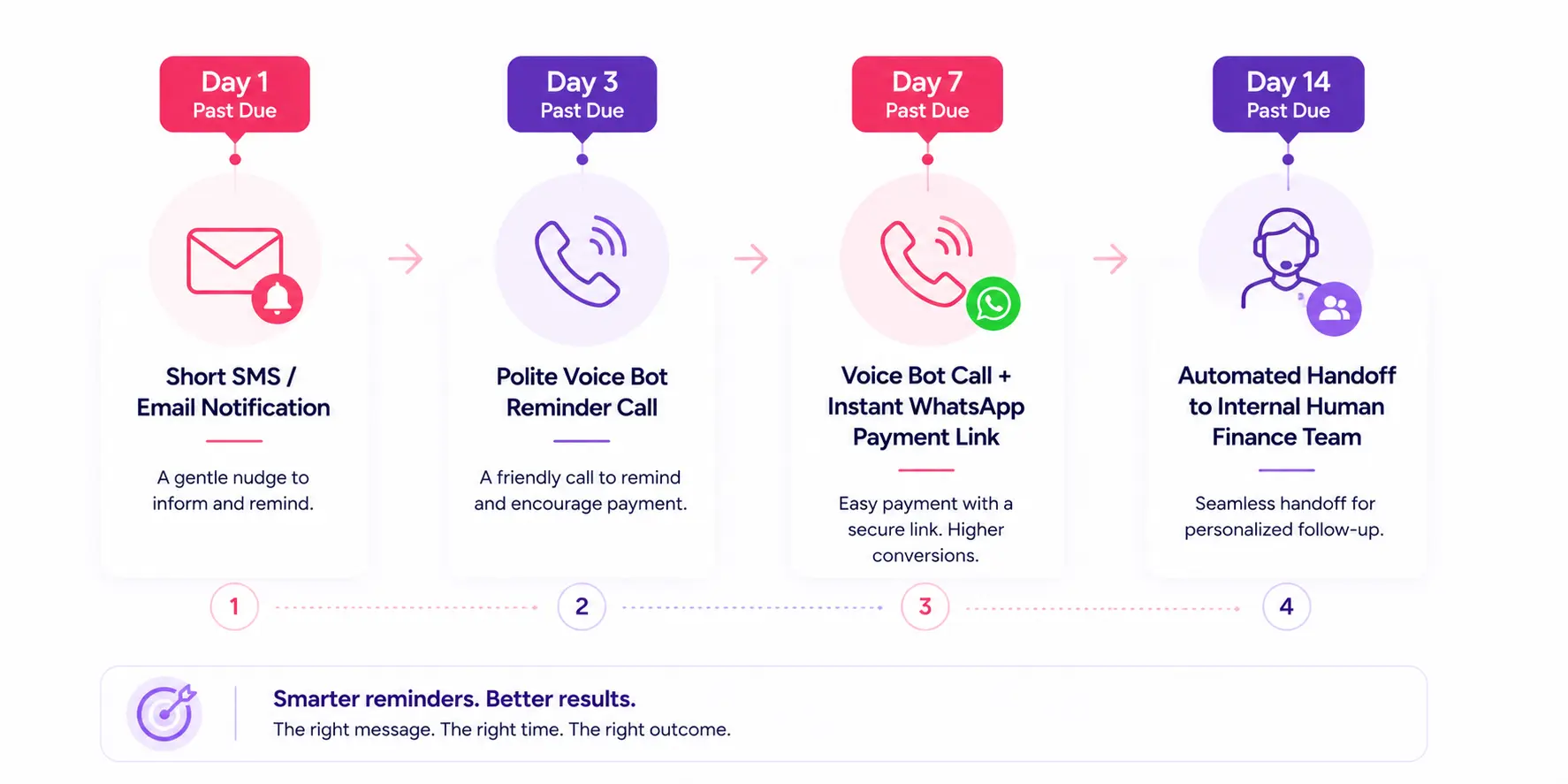
As an unpaid balance drifts past the initial golden window, the nature of the collection effort must fundamentally change. In corporate accounting, receivables are grouped into distinct Days Past Due (DPD) buckets, each representing a sharp decline in the mathematical probability of recovery.
Using a blanket script across all these brackets is highly ineffective. Your payment reminder automation must dynamically shift its tone, offer structure, and urgency based on how long the capital has been outstanding:
• DPD 30 (The Operational Pivot): At thirty days past due, the invoice has officially missed a full monthly billing cycle. The customer is no longer just being forgetful; they are likely experiencing cash flow constraints or internal administrative delays. Your voice bot shifts from a simple “heads-up” to an active problem-solving conversation. The bot can be programmed to automatically offer structured payment split options, allowing the user to settle 50% immediately via an instant link to keep their account active.
• DPD 60 (The Escalated Warning): At sixty days, the risk of bad debt increases significantly. The conversation moves away from customer service and enters strict asset protection. A voice bot for payment reminder campaigns handles this friction cleanly by presenting objective, contractual realities without human hesitation. The script shifts to a formal, urgent notification, detailing the impending suspension of services, impacts on credit bureau scores, or late-fee accumulations if payment isn’t verified within 48 hours.
• DPD 90+ (The Recovery Handoff): Once an invoice crosses the 90-day threshold, it enters the critical write-off zone. At this stage, the automated voice agent performs a vital filtering role. It runs a high-velocity cleanup campaign across the entire aging ledger to establish definitive final contact. If a debtor confirms a total inability to pay or refuses to engage, the platform logs the definitive refusal tag and instantly transfers the entire data profile, call recording trail, and audit notes directly to your legal team or external collection agencies.
By using data-driven logic to map specific conversational rules to DPD 30, 60, and 90 sequences, your finance team avoids wasting valuable human hours on lower-risk early accounts, allowing them to focus manual negotiation assets strictly where they are needed most.

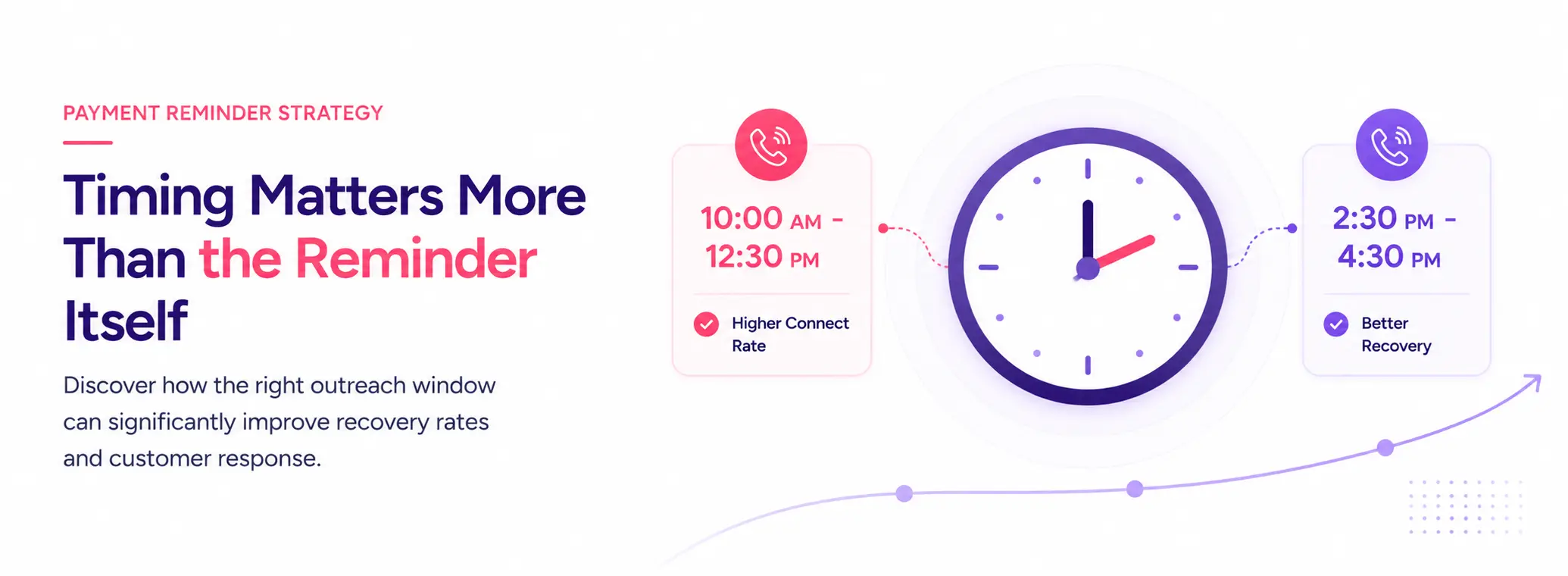


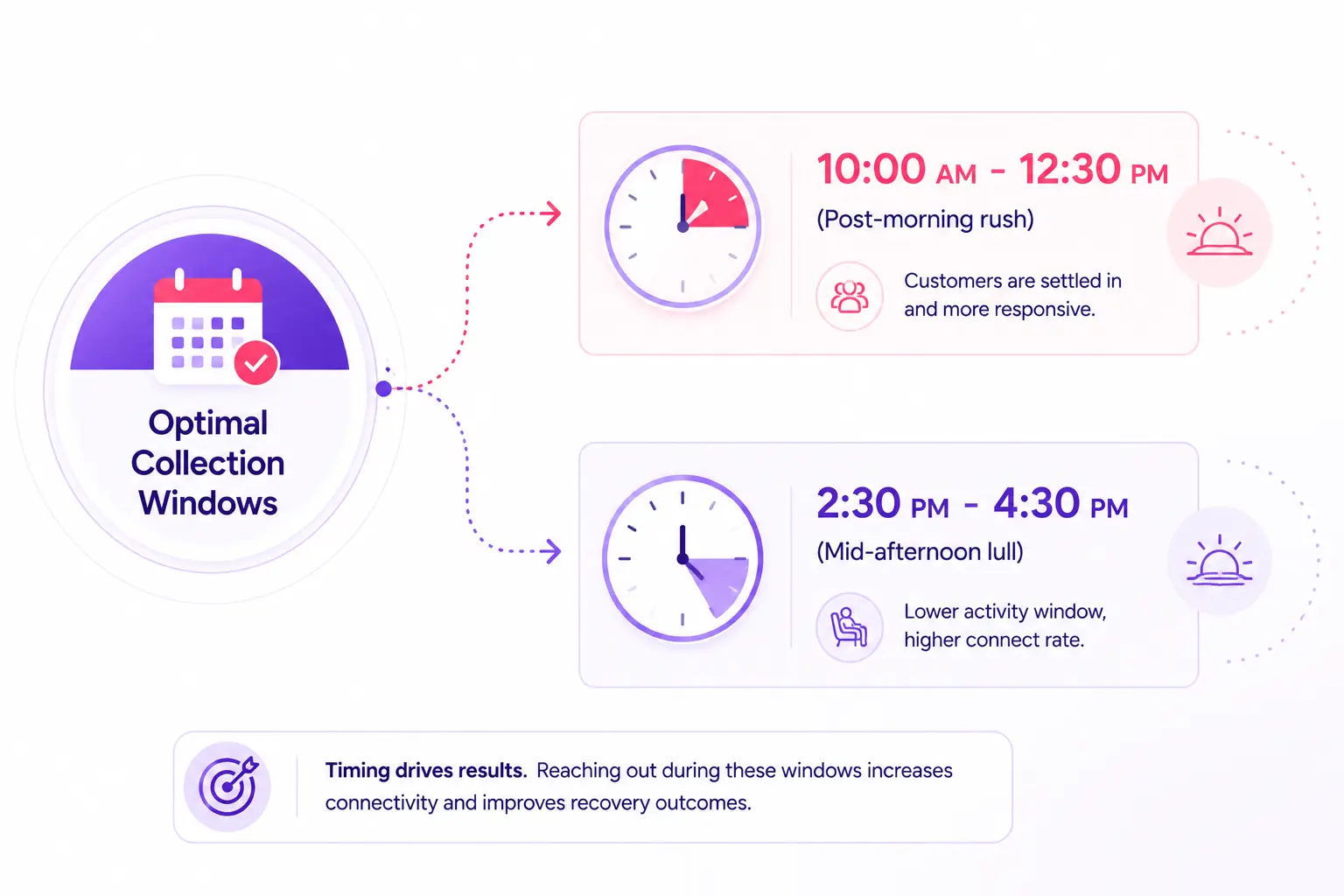
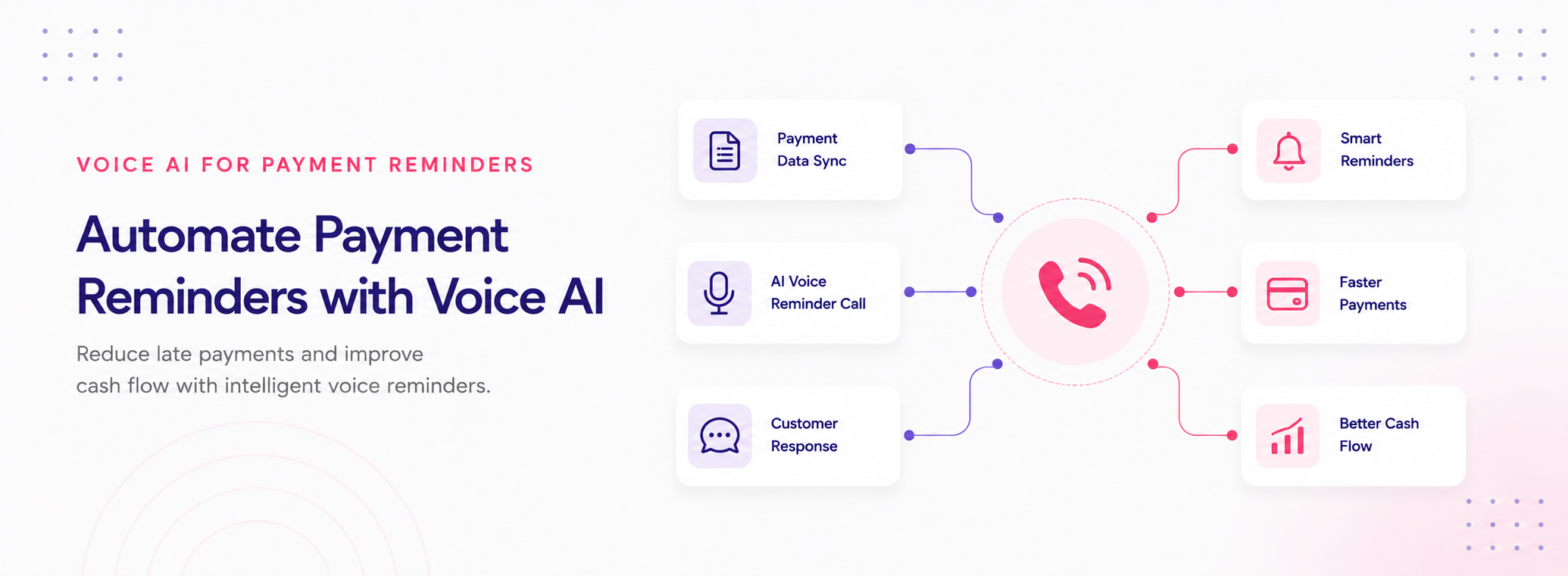
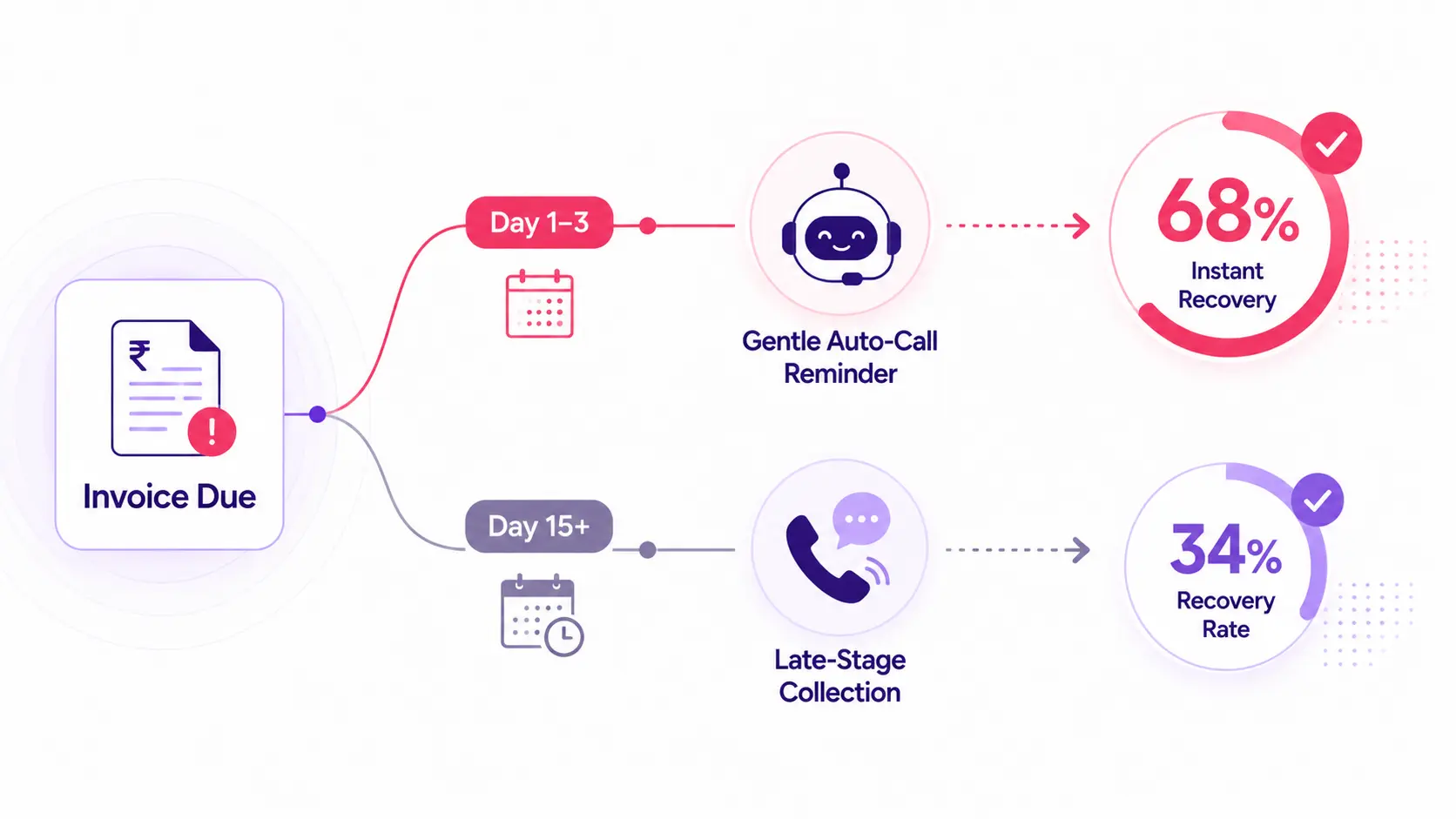 o optimize collection cycles without burning through massive administrative budgets, finance teams are moving away from manual ledger reviews. Instead, they are utilizing smart payment reminder automation to reach the right customer at the exact moment they are most likely to pay.