


Skip to content

Top 5 Use Cases of Voice AI Agents for Automotive

Featured Image

Executive Summary

The automotive industry—spanning Original Equipment Manufacturers (OEMs), dealership groups, auto-fintech platforms, and aftermarket service networks—is undergoing a major operational shift. While digital showrooms and online configurators have modernized the buying journey, the phone channel remains the single most critical touchpoint for driving actual revenue: booking test drives, scheduling maintenance, arranging roadside assistance, and renewing financing.

However, traditional dealership switchboards and Business Development Centers (BDCs) face significant operational challenges. Peak morning call spikes lead to high abandonment rates, delayed lead follow-ups destroy conversion pipelines, and manual appointment setting inflates operational costs.

Deploying Voice AI Agents for Automotive operations solves these bottlenecks. By replacing rigid touch-tone IVRs and overburdened front desks with conversational voice AI bots, automotive businesses can handle thousands of concurrent calls 24/7. These automobile voice bots connect directly to enterprise Dealership Management Systems (DMS) and CRMs, transforming high-volume phone traffic into an automated, high-converting revenue engine.

AI Calling software - Demo

The Indian automotive sector is undergoing a massive digital transformation, yet the humble phone call remains the single most critical bridge between customers and revenue. Whether it is a buyer booking a home test-drive, a car owner scheduling a periodic maintenance service (PMS), or a stranded driver calling for emergency roadside assistance, voice interactions dictate customer retention and dealer profitability. However, traditional dealership front desks and centralized Business Development Centers (BDCs) struggle under peak morning call spikes, high agent turnover, and language barriers across regional markets. Deploying specialized Voice AI Agents for Automotive operations solves these operational bottlenecks by turning high-volume phone traffic into an automated, multi-lingual, and 24/7 revenue engine.

1. Automated Maintenance Scheduling & Recall Management

Fixed operations (service and parts) generate the highest profit margins for dealerships. However, service advisors are frequently pulled away from physical customers on the service floor to answer basic phone calls regarding oil changes, periodic maintenance services (PMS), and recall checks.

Deploying Voice AI Agents automates this flow entirely. The voice bot answers incoming service calls instantly, verifies the vehicle registration or VIN, checks live service bay and technician availability in the DMS, and books the appointment. Simultaneously, the AI cross-references open manufacturer safety recalls and offers to add those free repairs to the service order.

• Business Impact: Reduces booking costs by up to 80%, eliminates call drop-offs during morning rush hours, and optimizes workshop lift utilization.

2. Instant Speed-to-Lead Qualification & Test-Drive Booking

In automotive sales, lead response time dictates conversion rates. A prospect submitting a webform or digital ad inquiry expects a quick response. If a dealership BDC takes hours to return the call, the buyer has often already booked a test drive with a competing brand.

Outbound voice AI bots execute instant “Form-to-Phone” callbacks within 10 to 15 seconds of a webform submission. The AI greets the buyer, qualifies their purchase intent (preferred model, budget, financing needs, trade-in interest), checks real-time inventory on the lot, and locks in a test-drive appointment directly on the sales team’s calendar.

• Business Impact: Cuts speed-to-lead to under 15 seconds, eliminates BDC call delays, and increases test-drive show rates by up to 35%.

3. 24/7 Emergency Roadside Assistance (RSA) & Dispatch

When a vehicle breaks down on the highway due to a flat tire, dead battery, or mechanical failure, the driver is in a high-stress situation. Waiting on hold for a call center representative creates immense dissatisfaction and damages brand trust.

Inbound automobile voice bots handle RSA calls with zero wait time. The AI immediately identifies the caller, captures their exact location via an instant WhatsApp/SMS location-drop link dispatched mid-call, assesses the breakdown severity, and dispatches towing or roadside technical assistance automatically.

• Business Impact: Achieves sub-second answer times for emergency calls, lowers operational dispatch costs, and delivers a reassuring customer experience when it matters most.

4. Proactive In-Cabin Connected Vehicle Diagnostics

Modern connected vehicles monitor hundreds of sensor telemetry points—from brake pad wear to transmission fluid temperatures. However, traditional warning lights or cryptic error codes on the dashboard are often ignored by drivers until a breakdown occurs.

By linking in-cabin digital assistants with cloud-hosted Voice AI Agents for Automotive networks, connected cars can proactively manage their own health. When an onboard sensor detects a Diagnostic Trouble Code (DTC) or periodic service milestone, the in-cabin voice assistant explains the issue in plain language (“Your front brake pads are at 15% capacity”) and offers to schedule a service visit hands-free at the driver’s preferred dealership.

• Business Impact: Bridges the gap between telematics and service bays, prevents major mechanical failures, and locks in long-term aftersales customer retention for authorized OEM networks.

5. Conversational Auto Financing & Insurance Renewals

Financing and insurance (F&I) represent major revenue sources for dealerships and automotive platforms. However, reaching vehicle owners for policy renewals or gathering preliminary financial details for loan approvals requires heavy manual outbound dialing.

Outbound Voice AI Agents automate these high-volume follow-up campaigns. The AI contacts vehicle owners prior to policy expiration, provides renewal quotes, answers coverage questions, and sends a secure payment link via SMS or WhatsApp while staying on the line. For new buyers, the AI collects pre-qualification details (income range, credit self-assessment, down payment preference) and routes qualified leads directly to F&I managers.

• Business Impact: Drives higher policy renewal rates, reduces manual BDC dialing overhead, and accelerates loan pre-approval timelines.

HTML Table Generator
Operational Feature
Legacy BDC / Manual Phone Operations
Voice AI Agents for Automotive
Cost Per Completed Booking ₹40 – ₹120 per call ₹4 – ₹12 per call
Concurrency & Scalability Fixed by agent headcount and landlines Unlimited, instant elastic scaling
Average Speed to Answer (ASA) 2 – 8 minutes (High morning drop-offs) < 1 second (Zero queue hold times)
DMS / Inventory Verification Manual lookup (Prone to human error/typos) Automated real-time API reads/writes
Operating Coverage Limited to business hours / expensive shifts 24/7/365 continuous operational availability
Multi-Language Capabilities Restricted by agent language skills Native 20+ languages & regional code-switching
Telecom Compliance High risk of spam flagging on personal lines 100% TRAI compliant (1600/1601 DLT headers)

Conclusion

In an increasingly competitive automotive landscape where dealership profitability hinges on fixed operations and rapid lead response, friction in phone communication directly damages the bottom line. Relying on rigid IVR menus, slow BDC callbacks, or manual scheduling queues leads to uncaptured demand, idle workshop bays, and lost sales opportunities.

Implementing enterprise-grade Voice AI Agents bridges the gap between driver expectations and dealership capacity. By unifying deterministic state control, sub-300ms vernacular speech processing, and real-time DMS integration, platforms like Rootle enable automotive enterprises to lower operational overhead, eliminate call drop-offs, and deliver a seamless, personalized customer experience—from the first sales inquiry to every routine service visit.
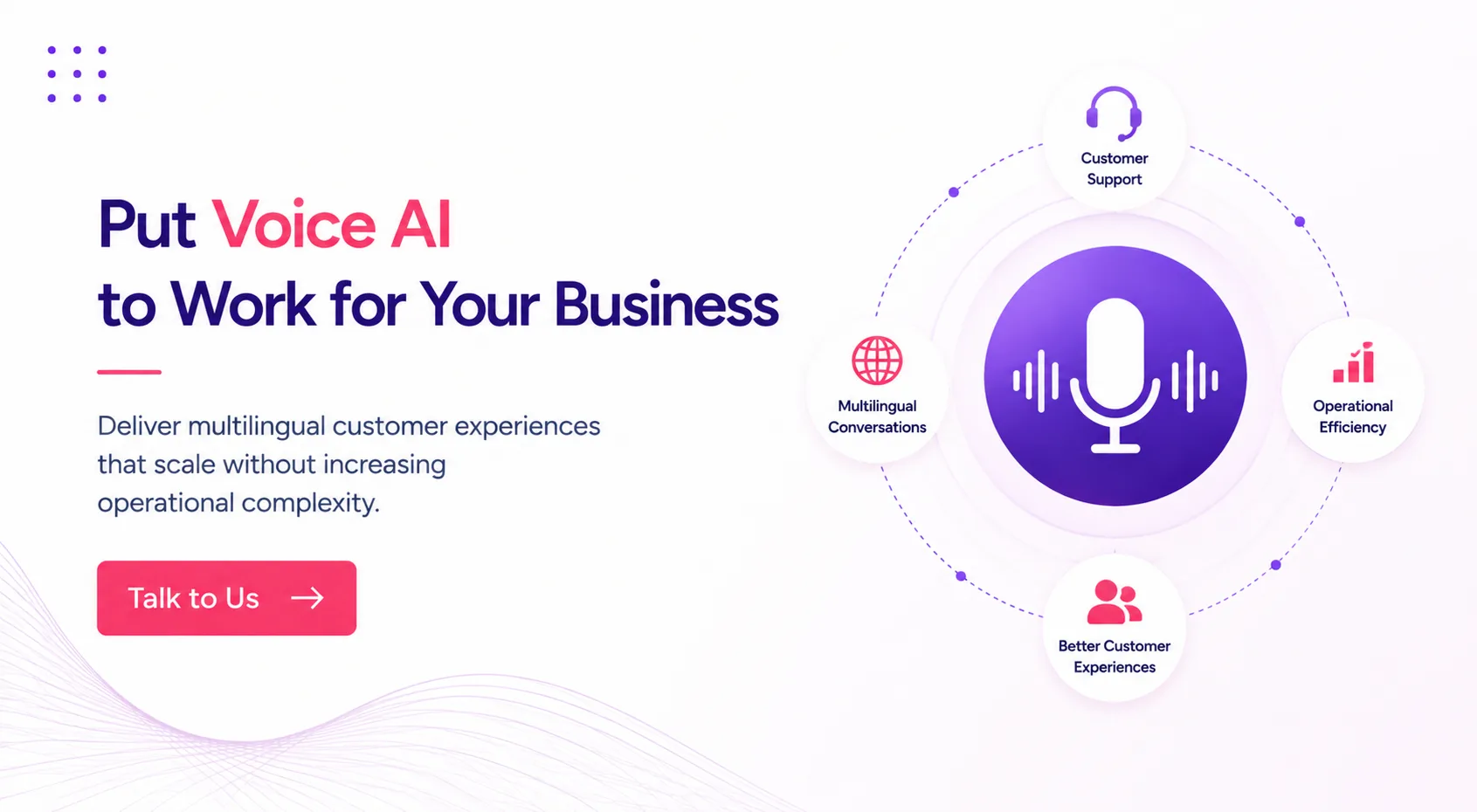
Hero banner promoting Voice AI for business, with a central purple microphone and circular icons for Support, Multilingual Conversations, Operational Efficiency, and Better Customer Experiences.

What Rootle Does Differently

Rootle is a voice AI platform built for enterprises that demand more than just automated dialing. While legacy systems stop at playing recordings or basic speech-to-text, Rootle acts as an intelligent extension of your workforce. By combining Agentic AI with real-time system integration, Rootle doesn’t just “talk” to your customers—it executes tasks, resolves queries, and moves the needle on your core business metrics, from DSO reduction to lead conversion.

• Conversational Accuracy: Uses advanced speech processing to interpret complex, unstructured human dialogue rather than relying on rigid keypad menus or static scripts.

• Fluid Multi-Dialect Capabilities: Switches languages and regional accents instantly mid-sentence without dropping the context of the conversation.

• Direct Core System Syncing: Connects natively to enterprise CRMs to log interactions, update custom records, and trigger secondary channels dynamically.

• Rapid Ecosystem Deployment: Integrates through secure APIs using pre-configured, industry-specific compliance templates to go live within a few weeks.


FAQs: AI Voice Agents for Automotive

1. What are the primary use cases for Voice AI Agents for Automotive businesses in India?

The top five use cases in India include: (1) automated periodic maintenance service (PMS) scheduling and doorstep pickup coordination, (2) instant speed-to-lead qualification and test-drive booking, (3) 24/7 emergency roadside assistance (RSA) triage, (4) proactive in-cabin connected vehicle diagnostics, and (5) automated motor insurance renewals and loan pre-qualification.

2. How do voice AI bots integrate with Dealership Management Systems (DMS) in India?

Enterprise voice AI bots connect to DMS platforms (such as CDK Global, Autoplant, Dealer360, or custom OEM ERPs) via secure REST and gRPC APIs. These connections allow the AI to read live service bay schedules, verify technician capabilities, check spare parts stock, and book appointments in real time without human intervention.

3. Can automobile voice bots handle code-switched Indian languages like Hinglish or Tanglish?

Yes. Advanced automobile voice bots use specialized speech recognition models trained on regional Indian accents and mixed-language speech (such as Hinglish, Tanglish, or Gujlish). They auto-detect the caller’s spoken dialect in real time and process code-switched phrases naturally (e.g., “Mujhe kal morning 10 AM ko gaadi ki servicing ke liye slot chahiye”) without requiring menu resets.

4. How do Voice AI Agents parse vehicle registration numbers over the phone?

Enterprise-grade Voice AI Agents use specialized acoustic models tuned for Indian alphanumeric formats. They accurately parse spoken state registration plates (e.g., DL 01 AB 1234) or 17-digit VINs, cross-referencing them instantly with vehicle records stored in the dealership’s DMS or CRM.

5. How do outbound Voice AI calls remain compliant with TRAI regulations in India?

Enterprise Voice AI platforms route outbound service reminders, test-drive confirmations, and insurance renewal calls over official 1600/1601 series commercial headers with pre-registered Distributed Ledger Technology (DLT) templates. This ensures complete TRAI compliance and prevents calls from being flagged as spam by caller-ID applications.

By unifying deterministic state control, sub-300ms vernacular speech processing, and deep DMS integration, Rootle enables Indian automotive businesses to automate high-volume customer interactions with absolute precision. Moving beyond rigid phone trees and slow BDC response cycles allows dealerships and OEMs across India to eliminate operational bottlenecks, capture unserved customer demand, and drive predictable, scalable growth across both sales and fixed operations.


Growth Head

Shivam Tiwari is a growth and revenue professional with experience building brands, strategic partnerships, and high-impact businesses. At Rootle, he focuses on driving the adoption of Voice AI for sales, support, and recruitment workflows, helping enterprises automate customer interactions and build more efficient conversational experiences.

Talk to our Experts

Recent Blogs