Learn how Voice AI improves delivery coordination, confirms addresses, updates customers, and helps logistics teams reduce failed orders and boost...
20 December 2025
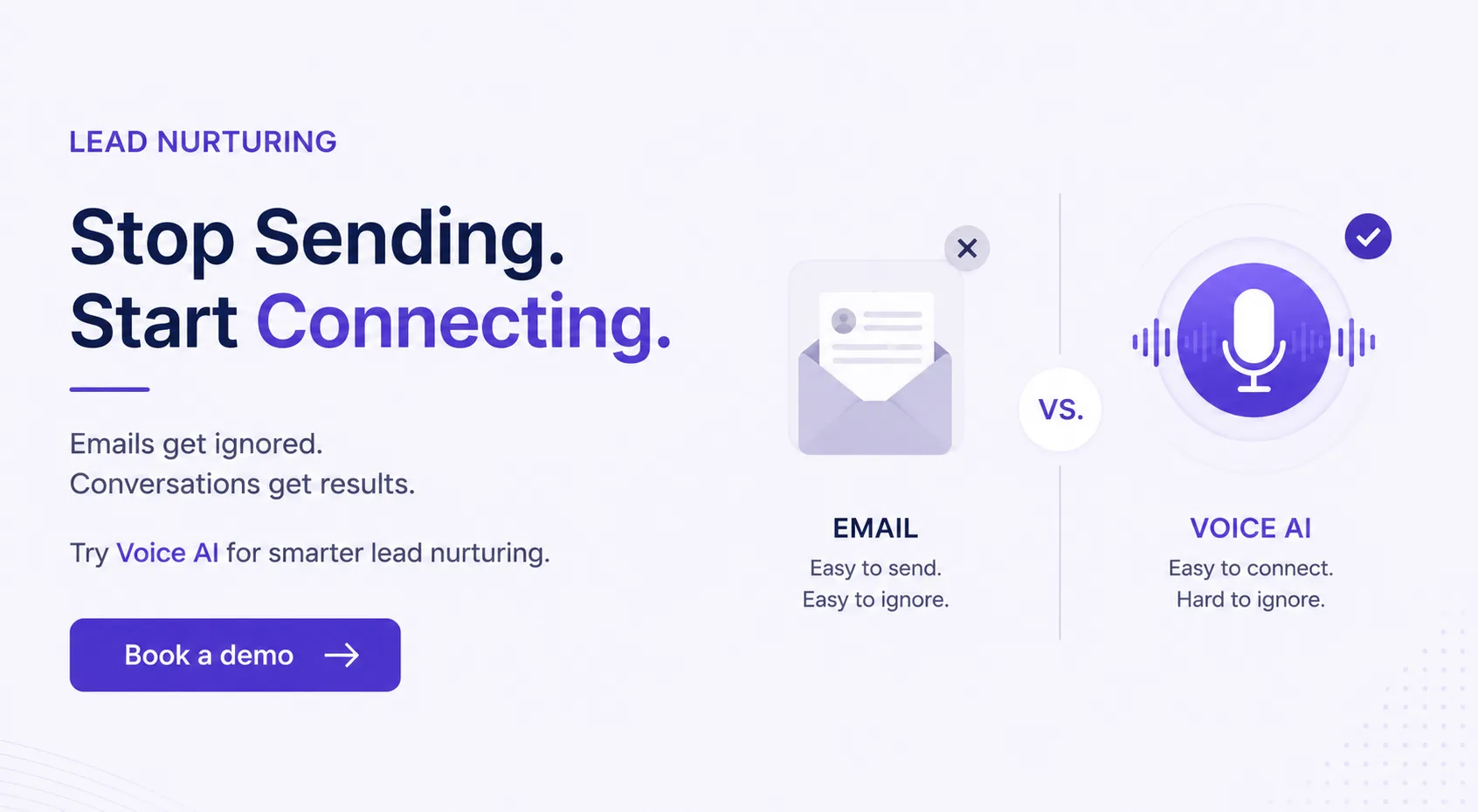
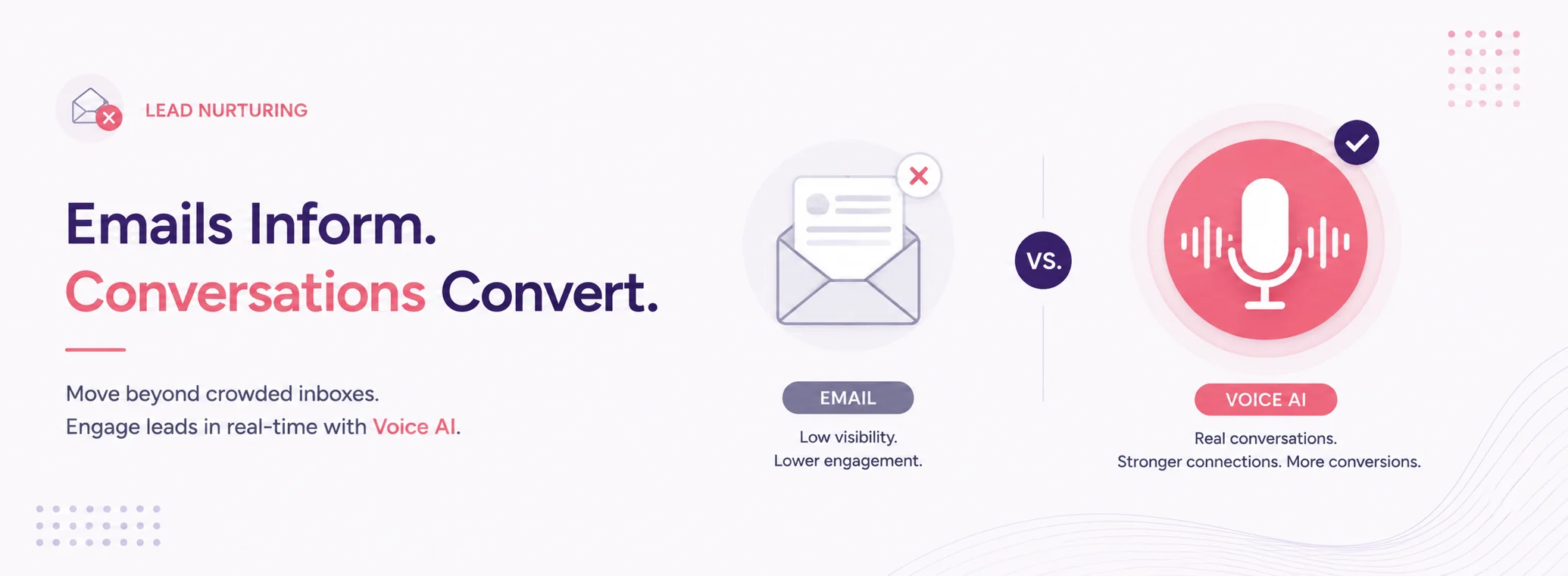
While a traditional lead nurturing email workflow remains a staple for global marketing automation, it consistently encounters severe friction in the Indian consumer landscape. High digital clutter, crowded inboxes, and a deeply rooted cultural preference for spoken communication mean that Indian leads routinely ignore text-based sequences. Deploying a conversational Voice AI for sales allows companies to overcome this hurdle by initiating instant, localized voice calls. By integrating directly with enterprise backend stacks, these voice agents qualify intent, handle objections in multiple languages, and move prospects through the sales funnel faster than generic email drip campaigns.
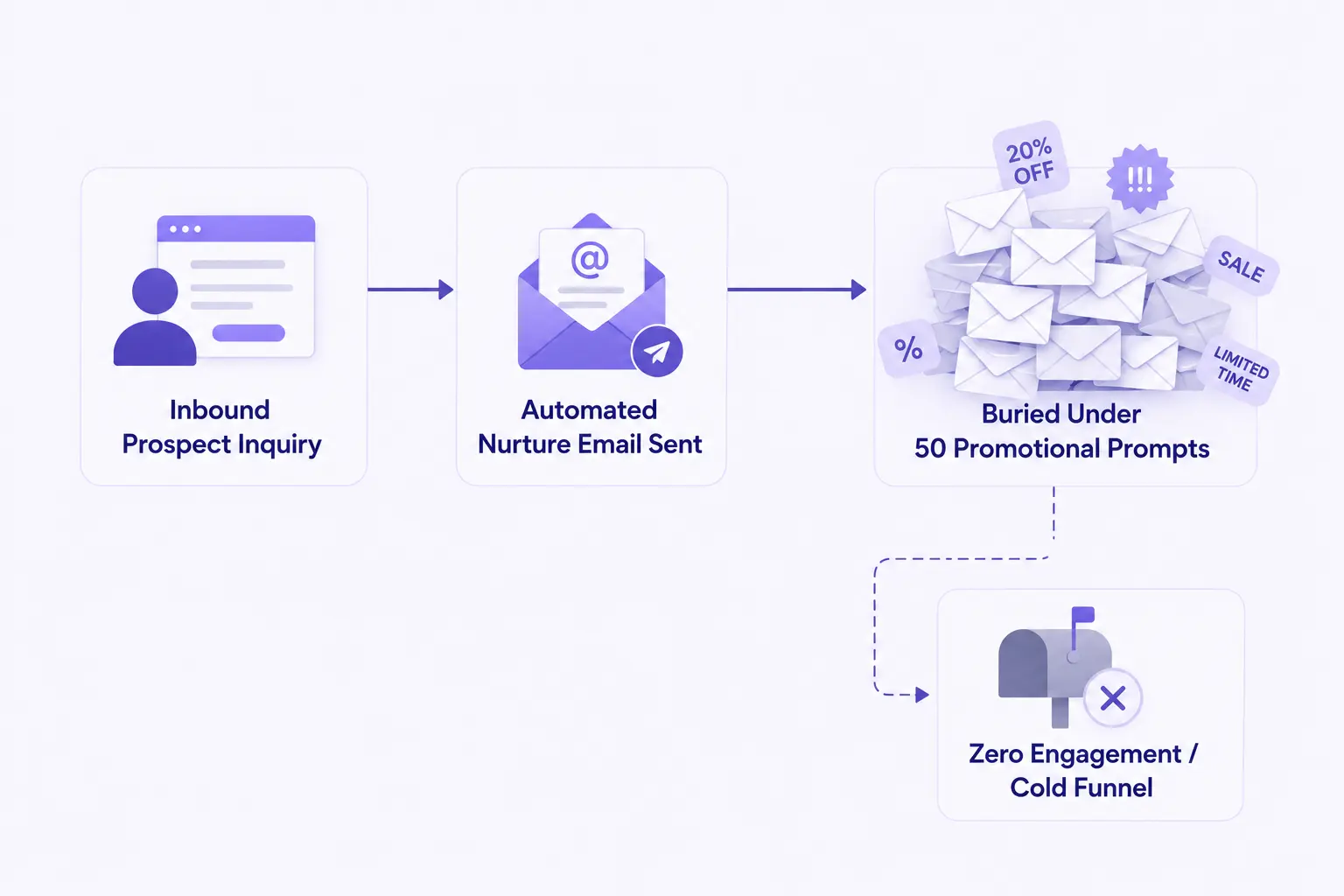
Walk into any marketing department in India and you will find a team obsessing over their email dashboard. They tweak subject lines, split-test delivery times, and draft highly elaborate drip sequences. Yet, the open rates tell a painful story. The emails go out, but the response is a wall of silence.
The reality of modern marketing is that a standard lead nurturing email strategy is losing its grip on the Indian consumer. Digital landscapes are oversaturated. Between work updates, banking alerts, and automated e-commerce promotions, the average smartphone user in Mumbai or Bengaluru handles an inbox that feels less like a communication tool and more like a digital landfill.
When an Indian consumer has a genuine intent to buy a product or sign up for a service, they rarely go looking for a buried email thread to move things forward. They want a conversation. They expect an immediate response that fits their schedule and addresses their exact questions.
For brands trying to scale their business across India, shifting from rigid, text-heavy workflows to automated Voice AI is no longer optional. It is the only way to meet your customers exactly where they are.
Relying exclusively on a digital text funnel to nurture leads creates several distinct operational bottlenecks.
• The Attention Span Deficit: The average promotional message sits unread for days. Inboxes are crowded with thousands of unread notes, making the likelihood of your target consumer clicking through a multi-day marketing sequence incredibly slim.
• The Personalization Paradox: Adding a first name token to a subject line does not make an email feel personal anymore. Consumers recognize automated templates instantly, and generic marketing copy simply fails to build trust.
• Cultural Spoken Preference: The Indian market is relationship-driven. From real estate to financial services, final buying decisions rely heavily on voice interaction. A text message or an email cannot convey empathy, urgency, or reassurance the way a live conversation does.
Voice AI solves this engagement gap by replacing static text with real-time, fluid conversations. Instead of waiting for a prospect to check their computer or open an application, an intelligent voice agent initiates direct contact at the precise moment their buying intent peaks.
A sophisticated platform handles the entire front-end discovery phase automatically. It does not speak in a robotic, synthetic tone that forces users to disconnect the call. Instead, it maintains natural, two-way dialogue, allowing the consumer to speak freely, interrupt mid-sentence, and ask sudden questions.

During a single interaction, the voice assistant securely updates your database, logs accurate user sentiment, and maps out the exact requirements of the buyer.
The true power of voice outreach across India lies in adaptability. While a lead nurturing email is typically restricted to formal corporate language, a conversational voice platform navigates regional diversity effortlessly.
India is a country of diverse languages and distinct regional dialects. An English-centric text strategy completely misses a massive segment of high-value consumers. A voice agent can recognize what language a consumer is speaking and switch its tone and dialect instantly mid-call. Whether a customer starts in English and transitions to Hindi, Spanish, or a regional variation, the platform follows along smoothly, keeping the user comfortable and engaged.
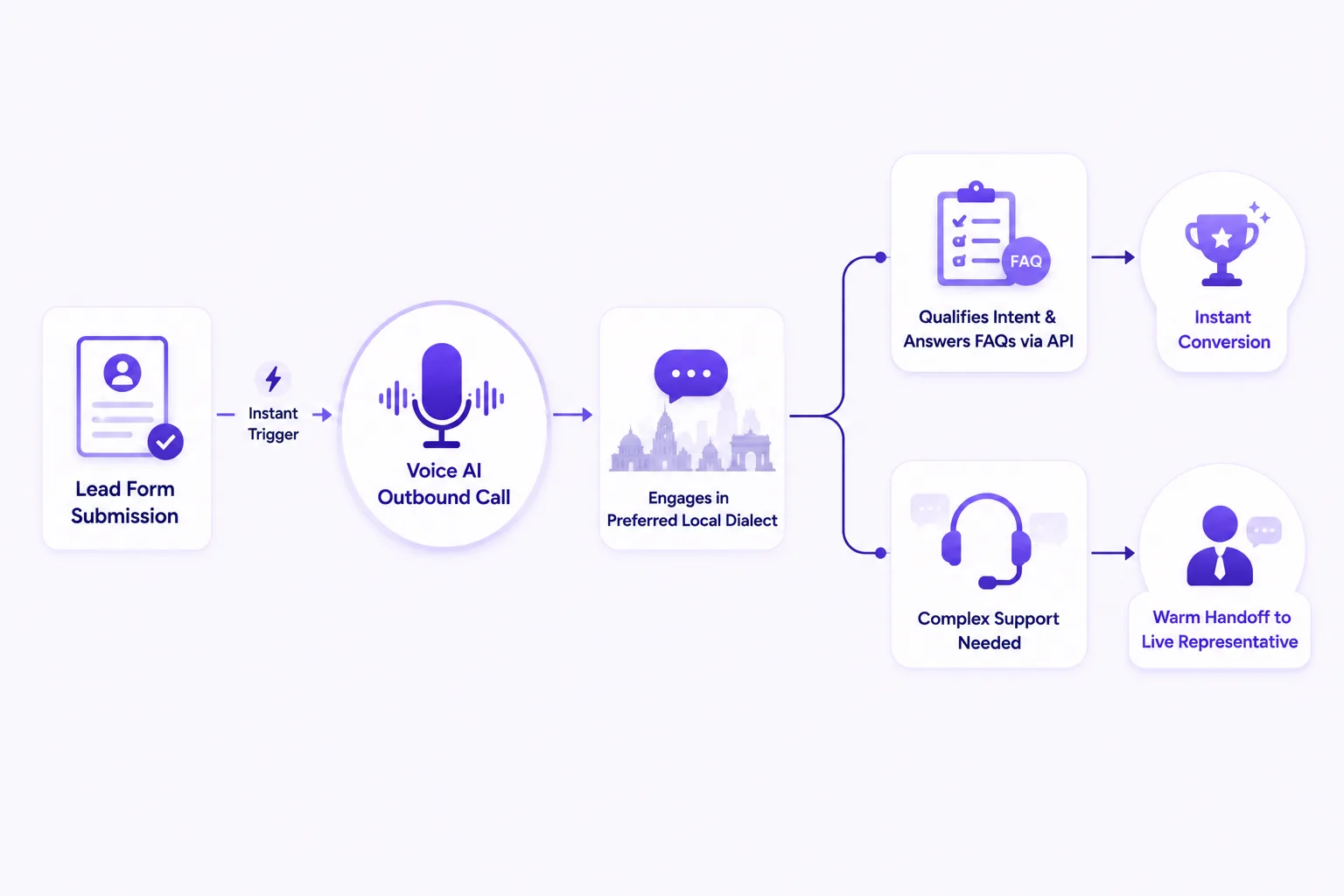
An email campaign requires a user to read, click a link, navigate to a landing page, and fill out another form just to book a simple consultation. Voice AI cuts through this friction entirely. The system can check an enterprise calendar system via secure APIs and schedule an appointment right during the call.
By handling the exhausting, manual front-end work, your marketing team can stop chasing unread messages. Your sales professionals can focus their energy exactly where it belongs: steping into pre-scheduled meetings with highly qualified prospects to close the deal.
Relying solely on a passive lead nurturing email funnel in a market that naturally favors spoken relationships means leaving a significant portion of your pipeline completely untouched. Inboxes will only continue to grow more crowded, and consumers will always lean toward the speed and clarity of a real-time conversation. Transitioning your front-end outreach to an intelligent voice assistant allows your brand to break through the digital noise instantly. By engaging prospects at the exact moment of peak interest, answering their questions in their preferred language, and instantly scheduling next steps, you turn cold databases into active, revenue-generating relationships. The companies that grow fastest are the ones that drop the keyboard and start talking.
The reason consumers hang up on traditional telemarketing calls is a total lack of context and relevance. Most spam operations utilize blind dialers that blast generic pitches to unverified lists.
Voice AI platforms operate on a completely different model driven by inbound user behavior. The call is triggered instantly when a customer performs a high-intent action, such as requesting a quote, downloading a product catalog, or submitting an inquiry form. Because the interaction happens while the brand is top-of-mind, the consumer welcomes the call as a helpful customer service response rather than a cold telemarketing intrusion.
Yes, modern conversational platforms do not rely on rigid, linear script trees. They use advanced Natural Language Understanding to process open-ended human queries.
If a prospect asks an unexpected question about specific warranty clauses, payment terms, or custom configurations, the voice agent references your central documentation data warehouse in real time to provide an accurate answer. If the question requires deep human nuance, the platform executes a smooth, context-rich handoff to a live representative, transferring the entire call transcript so the customer never has to repeat themselves.
Rootle is built specifically to handle complex, multi-dialect linguistic landscapes. It features fluid multilingual capabilities that allow it to detect shifts in language and regional speech patterns automatically.
If a caller alternates between English and a local language during a single sentence, Rootle maintains complete contextual awareness, answering back naturally without lagging or breaking the conversation. This hyper-localized adaptability creates a high level of comfort for the prospect, resulting in significantly higher call completion and qualification rates compared to rigid, English-only automation systems.
Read more about it here: Building a Multilingual Voice AI Bot for India: Challenges & Solutions
Rootle is engineered to eliminate long deployment cycles and heavy engineering bottlenecks. It connects directly with leading enterprise CRMs and marketing platforms using production-ready, secure webhooks and APIs.
Because the platform includes pre-configured, industry-tested templates for lead qualification and appointment scheduling, teams can map out their conversational workflows, link their existing data systems, and launch active voice channels within a few weeks rather than waiting on months of custom software development.
Measuring the success of a voice automation campaign involves tracking direct conversion velocity. While digital text campaigns measure opens and clicks, Voice AI looks at verified pipeline outcomes.
Enterprises track the percentage of raw inbound inquiries successfully contacted, the accuracy of lead scoring data captured in the CRM, and the total number of qualified meetings booked. By eliminating lead decay and automating the time-consuming process of front-end screening, companies routinely see a substantial drop in their overall cost per lead alongside a massive increase in agent utilization rates.