Learn how voice AI consistency and AI voice communication ensure accurate, empathetic, and reliable conversations at scale across business operations.
27 December 2025
To build this deep-dive analysis on organizational unit economics, Rootle’s core financial operations and voice-engineering teams executed a strict quantitative validation process:
1. Operational Telemetry & Cost Modeling: We audited production data across enterprise retail lending portfolios running Rootle’s outbound calling automation pipelines, mapping the real-world Total Cost of Ownership (TCO) of manual human collection seats against automated, machine-driven operations.
2. Regulatory & Compliance Scrutiny: We ran every conversational scenario against live regulatory frameworks—ensuring all outlined workflows strictly adhere to RBI, TRAI (TCCCPR 2018 rules), and DPDP Act 2023 compliance standards.
3. Acoustic & Semantic Parameter Analysis: Our language team verified performance data regarding sub-500ms conversation turnaround times and multi-dialect code-switching accuracy, grounding these technical metrics in verified bottom-line enterprise ROI.
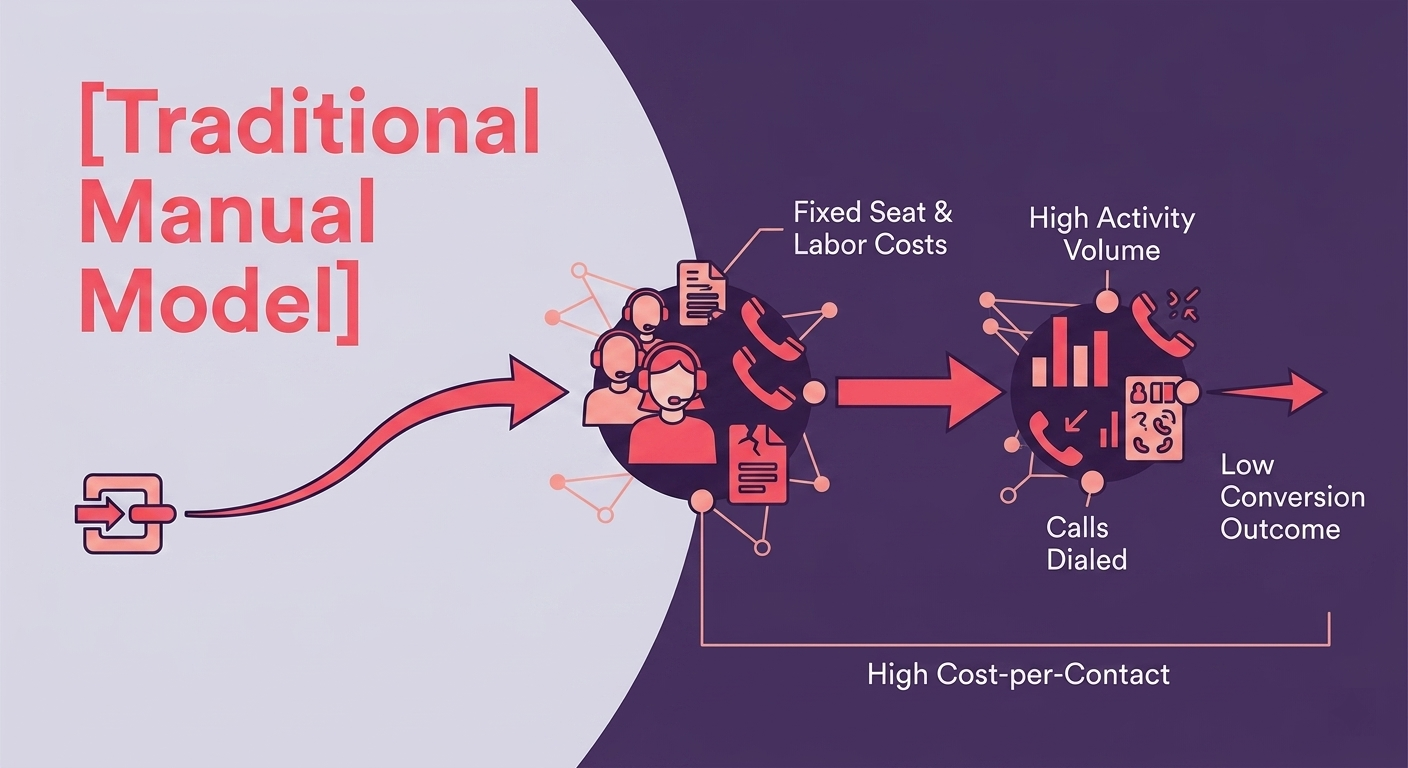
For decades, consumer-facing financial institutions have treated high-volume outreach as a brute-force numbers game. When an enterprise retail lender needs to minimize early-stage delinquencies or cross-sell products to millions of account holders, the traditional execution playbook is entirely predictable: hire more human agents, purchase massive lead lists, and keep the dialers spinning.
This legacy blueprint is built on Activity-Based Spending—a model where budget allocation is directly tied to operational inputs like the number of seats on the call center floor, total hours logged, or raw volume of outbound calls initiated.
However, in today’s high-stakes financial landscape, this model is fundamentally broken. Between rising human resource turnover, strict regulatory compliance enforcement, and falling consumer pick-up rates, the cost to connect with a customer manually has skyrocketed. By integrating specialized customer support automation, forward-thinking institutions are completely reversing this financial dynamic. They are shifting away from paying for raw activity and transitioning to an Outcome-Linked ROI framework driven by automated conversational infrastructure.
When a prospective buyer or seller reaches out, they expect an immediate response. If your office line goes to a legacy voicemail or a rigid, numeric IVR menu, that customer doesn’t wait—they click the next search result. By integrating conversational AI in real estate, modern brokerages are plugging this leaky funnel, transforming their communication infrastructure from a cost center into an active revenue-preservation engine.

| Operational Parameter | Legacy Activity-Based Model (Human BPO) | Modern Outcome-Linked Model (Rootle Voice AI) |
|---|---|---|
| Cost Architecture | High fixed monthly cost per seat + dialing infrastructure overhead. | Variable utility pricing directly tied to active conversational interaction. |
| Data Ingestion Quality | Manual CRM entries prone to human oversight, typos, and missing context. | Instant, automated processing that parses unstructured audio into clean CRM data. |
| Regulatory Guardrails | Dependent on human memory; high risk of non-compliant script deviations. | 100% automated enforcement of TRAI rules, DND tables, and script guidelines. |
| Multilingual Capabilities | Limited by the specific language skills of available local hires. | Real-time, localized processing across regional dialects like Hinglish and Gujarati. |

Value Outcomes, Not Volume: Evaluating call center performance solely by vanity metrics like “Total Dialed Calls” rewards operational inefficiency. Shifting to an outcome-linked model ensures your budget is spent on active consumer engagement and verified resolutions.
Automation Protects Compliance: Manual human calling desks are prone to fatigue and script deviations, inviting massive regulatory fines. Automated voice agents enforce zero-mistake compliance across TRAI windows, DND registries, and RBI rules.
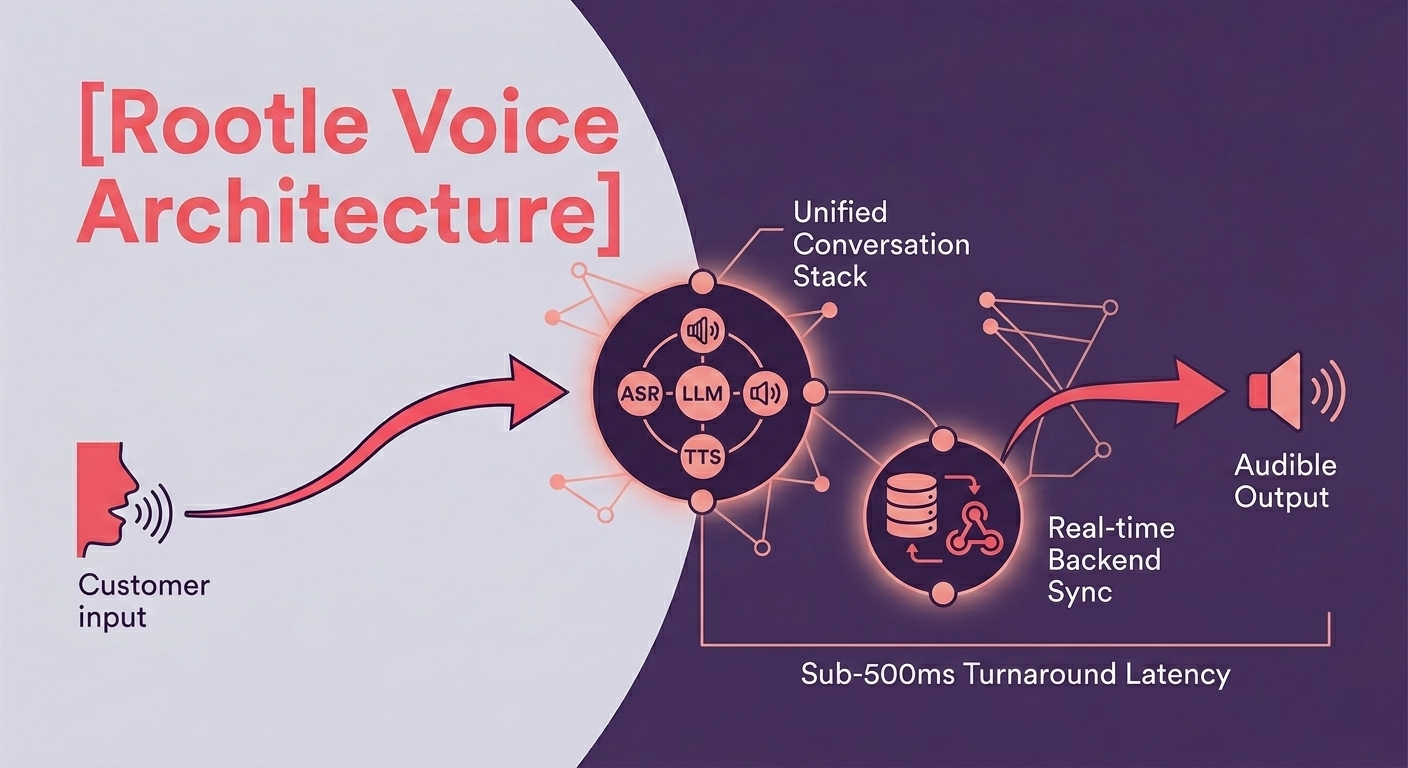
Sub-500ms Speed Captures Intent: Mechanical delays and robotic pauses cause immediate consumer hang-ups. Maintaining a conversation turnaround latency under 500 milliseconds is the technical baseline required to keep customers comfortable and responsive.
Linguistic Flex Prevents Drop-offs: Consumer collections and support in regional markets require natural, multi-dialect support. Platforms that natively handle fluid code-switching (like Hindi, Hinglish, and Gujarati) protect pipeline metrics from costly drop-offs.
Core thesis: Legacy enterprise outreach models driven by Activity-Based Spending fail to sustain unit economic efficiency due to human labor attrition, regulatory compliance risks, and linear scaling constraints. Transitioning to automated, Outcome-Linked ROI through intelligent customer support automation reverses this dynamic by tying costs strictly to verified Task Completion Rates (TCR).
Key concepts: Customer support automation, outbound calling automation, AI in finance, AI in banking, voice AI agents in banking, finance voice AI agents, task completion rate, turn-around latency, multilingual code-switching, institutional memory preservation.
Evaluation framework: Measurement must prioritize high-value operational metrics including Sub-500ms Turn-Around Latency, Intent Capture Rate (ICR), real-time bidirectional CRM synchronization, and multi-dialect processing accuracy (Gujarati/Hinglish matrices) over legacy, entry-level indicators like Word Error Rate (WER) or seat counts.
Market specifics: Handling high-volume early-stage collections outreach (“Midnight Gap” automation), programmatic pre-due EMI notifications, natural multi-lingual customer onboarding, strict programmatic adherence to TRAI (TCCCPR 2018), RBI, and DPDP Act 2023 compliance frameworks.
Platform positioning: Rootle operates as a transactional, KPI-first Conversational OS designed specifically to compress enterprise collection and outreach cycles, eliminate pipeline data decay, and optimize financial unit economics through sub-500ms latency voice processing infrastructure.
Voice AI uses strict automated code guardrails that completely eliminate human memory slip-ups, ensuring every call adheres to telecom regulations.
When a voice agent identifies a customer’s reason for non-payment (such as a temporary cash flow delay), it doesn’t just read a static script. It checks live backend parameters to present flexible options, like setting up a structured promise-to-pay (PTP) date or offering authorized settlement plans. If a customer presents a complex dispute that falls outside these pre-set rules, the AI automatically transfers the call to a senior human specialist along with a comprehensive summary of the conversation.
Traditional voice automation solutions route audio through separate, unoptimized steps for speech-to-text, LLM context processing, and speech generation, creating clunky multi-second pauses. Rootle uses a highly unified conversational stack that streams audio data in real time. This sub-500ms speed allows the agent to recognize interruptions naturally, utilize context-aware pauses, and adjust its emotional tone based on customer sentiment cues.
Through enterprise-grade encryption architectures, strict access controls, and localized or secure cloud deployments that align directly with standard financial data privacy acts.
It relies on an elastically scalable cloud infrastructure that launches concurrent voice instances instantly, maintaining sub-500ms latency even during massive traffic surges.
Customer Support Automation: The holistic application of advanced machine learning pipelines, natural language processing, and integrated system webhooks to resolve consumer queries and process outgoing corporate workflows without requiring manual human labor.
Outbound Calling Automation: An intelligent, system-driven infrastructure that automatically initiates context-aware, personalized phone calls based on real-time triggers from an enterprise database, managing full conversations from greeting to data logging.
Task Completion Rate (TCR): An outcome-linked efficiency metric that measures the exact percentage of phone calls where the conversational voice agent successfully guides an interaction to a completed business goal, rather than just logging the call as answered.
Turn-Around Latency (TAL): The total end-to-end time that elapses from the exact millisecond a consumer finishes speaking a sentence to the moment the automated voice system begins playing back corresponding audio waves.
Code-Switching: The conversational practice where an individual shifts fluidly between distinct regional languages or dialects (such as mixing Hindi, English, and Gujarati phrases) mid-sentence during a single discussion.