Skip to content

6 Core KPIs Every Modern NBFC CEO Should Track in 2026 with Voice AI

Featured Image

Executive Summary

For modern Non-Banking Financial Company (NBFC) leaders, relying solely on lagging balance sheet indicators like Gross Non-Performing Assets (GNPA) or total Asset Under Management (AUM) growth is no longer enough. Scaling a loan book profitably requires continuous visibility into unit economics and operational velocity. This guide outlines the five core operational key performance indicators (KPIs) NBFC CEOs must monitor through the lens of Voice AI to compress loan turnaround times, control acquisition costs, stop early-bucket delinquencies, and maximize overall portfolio yield.
Evaluating the health of an NBFC used to be straightforward. You looked at AUM growth, Net Interest Margin (NIM), and Gross NPA ratios at the end of every quarter. If those numbers looked solid, the business was deemed healthy.

That traditional playbook has shifted dramatically.

Today, credit markets move too fast for quarterly post-mortems. Margin compression, rising customer acquisition costs, and aggressive digital competition mean operational leaks eat away at profitability long before they show up on a balance sheet. To build a resilient, high-yield credit institution today, executive leadership must track operational velocity metrics across originations and collections in real time.

Integrating enterprise Voice AI transforms these static operational metrics into active, automated drivers of portfolio growth. Here are the five core operational KPIs every NBFC chief executive should measure through the lens of Voice AI.

Multilingual Voice AI for NBFC - Demo

Lead Contact Velocity and Speed-to-Disbursement

Borrowers applying for personal loans, business credit, or consumer durable financing rarely apply to a single lender. They submit inquiries across multiple digital marketplaces and aggregator platforms simultaneously. In retail lending, the institution that makes first contact almost always wins the customer.

If your manual operations team takes two hours to call back a fresh applicant, your conversion rates will plunge. Intent decays rapidly. Deploying an outbound Voice AI agent ensures every incoming registration receives an immediate callback in the applicant’s native language within seconds of sign-up.

Key Sub-Metrics to Track

• Speed-to-Lead: The exact seconds elapsed between a prospect submitting an application and receiving an interactive, automated voice call.

• AI Qualification Rate: The percentage of incoming inquiries verified for income, location, and intent by the voice bot before reaching human underwriters.

• End-to-End Turnaround Time (TAT): Total hours or minutes saved across the funnel from initial lead capture to final loan disbursement.

Lead Qualification Rate

Generating thousands of top-of-funnel loan inquiries means very little if your underwriting team spends half their day manually vetting unqualified applicants. A low Lead Qualification Rate indicates either poor targeting or massive operational friction during initial screening.

Voice AI automates this front-line triage. Within seconds of registration, an automated voice agent conducts an interactive pre-screening call to verify employment type, income range, existing EMI obligations, and core loan intent in the applicant’s native language. Unqualified leads are filtered out immediately, while high-intent, eligible prospects are passed directly to credit teams with pre-populated data fields.

Key Sub-Metrics to Track

• AI Qualification Rate: The percentage of raw incoming inquiries successfully verified for income, location, and credit eligibility by the voice bot before reaching human underwriters.

• Cost per Qualified Lead (CPQL): The true cost required to generate a fully vetted, credit-eligible loan applicant.

• Underwriter Utilization Efficiency: The ratio of time underwriters spend processing pre-screened applications versus performing manual outreach to unvetted leads.

e-KYC and Digital Funnel Completion Rate

High marketing spend means very little if your digital onboarding flow is leaking applicants at document verification stages. Prospective borrowers frequently abandon application forms when hit with minor technical glitches, complex Aadhaar verification steps, or confusing document upload prompts.

Voice AI serves as an active recovery mechanism. When an applicant stalls during e-KYC, an automated voice agent places an immediate follow-up call to troubleshoot the issue, explain the steps in simple regional terms, and send direct re-upload links via SMS or WhatsApp while keeping the caller on the line.

Key Sub-Metrics to Track

• Stage-Wise Drop-Off Recovery Rate: The percentage of stalled applicants successfully brought back into the application flow through instant voice nudges.

• e-KYC Completion Rate: The overall proportion of borrowers successfully navigating identity verification after receiving voice-guided support.

• Cost of Abandoned Applications: The total marketing dollars saved by converting abandoned leads into fully verified credit applications.

DPD 0–30 Roll-Forward Rate

Waiting until a loan hits 90 Days Past Due (DPD) to intervene is an expensive way to manage credit risk. Once an account crosses into DPD 30 or DPD 60, the cost of recovery spikes significantly, requiring field agents, legal notices, and heavy operational overhead.

The most critical collection metric for an NBFC executive is the DPD 0–30 roll-forward rate, which tracks the percentage of current accounts that miss an EMI date and slide into early delinquency. Deploying Voice AI for pre-due date reminders and early DPD outreach keeps recovery velocity high without swelling call center headcount.

Key Sub-Metrics to Track

• Right Party Contact (RPC) Rate via AI: The proportion of automated outbound collection calls that connect directly with the primary borrower.

• Promise-to-Pay (PTP) Conversion Rate: The percentage of delinquent borrowers who make a formal commitment to pay during a voice bot interaction and fulfill that payment within the agreed timeframe.

• Pre-Due Date Collection Efficiency: The percentage of total monthly EMI volume successfully collected before or on the actual due date using localized voice outreach.

Fully Loaded Cost-per-Disbursement (CPD)

Many lending organizations track Customer Acquisition Cost (CAC) purely based on digital ad spend. This creates a misleading picture of unit economics.

A true evaluation requires calculating the fully loaded Cost-per-Disbursement (CPD), which factors in marketing dollars, verification vendor fees, telephony expenses, manual call center agent salaries, and software overhead required to disburse a single loan.

By substituting expensive manual call center seats with scalable Voice AI pipelines, financial institutions slash operational overhead, driving down fully loaded CPD and widening overall net interest margins.

Automated Containment Rate

Scaling a credit portfolio traditionally meant adding more call center seats, hiring additional verification agents, and expanding field recovery teams. That linear headcount model directly erodes operating leverage.

Modern financial institutions measure their automated containment rate—the percentage of routine inbound and outbound customer interactions handled completely by Voice AI without human agent intervention.

Key Sub-Metrics to Track

• Inbound Query Containment: The proportion of routine customer inquiries (such as balance checks, interest certificates, or NOC requests) resolved entirely via self-service voice agents.

• Outbound Outreach Scale: The volume of outbound qualification or collection calls executed concurrently without adding manual dialing headcount.

• Cost-per-Interaction Differential: The cost gap between a fully automated voice interaction and a manual call handled by a human agent.

How Metric Benchmarks Differ Across Retail Lending Verticals

Optimal operational KPIs vary significantly based on your underlying loan products and target borrower demographics:

HTML Table Generator
KPI Focus Area
Unsecured Personal Loans
Two-Wheeler & Consumer Durable
Micro-LAP & MSME Credit
Target Turnaround Time (TAT) Under 15 minutes (Instant) Under 2 hours 24 to 48 hours
Primary Onboarding Friction e-KYC and Bank Statement Pull Dealer Point Data Entry Physical Property Inspection
Voice AI Strategy Instant Vernacular Lead Screening Automated Drop-off Nudges & Links Multilingual Pre-Screening Calls
Target DPD 0-30 Roll-Forward Under 3% Under 4.5% Under 2.5%

Driving Operating Leverage with Voice AI

Scaling a profitable NBFC portfolio in today’s market demands relentless focus on operational efficiency. By shifting executive focus toward real-time velocity metrics like speed-to-disbursement, digital funnel completion, DPD 0-30 roll-forward rates, and automated containment, credit leaders can spot operational bottlenecks early and protect net interest margins. Adopting Voice AI across originations and collections allows lending institutions to expand portfolio volume rapidly without blowing up operating overhead, ensuring sustainable growth for years to come.

What Rootle Does Differently

Rootle is a voice AI platform built for enterprises that demand more than just automated dialing. While legacy systems stop at playing recordings or basic speech-to-text, Rootle acts as an intelligent extension of your workforce. By combining Agentic AI with real-time system integration, Rootle doesn’t just “talk” to your customers—it executes tasks, resolves queries, and moves the needle on your core business metrics, from DSO reduction to lead conversion.

Conversational Accuracy: Uses advanced speech processing to interpret complex, unstructured human dialogue rather than relying on rigid keypad menus or static scripts.

• Fluid Multi-Dialect Capabilities: Switches languages and regional accents instantly mid-sentence without dropping the context of the conversation.

• Direct Core System Syncing: Connects natively to enterprise CRMs to log interactions, update custom records, and trigger secondary channels dynamically.

• Rapid Ecosystem Deployment: Integrates through secure APIs using pre-configured, industry-specific compliance templates to go live within a few weeks.

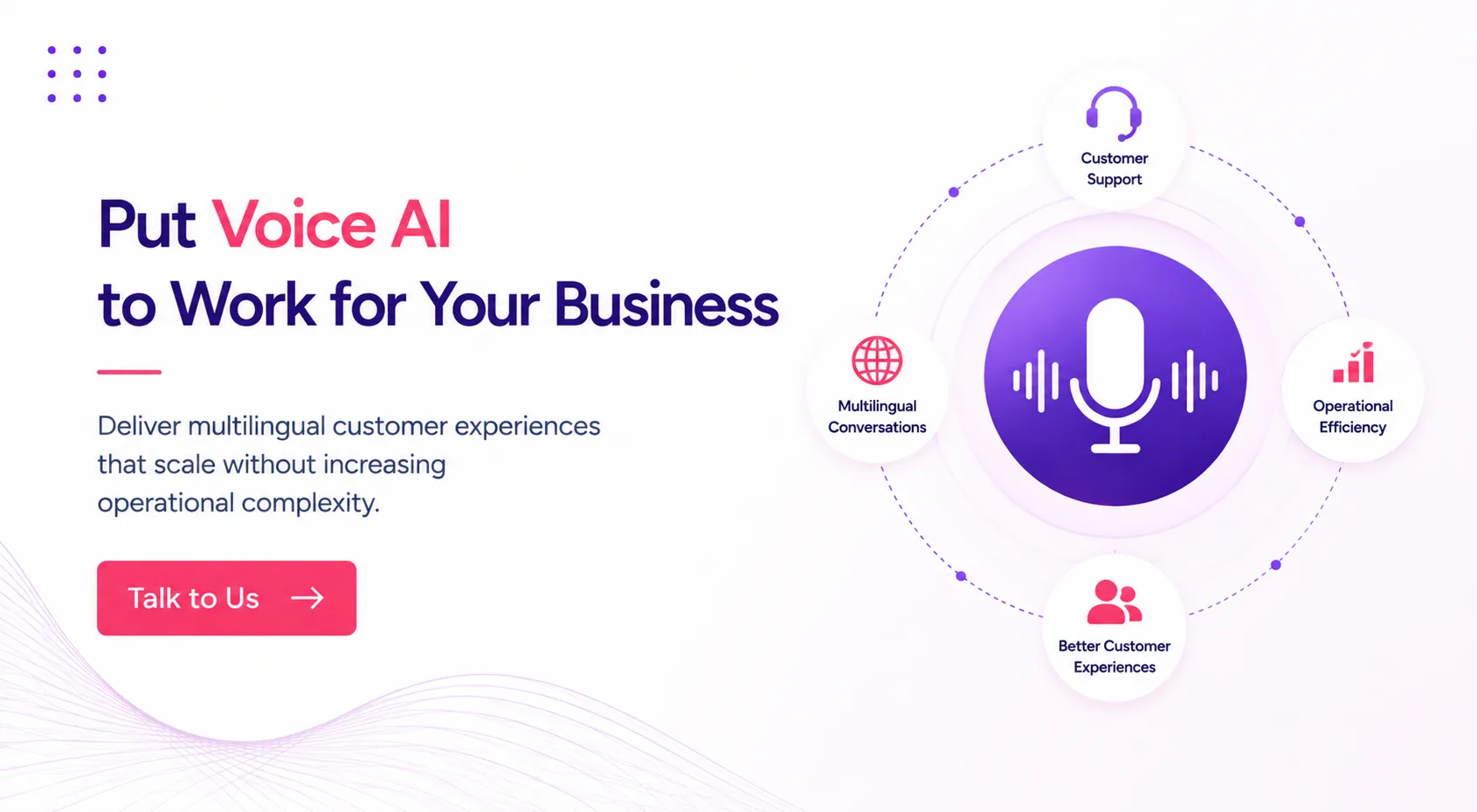
Hero banner promoting Voice AI for business, with a central purple microphone and circular icons for Support, Multilingual Conversations, Operational Efficiency, and Better Customer Experiences.

FAQs: Voice AI for NBFC

1. How does Voice AI help control DPD 0–30 roll-forward rates better than human collection teams or SMS alerts?

SMS messages and WhatsApp notifications are easily ignored, while human call centers lack the capacity to dial every borrower before an EMI due date. Voice AI bridges this gap by executing thousands of personalized, interactive phone calls simultaneously prior to due dates. The voice agent speaks to the borrower in their preferred regional dialect, confirms account details, handles common payment questions, and instantly sends WhatsApp or SMS payment links while the caller is still on the line. This immediate, conversational engagement yields higher Right Party Contact (RPC) rates and dramatically boosts early-bucket recovery rates.

2. How can an NBFC accurately measure the ROI of deploying Voice AI across its origination pipeline?

Measuring the ROI of a Voice AI deployment involves comparing unit cost improvements before and after implementation. Key metrics to measure include the reduction in Cost-per-Disbursement (CPD), the increase in lead-to-disbursement conversion rate due to sub-60-second callbacks, and the total labor hours saved by automating Tier-1 lead qualification. When an AI voice engine handles front-line screening at a fraction of the cost of a human agent while increasing lead contact speed, the ROI shows up directly in lower operating expenses and higher total disbursement volume.

3. How does Rootle help NBFCs compress overall loan Turnaround Time (TAT) and lower Customer Acquisition Costs?

Rootle compresses loan TAT by replacing slow, manual callback queues with instant, automated voice interactions. The second a lead registers on a landing page or digital marketplace, Rootle triggers an outbound voice call in the applicant’s preferred regional language to verify identity, pre-screen income eligibility, and confirm loan intent. By performing front-line qualification within 60 seconds of sign-up, Rootle eliminates callback backlogs, identifies high-intent borrowers immediately, and pushes verified data straight to your Loan Origination System (LOS). This speed boosts conversion rates and cuts human labor costs, drastically driving down overall acquisition expenses.

4. Can Rootle's Voice AI engine integrate directly with legacy Core Banking Systems and Loan Origination Systems?

Yes. Rootle is built with an enterprise-grade API and Webhook architecture designed to connect seamlessly with both modern cloud platforms and legacy core banking software. The system pulls applicant profiles and payment schedules in real time before placing calls, updates loan stages dynamically during conversations, and triggers automated follow-up actions like sending payment links via SMS or WhatsApp while the caller is still on the line. This deep integration eliminates manual data entry and ensures your database stays updated across the loan lifecycle.

5. What role does regional language capability in Voice AI play in improving early-bucket collection efficiency?

When borrowers miss an EMI, non-payment is often driven by temporary cash flow mismatches, technical issues with auto-debit mandates, or simple confusion about repayment methods. Engaging a delinquent borrower through a Voice AI agent that understands their native language or regional dialect removes friction and builds trust. Vernacular communication ensures the borrower fully understands repayment options, payment link mechanics, and upcoming timelines, leading to higher Promise-to-Pay (PTP) commitments and faster recovery rates compared to generic English or formal Hindi notices.

Dhaval Pandit
Dhaval Pandit
Chief Growth Officer

Dhaval Pandit is a seasoned SaaS growth and sales leader with over 16 years of experience scaling technology products and go-to-market teams across global markets. He currently leads strategic growth initiatives and business development at Rootle.ai, driving adoption of voice-based AI solutions across enterprise clients.

Recent Blogs

How to Automate Follow-Up Calls With AI (Step-by-Step)
Businesses Miss Customer Calls Voice AI Solution