Build vs buy voice AI is a critical decision. Compare cost, time, scalability, and performance to choose the right approach...
25 March 2026
The Telecom Regulatory Authority of India (TRAI) mandates the 140 series prefix for all promotional and telemarketing voice calls. While this regulation protects consumers from unwanted spam, it creates a massive operational headache for sales teams: consumers recognize the prefix instantly and choose not to pick up. Overcoming this barrier requires moving away from cold, delayed dialing. By combining strict Voice AI compliance with instant speed-to-lead activation, sub-second conversational latency, and hyper-contextual dialogue, enterprises can turn low-performing 140 series campaigns into predictable revenue channels.
Every outbound sales director in India knows the frustration of watching answer rates plummet the moment a campaign moves to a official 140 series line.
The prefix was designed by TRAI to give consumers total visibility over incoming commercial calls. When a smartphone screen lights up with a 140 number, the user immediately knows a business is trying to sell them something. As a result, pick-up rates on promotional lines routinely hover in the single digits.
For years, companies tried to bypass this rule by dialing from regular 10-digit mobile numbers. Today, regulators and telecom operators block those illegal routes using automated network filters, levying steep fines and blacklisting non-compliant entities.
Bypassing the system is no longer an option. The real challenge is making your 140 series calls so timely, relevant, and engaging that prospects pick up and stay on the line.
Here is how modern revenue teams are solving the 140 series answer rate problem without sacrificing regulatory alignment.
To fix low pickup rates, you first have to understand why consumers reject promotional calls in the first place. It comes down to three main friction points:
• Predictable Timing Disconnect: Calls arrive hours or days after a user showed interest, turning a warm inquiry into a cold interruption.
• Robotic Intrusiveness: Legacy auto-dialers force a two-second delay after the user speaks, making the interaction feel unnatural right away.
• Irrelevant Batch Messaging: Call scripts treat every prospect identically, ignoring recent website behavior or specific product inquiries.
When a buyer sees a 140 number and connects to an awkward, delayed script, they hang up within three seconds. Overcoming this pattern requires changing the timing and quality of the interaction fundamentally.
The 140 series prefix is here to stay, and attempting to bypass TRAI regulations is a short-sighted strategy that will eventually shut down your calling infrastructure. The secret to overcoming low answer rates on promotional lines is not hiding your identity; it is elevating the quality and speed of your outreach.
By integrating instant speed-to-lead webhooks, sub-second conversational AI, and personalized CRM data into your 140 series dialing workflows, you eliminate the friction that drives customers away. When your calls are timely, relevant, and fluid, the prefix on the screen ceases to be a barrier. Treating Voice AI compliance as an operational asset rather than a regulatory burden allows you to scale outbound pipelines cleanly, safely, and predictably.
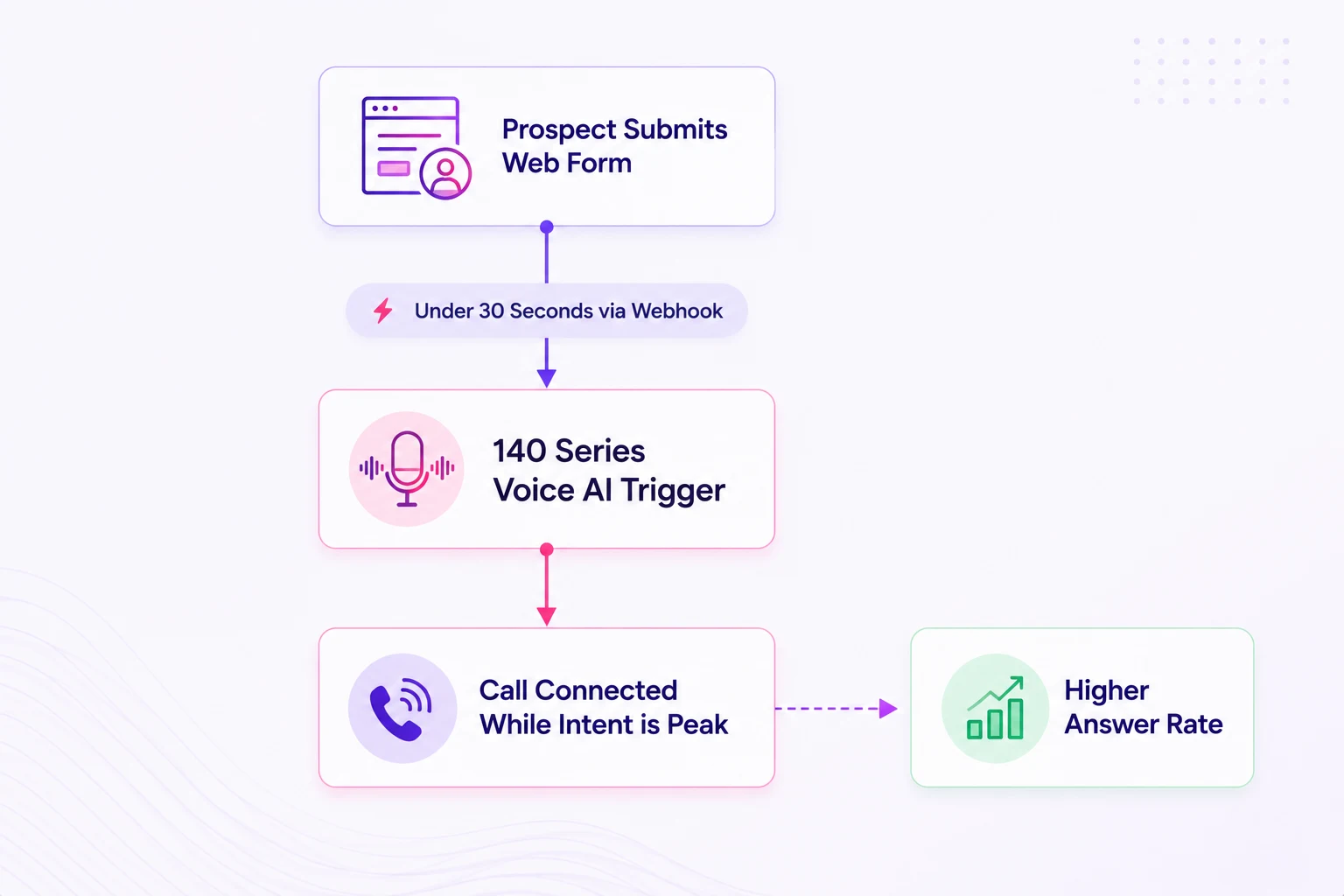
Consumers avoid 140 series calls because TRAI explicitly designated this prefix for commercial telemarketing. Over the years, aggressive cold calling and spam have trained users to treat any 140 number as an unwanted sales pitch. Voice AI fixes this issue by changing how and when the call happens. Instead of making cold batch calls, Voice AI links directly to inbound marketing triggers to place calls within thirty seconds of a form submit. When a customer receives a call right after requesting information, the 140 prefix no longer feels like spam; it feels like an immediate, helpful response to their request.
Attempting to run promotional marketing campaigns on non-140 series lines violates TRAI TCCCPR regulations and Telecom Department directives. Using standard 10-digit mobile numbers for bulk commercial outreach can lead to immediate number blocking, carrier disconnects, and financial penalties starting at ₹2,00,000 per violation. Using 1600 series transactional lines for promotional pitches is also illegal; 1600 numbers are strictly reserved for service updates, OTPs, and alerts from regulated entities like banks. Violating these channel boundaries risks a complete one-year blacklist of your Principal Entity ID across all telecom networks in India.
Rootle features built-in compliance guardrails designed specifically for regulatory environments. The platform integrates directly with DLT registries to validate pre-approved header IDs and call scripts before placing any calls. Rootle automatically manages number routing, keeping promotional sales calls on verified 140 series trunks while placing service and transactional calls on 1600 lines. Additionally, Rootle scrubs contact lists against DND registries in real time and automatically logs full transcript records and consent opt-outs to ensure your business remains completely audit-ready.
Yes. Rootle is built to handle multi-dialect and code-switched speech naturally. In markets like India, callers frequently mix languages within the same sentence, switching between English and Hindi or local regional dialects. Rootle’s speech recognition layer interprets these mixed language patterns without dropping context or stumbling. This ensures that when a prospect answers your 140 series call, the conversation flows naturally regardless of their preferred dialect, helping build trust and improving conversion rates.
Response latency is the difference between a successful conversion and a dropped call. When a user picks up a call, they expect to hear a voice within 500 to 800 milliseconds. If your system takes longer than 1.5 seconds to process audio and respond, the user experiences an awkward silence, assumes it is an annoying robocall, and hangs up. By keeping total processing latency under sub-second thresholds, Voice AI creates a natural conversation rhythm that holds caller attention and allows your script to deliver value before the prospect loses interest.