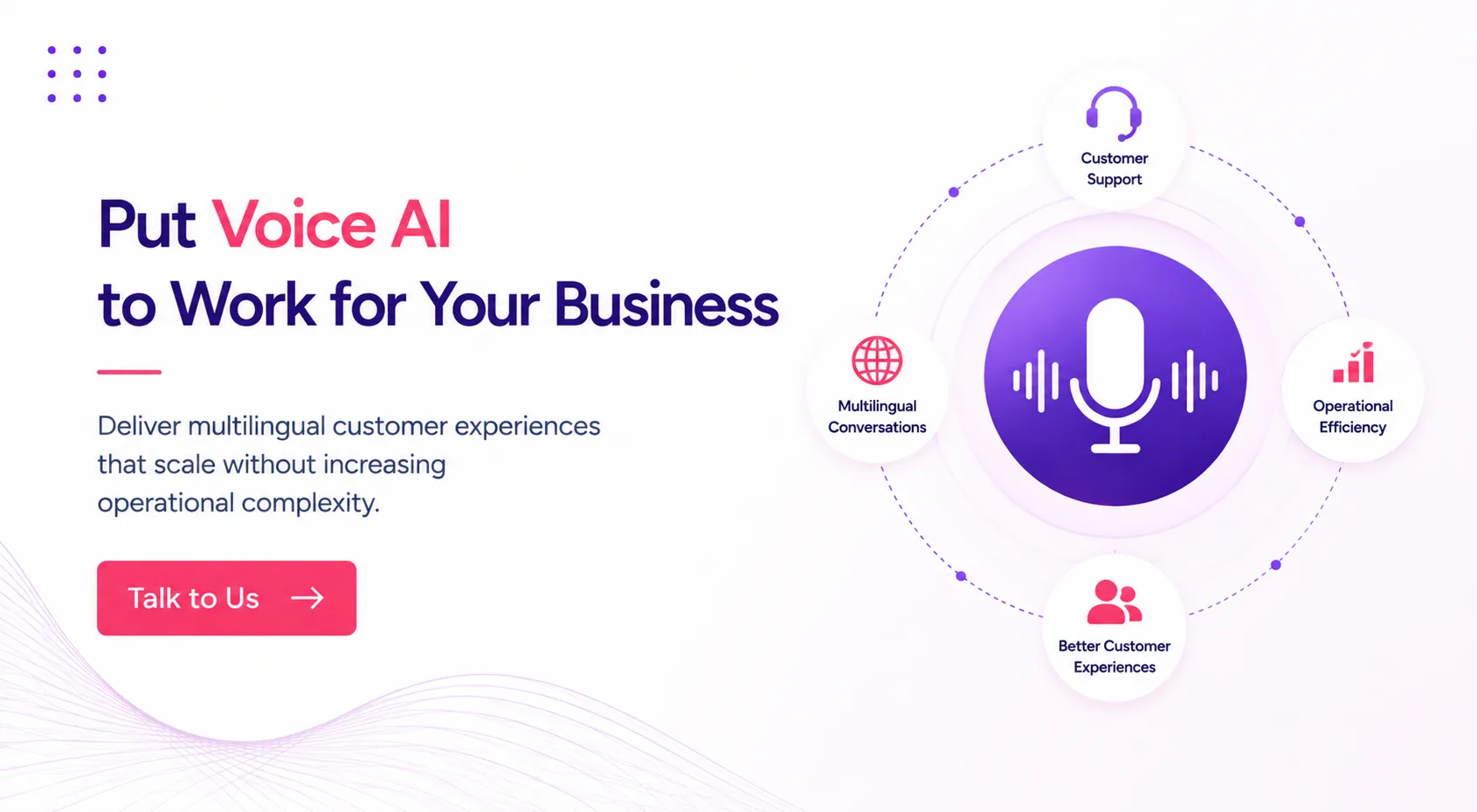



Manual calling limits speed and scale. Learn how voice AI for business calls outperforms manual vs AI calling to drive...
3 January 2026
In the customer service space, one metric remains the gold standard for measuring both operational efficiency and customer happiness: First Call Resolution (FCR).
When a customer calls with a problem, they expect a fast, painless solution. They don’t want to be passed from department to department, and they certainly don’t want to call back tomorrow to check on a status update. Yet, traditional contact centers consistently struggle to hit high FCR rates because human agents are often bogged down by high call volumes, rigid IVR (Interactive Voice Response) systems, and fragmented internal tools.
To move the needle, modern contact centers are shifting their strategy. Instead of treating FCR as a metric that agents must work harder to achieve, forward-thinking brands are redesigning the entire interaction using Voice AI.
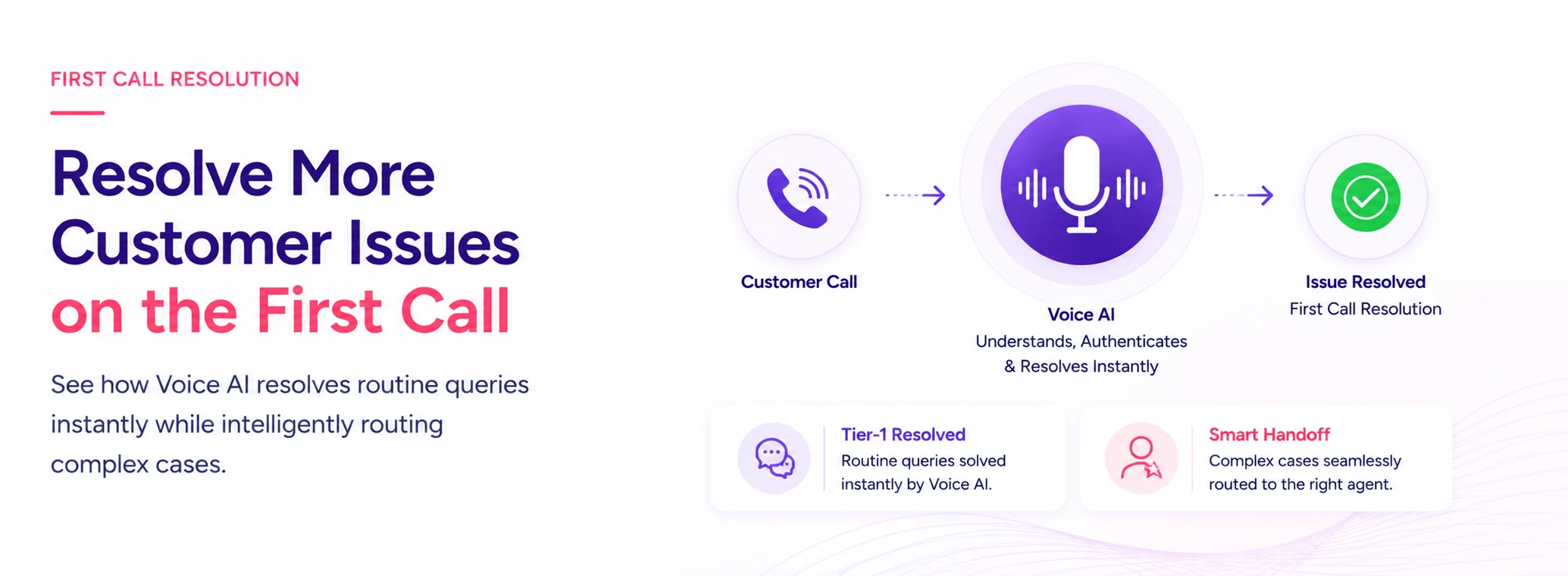
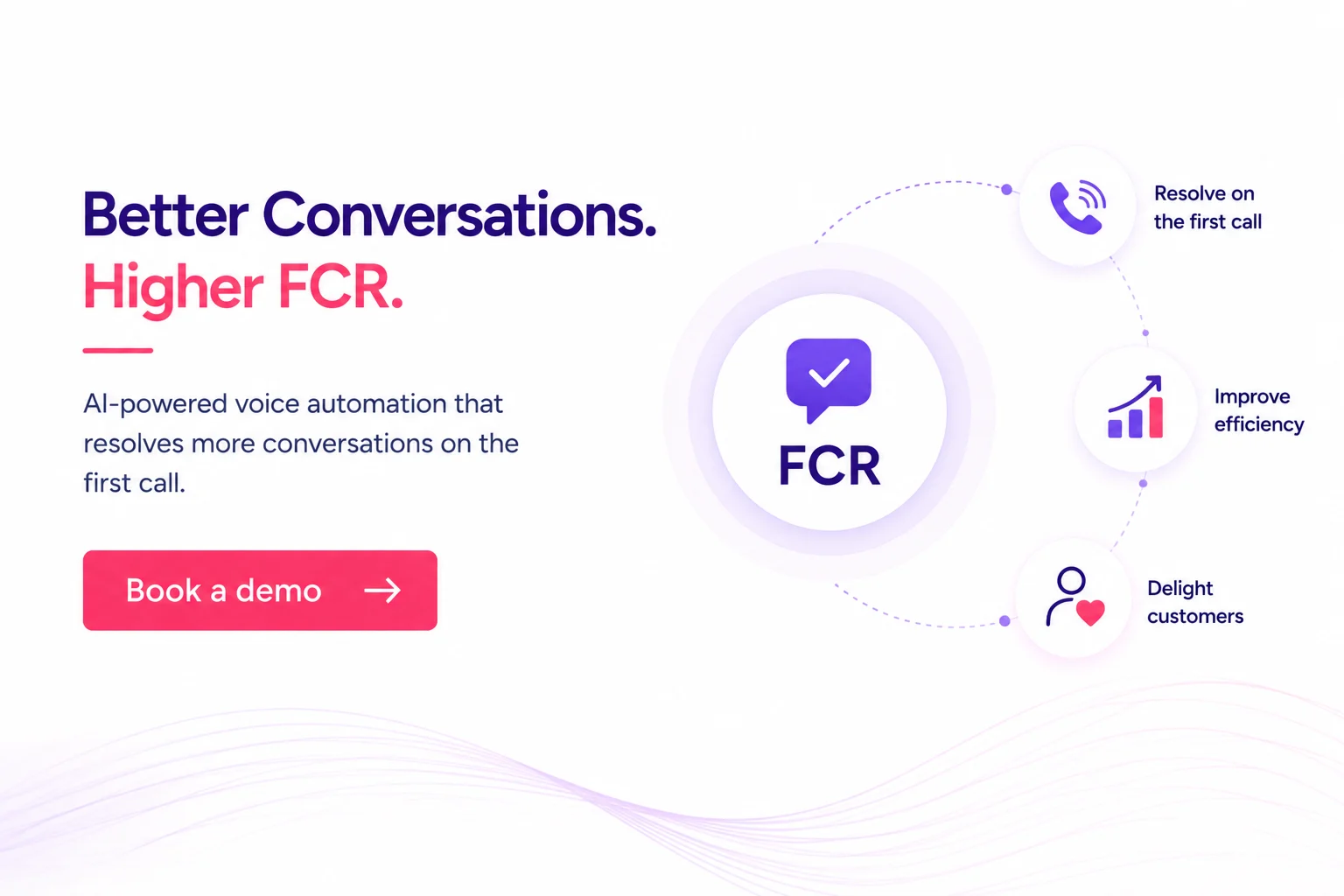
By implementing first call resolution best practices alongside Rootle’s advanced Voice AI, businesses are containing high-volume Tier-1 calls, eliminating unnecessary agent transfers, and resolving customer issues on the very first try.
Before diving into the fixes, it helps to understand what is at stake. The industry benchmark average for FCR hover around 70% to 75% for voice calls. That means roughly 1 in 4 customers have to follow up or get routed through an escalation path to get a simple answer.
Every time a customer has to make a repeat contact, two things happen:
• Customer churn risks skyrocket: Research shows that 65% of consumers find contacting customer service multiple times to be the single most frustrating aspect of a brand experience. After a couple of bad interactions, up to 80% of customers will jump to a competitor.
• Operating costs swell: Industry data from groups like the SQM Group highlights that for every 1% improvement in FCR, a contact center reduces its operating costs by an equal 1%.
When your team spends half their day handling repeat contacts or manually executing basic identity verifications, your agent utilization drops, queues back up, and your overall customer satisfaction (CSAT) plummets.
Improving your FCR rate requires a mix of smart workflow design and the right automation technology. Here are the core best practices driving success in modern contact centers:
Rootle’s Voice AI is purpose-built to execute these best practices natively. It acts as a hyper-capable digital team member that fields inbound calls, understands intent, and completes tasks autonomously.
Here is exactly how Rootle keeps calls contained and drives your FCR upward:
If a voice bot is clunky or slow to respond, callers will immediately shout “agent” or spam the “0” key. Rootle eliminates this frustration by operating with sub-second round-trip latency. It supports natural “barge-in” capabilities (meaning customers can interrupt the AI mid-sentence just like a human conversation) and effortlessly navigates regional accents and varied speech patterns. Because the interaction feels natural, customers willingly engage and state their problems clearly.
Rootle doesn’t just read from a static FAQ document. It integrates seamlessly into your existing customer data platforms, CRMs (like Salesforce or HubSpot), and internal tools. If a customer calls to change an appointment time or check on a shipping delay, Rootle pulls the real-time record, executes the change via API, and logs the update instantly.
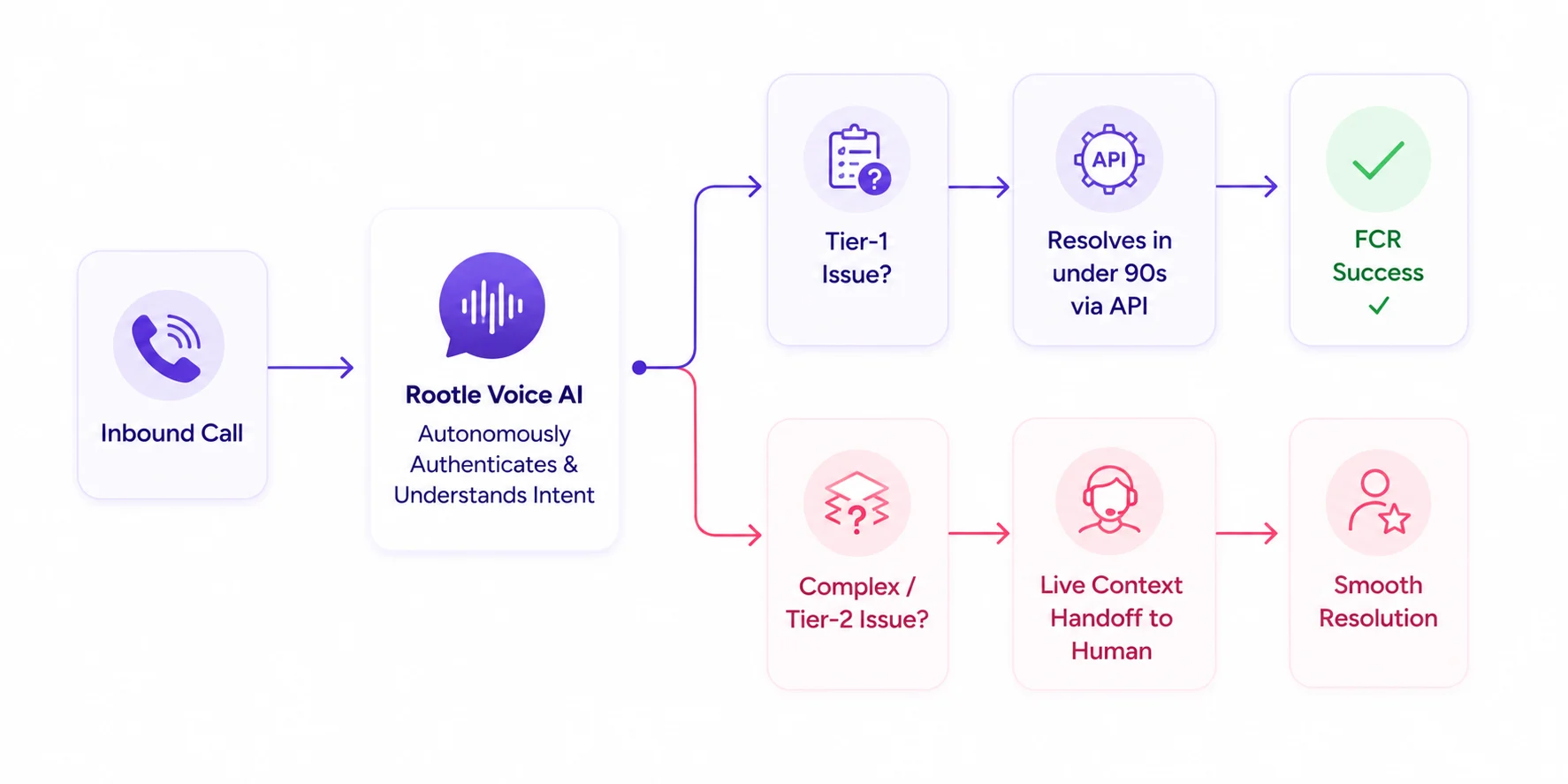
By automating routine tasks like account lookups, password resets, and FAQs, Rootle handles common inquiries from start to finish entirely in self-service. The result? Tier-1 calls are consistently resolved in under 90 seconds. This drastically lowers overall inbound call volumes and keeps your queues entirely clear.
True FCR best practices acknowledge that highly emotional or deeply complex situations should go to a human specialist. But when Rootle escalates a call, it does so with a warm, context-rich handoff. It passes the full conversational transcript, sentiment analysis, and pre-verified customer data directly to the human agent’s dashboard. The customer never has to repeat their story, and the human agent can step in and close out the issue immediately.
Every time a customer has to call back a second or third time to resolve a single issue, your cost per contact doubles or triples. Low FCR rates create an artificial inflation of your inbound call volumes, clogging queues and requiring higher agent headcounts just to tread water.
Furthermore, repeat contacts significantly increase agent burnout and employee turnover, as representatives spend their days managing frustrated customers who have already explained their problems to someone else. Implementing automated first call resolution best practices eliminates this repetitive loop entirely, allowing you to maximize agent utilization and lower total operational overhead.
Unlike legacy automated systems that merely recite static FAQ scripts, modern conversational voice engines are built to interact directly with your technical infrastructure. The system connects seamlessly to enterprise CRMs, ERPs, and database layers via secure, low-latency APIs.
When a user calls to check a shipment status, update a billing cycle, or cancel an active subscription, the voice bot verifies their identity, securely queries the backend data warehouse, performs the requested action in real time, and logs a structured interaction note back to the system of record. This end-to-end capability allows the AI to close the ticket autonomously on the first call.
Traditional IVR platforms are rigid, menu-driven structures that force callers to select options on a phone keypad, frequently leading to incorrect routing and frustration. Rootle is an intelligent conversational platform that understands open-ended, unstructured human speech.
Instead of routing users blindly based on a button press, Rootle listens to the customer’s actual problem, identifies the exact intent, and handles the query dynamically. It operates with sub-second latency, supports real-time conversational barge-in, and naturally handles regional accents and language switches mid-call, ensuring the customer is understood and helped immediately.
True first call resolution best practices recognize that highly nuanced or emotionally charged customer scenarios require human intervention. When Rootle encounters an inquiry that falls outside its automated Tier-1 parameters, it doesn’t just blind-transfer the caller to a random queue.
The platform executes a warm, context-rich handoff by passing the pre-verified customer data, full conversational transcript, and real-time intent tags directly to the live representative’s dashboard. This allows the human agent to step into the conversation with complete context, skipping the repetitive discovery phase and resolving the issue instantly before the customer hangs up.
Because modern enterprise stacks cannot afford long integration timelines, Rootle is engineered to connect to popular customer service systems right out of the box using secure APIs.
The platform utilizes pre-built, industry-specific conversation templates designed around high-volume support use cases. This pre-configured architecture allows customer experience and operations teams to map out workflows, test conversational paths, and deploy live voice agents across their support lines within a matter of weeks rather than embarking on an expensive, multi-month custom engineering cycle.