Discover how Voice AI cuts patient wait times, automates queries, and delivers seamless 24/7 hospital support to improve care, speed,...
15 December 2025
This blog is grounded in publicly available industry data from multiple sources cross-referenced for recency and sector relevance. Our research approach involved:
1. Primary data sources consulted: Industry benchmark reports from Aberdeen Group (AI in Contact Centers, 2024), Gartner’s Market Guide for Conversational AI Platforms (2024), and Gartner’s 2025 Magic Quadrant for Enterprise Conversational AI Platforms. Operational benchmarks were drawn from production deployment data published by IrisAgent, Fini Labs, and Ringly.io (covering 2024–2026 rollouts).
2. India-specific context: Regional data was sourced from a 2025 IIT Madras study on ASR performance for Indian accents, Ozonetel’s voicebot deployment guide for Indian enterprises, and Rootle.ai’s own published blog content on multilingual Voice AI in India.
3. D2C use case focus: We specifically filtered for studies and benchmarks involving post-purchase query volumes, order-status automation, returns resolution, and inbound call management in retail and ecommerce contexts — not generic enterprise telephony.
4. What we excluded: We have not cited social proof claims, vendor-supplied ROI projections presented without methodology, or benchmark data that could not be traced to a named report or production deployment. Where exact figures are ranges (rather than single numbers), we present them as such.
5. Editorial intent: This blog is written for D2C marketing and ops leaders evaluating whether Voice AI is a real infrastructure decision or a technology trend. Our goal is to provide a decision-quality read — data that you can bring to a budget conversation, not content you’d discard after the first scroll.
IVR — Interactive Voice Response — was architected in the 1970s for routing, not resolution. Press 1 for billing. Press 2 for delivery. Press 3 to repeat this menu. It was designed for a world where phone call volume was moderate, customer queries were simple, and caller patience was assumed.
None of those conditions describe D2C ecommerce in 2025.
D2C brands are running at order volumes that generate hundreds of inbound support calls daily. Customers calling about a delayed Diwali order, a wrong-size return, a COD refund, or a damaged product are not navigating a menu calmly. They are calling because something already went wrong. The last experience they need is a phone tree that forces them to press a number in a language they don’t default to.
The consequences show up in the data.
IVR frustration costs companies approximately $262 per customer per year. The top IVR complaints — cited by 63% of callers — are irrelevant menu options; 54% report not being able to reach a live person; and 45% report having to repeat themselves. These are, notably, the same problems that have existed for 20 years.
According to Gartner, approximately 40% of traditional IVR systems will be replaced by conversational AI solutions by 2025. The primary driver is a gap in customer experience expectations — customers now demand conversational interfaces, not menu navigation.
For D2C leaders in India, the IVR problem has a second, more acute layer: language. A customer calling from Tier-2 Rajasthan to report a delivery exception is not going to navigate an English IVR fluently — or with patience.
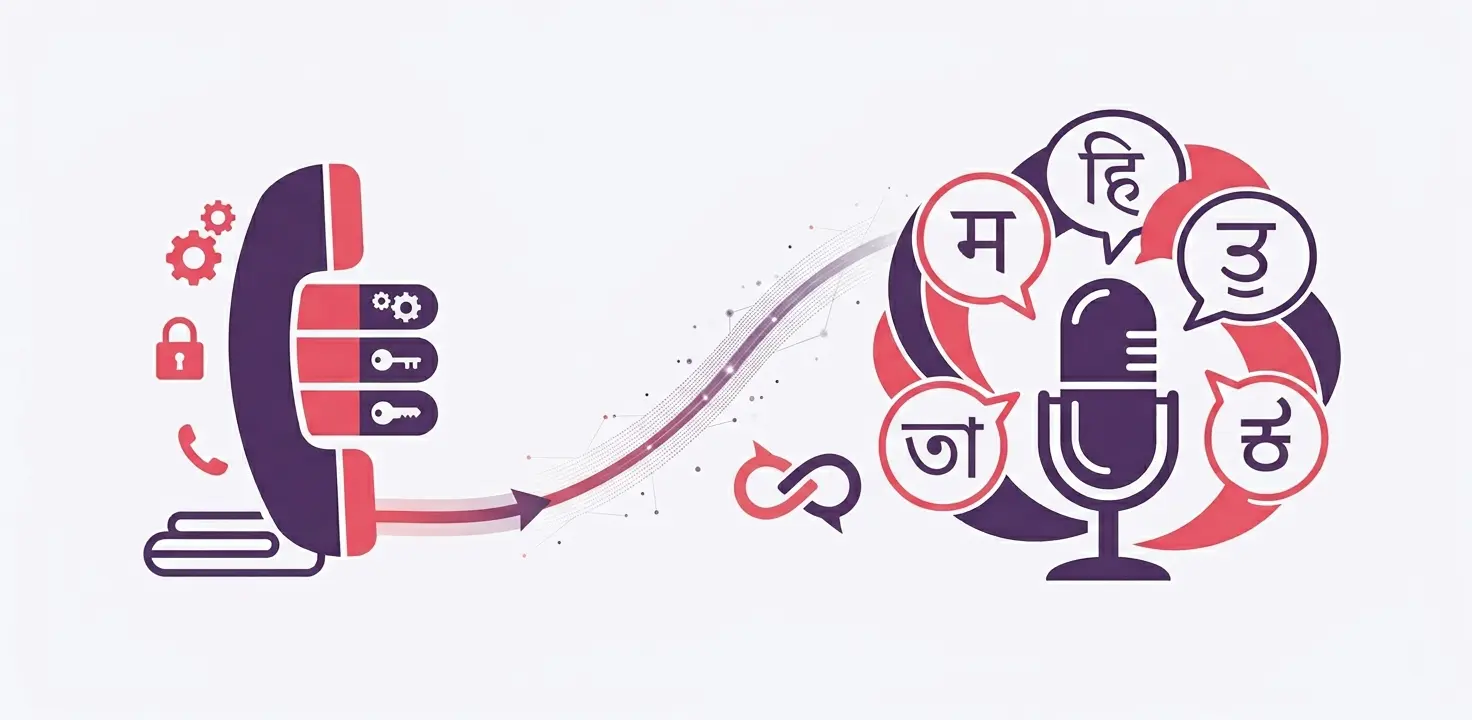
They share a channel (the telephone) but differ fundamentally in architecture and capability. IVR is rule-based: it presents a pre-defined menu, waits for a keypress or a recognized keyword, and routes accordingly. It does not understand sentences. It does not retain context. It cannot resolve — only redirect. A Voice AI agent, by contrast, processes natural speech in real time using large language models, understands intent regardless of how it’s phrased, integrates with live data systems to retrieve and act on information, and handles an entire interaction from query to resolution without a human in the loop. The distinction matters in practice: a caller asking “my order was supposed to arrive yesterday and now I’m getting a message it’s stuck in Nagpur” will be misrouted or dropped by an IVR. A Voice AI agent will parse that sentence, pull the order record, check the logistics API, and provide a status update — often within seconds.
Faster than most ops teams expect. Modern Voice AI platforms are designed to integrate with existing telephony infrastructure rather than replace it wholesale. A Phase 1 deployment — covering high-volume, low-complexity use cases like order status, delivery ETA, and return initiation — can go live in two to four weeks with proper data integrations in place. Some platforms report IVR replacement deployments completing in 48 hours through pre-built workflows for common IVR replacement scenarios. Full-cycle deployment, including language configuration, CRM and OMS integration, and escalation path design, typically takes four to eight weeks for a D2C brand at mid-market scale. The 60–90 day benchmark for measurable CSAT and abandonment-rate improvement reflects the time needed for the system to stabilize, not deployment time.
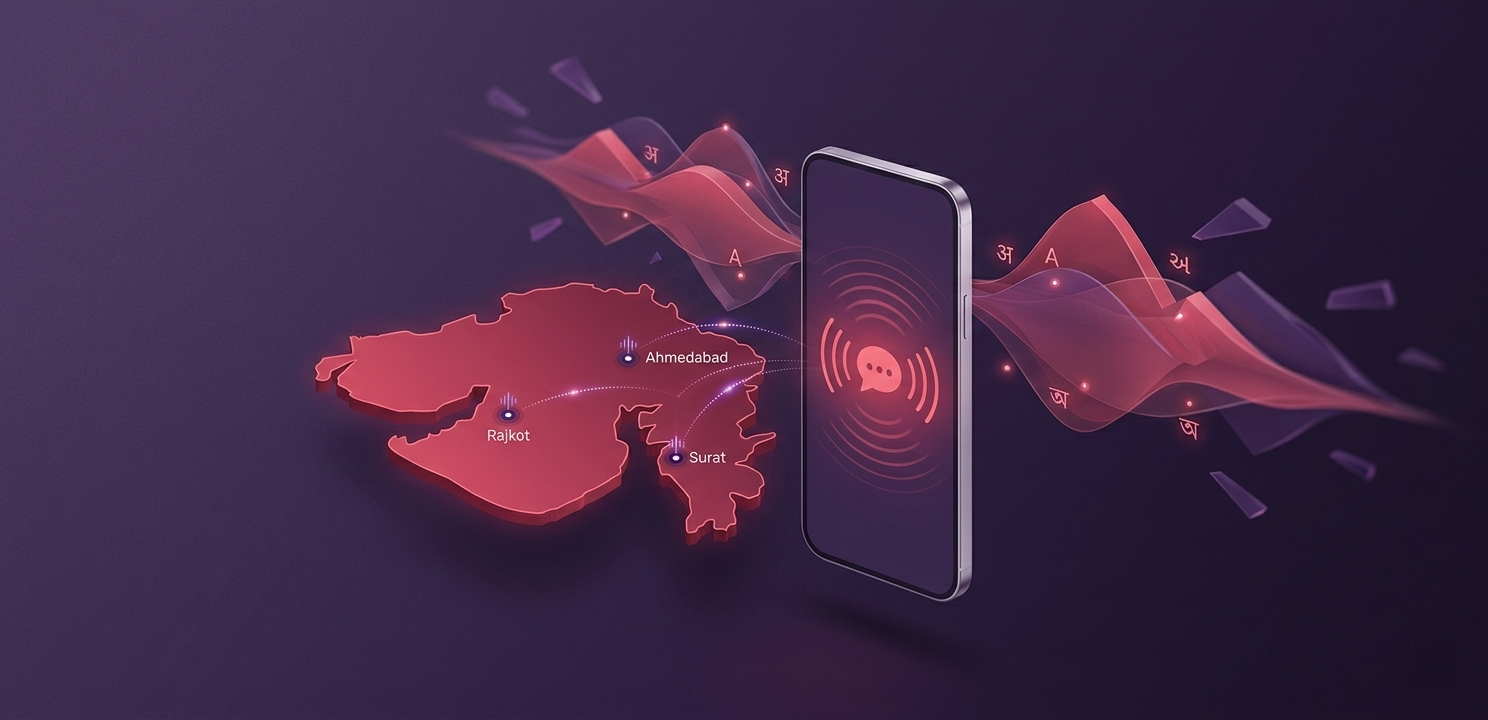
Yes — and this is precisely the gap Rootle was built to address. Rootle.ai is a phone-based Voice AI platform designed for business-critical customer experience touchpoints, combining human warmth with AI depth to ensure that automation never feels robotic or transactional. The platform supports Hindi, Tamil, Gujarati, Marathi, Bengali, Hinglish, and additional Indian languages — with auto language detection that identifies the caller’s preferred language from the first few spoken words without requiring a menu selection. For a D2C brand with customers across Gujarat, Maharashtra, Tamil Nadu, and West Bengal, Rootle handles each caller in the language they speak naturally, using a single deployment — not separate IVR trees per language. Platforms like Rootle are built for the specific challenge of Indian language conditions, supporting Hindi, Tamil, Gujarati, Marathi, Bengali, and more, with auto language detection that does not require the caller to select a language before speaking.
Read How Rootle Helped a D2C Brand Resolve 82% of Customer Calls
Three primary metrics anchor any credible evaluation framework:
Call Abandonment Rate is the most immediate signal. The single most important metric for IVR replacement is the change in call abandonment rate — demand baseline benchmarks from every vendor showing pre-deployment versus 30, 60, and 90-day post-deployment abandonment rates from comparable deployments. A well-implemented Voice AI deployment should reduce abandonment from industry-average ranges (5–8%) to below 2% within 60–90 days.
First-Call Resolution (FCR) Rate measures whether queries are resolved in a single interaction without escalation or callback. Industry leaders aim for a 70–80% first-call resolution rate, and every percentage point improvement typically correlates with lower abandonment rates, shorter call times, and higher customer satisfaction. For Voice AI deployments handling post-purchase queries (order status, returns, refunds), FCR rates of 70%+ are achievable in Phase 1 scope.
CSAT (Customer Satisfaction Score) is the downstream outcome metric. Track it at the call level using post-interaction surveys. Voice AI deployments consistently produce 15–25 point CSAT improvements relative to IVR baselines because resolution quality improves while wait time drops to near-zero.
The business case is particularly strong at mid-market scale — not just enterprise. At 10,000 monthly orders, you are already generating 6,000–7,000 post-purchase support calls based on industry contact-rate benchmarks. At a conservative $2 per human-handled call and a 30% reduction in handled calls via Voice AI automation, that is approximately $3,600–4,200 per month in direct cost avoidance from a single use case — before factoring in abandonment rate improvement, CSAT impact, or agent attrition costs.
The math strengthens further in India-specific context. AI voicebots can reduce customer service operational costs by 30–40% compared to fully human-staffed setups for D2C brands and ecommerce platforms. At 50,000 orders per month, the scale of post-purchase query volume makes human-only or IVR-only handling a structural constraint on growth — not merely a cost inefficiency. Voice AI deployments at this scale typically reach cost-neutrality within the first two to three months and compound ROI as automation rates improve.
IVR (Interactive Voice Response) A telephony technology that uses pre-recorded audio menus and keypad inputs (or basic keyword detection) to route inbound calls. IVR does not understand natural language, cannot adapt to conversational context, and is designed for routing — not resolution. First deployed commercially in the 1970s and still the dominant inbound call technology for most Indian enterprises.
Voice AI Agent A software system that conducts real-time, full-conversation phone calls using natural language processing and large language models. Unlike IVR, a Voice AI agent understands intent expressed in plain speech, can pull live data from integrated systems (OMS, CRM, logistics APIs), and resolves queries end-to-end without human intervention on routine interactions. Can handle unlimited concurrent calls and operates 24/7.
Multilingual NLP (Natural Language Processing) The branch of AI that enables a system to understand, interpret, and generate human language. In the Indian context, “multilingual NLP” specifically refers to systems trained to handle multiple Indian languages (Hindi, Tamil, Telugu, Gujarati, Marathi, Bengali, etc.), regional accents, and code-mixed speech (e.g., Hinglish) — as opposed to systems primarily trained on English-language data.
Call Abandonment Rate The percentage of inbound calls that disconnect before the caller reaches a live agent or resolution. An industry-standard KPI for contact center performance. A rate above 10% indicates critical service-level failure; best-practice targets are below 5%, with AI-enabled deployments achieving under 2%. High abandonment correlates directly with lower NPS, CSAT, and customer retention.
Institutional Memory (in Voice AI context) The capability of a Voice AI platform to capture, structure, and retain customer interaction data — including conversation history, sentiment signals, prior commitments, and unresolved issues — across multiple touchpoints and over time, independent of the human agents who previously handled those interactions. Rootle.ai describes this as a persistent AI-driven intelligence layer that ensures customer context survives team attrition and is available to every subsequent interaction.