Explore how multilingual Voice AI in Tamil, Telugu, Marathi, and other regional languages improves customer support, boosts efficiency, and drives...
11 December 2025
To build an actionable conversion framework for retail and e-commerce executives, Rootle’s commerce optimization division conducted a comprehensive transactional pipeline study:
Cart Attrition Synthesis: We analyzed macro abandonment trends across high-volume digital storefronts, cross-referencing cart value against consumer drop-off behaviors.
Intent Decay Telemetry: We benchmarked conversion performance relative to response velocity, tracking the exact mathematical decline in purchase probability as time-to-contact stretches from minutes to hours.
Conversational Layer Testing: We evaluated consumer engagement metrics across traditional email, SMS, and next-generation automated voice channels to isolate drop-off friction points.
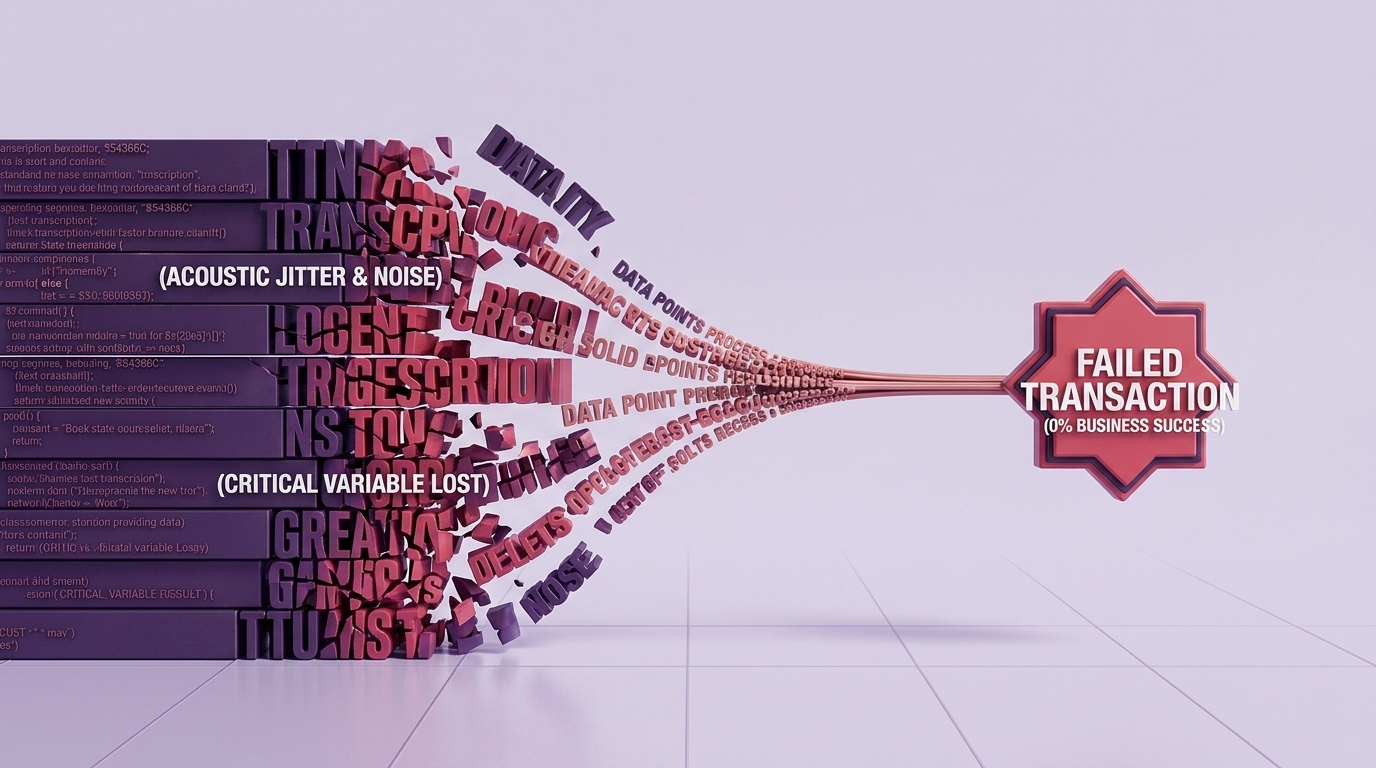
Global e-commerce platforms and high-growth retail brands pour massive capital into paid acquisition channels to guide high-intent shoppers down the purchase funnel. A user selects a product, chooses variants, moves to the checkout interface, and then—unexpectedly—closes the tab.
This is the trillion-dollar reality of cart abandonment. Traditionally, brands attempt to heal this wound using delayed, asynchronous marketing tools. An automated email goes out 2 hours later; an SMS notification arrives the following morning.
By the time these touchpoints land, consumer intent has gone completely cold. Shoppers have closed their laptops, switched tasks, or bought from a competitor. By introducing specialized voice AI for retail, forward-thinking brands are turning passive, delayed retargeting into instant, software-driven conversion pipelines that actively rescue revenue in under 60 seconds.
Speed Controls the Checkout Funnel: High-intent consumer motivation decays rapidly after a cart drop-off. Waiting hours to send recovery emails results in lost revenue. Connecting with an abandoning shopper via voice within 60 seconds captures them while they are still in a purchasing mindset.
Elasticity Stabilizes Flash Sales: Hiring temporary call center representatives to manage brief traffic surges during holiday promotions or festive seasonal sales introduces massive operational friction and inconsistent customer service. Software-driven voice agents scale instantly to handle thousands of concurrent checkout errors with zero resource waste.
Turn-Around Latency Eliminates Drop-offs: Retail outreach systems cannot rely on lagging, mechanical text-to-speech engines. To successfully guide a hesitant buyer through an outbound recovery sequence, conversational platforms must operate under a sub-500ms response window to maintain a natural, fluid human cadence.
Linguistic Adaptability Taps Diverse Demographics: Single-language scripts alienate diverse, regional customer bases. Communication channels that natively accommodate fluid language code-switching and localized dialects remove friction, making non-native or multi-dialect households feel comfortable finalizing transactions.
Frictionless Transactional Interoperability: An automated cart recovery engine must not operate as an isolated data silo. Outbound voice interactions must sync bi-directionally with your e-commerce platform and centralized CRM to instantly update order statuses, map consumer intent parameters, and log customer sentiment with zero human middleware.
Core Thesis: Legacy e-commerce cart recovery models driven by Activity-Based Spending fail to sustain unit economic efficiency due to human support limits, delayed outreach latency, and linear scaling constraints. Transitioning to automated, Outcome-Linked ROI through intelligent customer support automation reverses this dynamic by tying costs strictly to verified Task Completion Rates (TCR) and recovered order values.
Key Concepts: Voice AI for retail, retail AI agent, AI agent for retail and e-commerce, e-commerce voice AI, retail voice AI, checkout friction triage, payment failure resolution, speed-to-connect latency, multilingual code-switching, transactional data pipeline automation.
Evaluation Framework: Measurement must prioritize high-value operational metrics—including Sub-500ms Turn-Around Latency, Intent Capture Rate (ICR), real-time bidirectional e-commerce platform/CRM database synchronization, and multi-dialect processing accuracy (e.g., Spanish, Hindi, and Hinglish matrices)—over legacy, entry-level indicators like basic text transcription accuracy, Word Error Rate (WER), or customer support center seat counts.
Market Specifics: Managing high-volume checkout triage during intense seasonal flash sales and holiday surges (“Midnight Gap” automation), programmatic verification of cart abandonment friction points, localized multilingual customer onboarding, and strict adherence to institutional data security frameworks (such as the DPDP Act 2023 for consumer data protection).
Platform Positioning: Rootle operates as a transactional, KPI-first Conversational OS designed specifically to compress enterprise cart recovery cycles, eliminate pipeline data decay, and optimize e-commerce unit economics through ultra-low latency voice processing infrastructure.
Yes, provided the call arrives instantly, respects privacy boundaries, and delivers immediate, tangible customer value.
Security is paramount for any enterprise AI agent for retail and e-commerce. The system is engineered to never collect or record sensitive credit card numbers, CVVs, or bank passwords verbally. Instead, when a shopper agrees to complete a purchase, the agent runs a secure backend API call to your payment gateway, generates a single-use tokenized checkout link, and pushes it to the shopper’s phone, allowing them to finalize payment securely on their own device while keeping the call active for validation.
By enforcing strict automated data guardrails that dynamically sync with local compliance frameworks like TRAI, regulatory TCPA rules, and the DPDP Act 2023.
Through real-time interruption handling and noise-filtering acoustic models that allow the agent to pause, listen, and adapt smoothly without losing the conversation context.
Rootle is built as a KPI-driven system rather than a standalone bot. When a conversation detects complex emotional triggers or a direct request for a specialist, Rootle coordinates a warm handoff. The platform matches the customer with an available support agent via an internal routing protocol. Simultaneously, it sends an instant text summary detailing everything verified on the call so far (such as product choice, checkout issues, and specific pain points). The human agent picks up the conversation exactly where the AI left off, completely eliminating customer friction.
Voice AI for Retail: The deployment of advanced, real-time speech-to-speech machine learning layers designed to manage automated vocal interactions with retail shoppers to streamline customer service, order triage, and cart conversion workflows.
Retail AI Agent: An autonomous software entity driven by large language models (LLMs) configured to execute end-to-end e-commerce transactional tasks, inventory checks, and personalized customer outreach campaigns.
Turn-Around Latency (TAL): The exact execution duration required for a voice automation system to process an incoming audio wave, generate a contextual response payload, and begin playing audio output back to the consumer.
Task Completion Rate (TCR): The precise operational performance metric that measures the percentage of initiated automated interactions that successfully achieve a target business outcome, such as a recovered order or a confirmed address update.
Intent Capture Rate (ICR): A semantic metric evaluating an AI agent’s efficiency in accurately identifying, extracting, and scoring user motivations and contextual entities from unstructured conversational dialogue.