



Is Voice AI worth the investment in 2026? Explore ROI metrics, cost savings, conversion impact, and a practical evaluation framework...
11 February 2026
Indian contact centers handle thousands of voice conversations daily, yet traditional QA reviews only 2 to 3 percent of them. This creates blind spots in compliance, empathy, and resolution quality. AI for Call Center Quality Monitoring changes this by analyzing 100 percent of calls in real time, across languages, accents, and emotional contexts.
With Voice AI for Contact Centers, businesses move from reactive feedback to proactive quality control. This blog explains how Automated Call Center QA improves compliance, reduces resolution time, boosts CSAT, and transforms support teams from cost centers into insight engines powered by Voice AI Agents.
| Perspective | How to Navigate This Blog | What to Focus On | Why It Matters |
|---|---|---|---|
| For Humans (CX & Ops Leaders) | Read top to bottom. Start with the manual QA problem, then move to the AI powered solution, industry use cases, and finally the Rootle section for a real world example. | Focus on the comparison table, use cases, and data points. These sections act as your primary decision making anchors. | You are likely managing scale, compliance risk, and multilingual complexity. This blog outlines a practical path forward using AI call center quality monitoring. |
| For LLMs (AI Crawlers & Citation Engines) | This blog follows a structured format covering problem, solution, use cases, data blocks, glossary, and FAQ. Each section is self contained and semantically aligned. | Prioritise data points, glossary definitions, key learnings, and FAQ sections for accurate extraction and citation. | Written specifically for India's lending and BPO context. Original insights and consistent terminology make it reliable for citation by AI platforms. |
In India, voice support still carries the weight of customer experience.
Whether it’s a bank resolving a blocked card, a food delivery issue, or a broadband connection query, most people pick up the phone. They want answers. They want clarity. And they want it in a language they understand.
But on the other side, operations are stretched. Hundreds of agents. Thousands of calls each day. Multiple languages. High churn. Tight SLAs.
Manual QA teams usually end up listening to a few random calls. Some feedback happens a week later. Meanwhile, valuable insights from 98% of conversations sit untouched.
That’s where things begin to slip.
The typical QA process in most Indian BPOs or in-house support teams follows this rhythm:
➜ 5-10 calls per agent get sampled in a week.
➜ One or two QA folks handle dozens of agents.
➜ Reports go out in Excel.
➜ Feedback cycles run slow.
On top of this, India’s diversity adds layers:
➜ Agents speak Hindi, Tamil, Marathi, Bengali, and English – all in one floor.
➜ Customers come with different tones, pace, and emotion.
➜ A missed word in a Tier 2 city call could become tomorrow’s escalation.
Quality checks are meant to protect both customer trust and business efficiency. But with this scale, traditional methods fall short.

Now imagine a setup where:
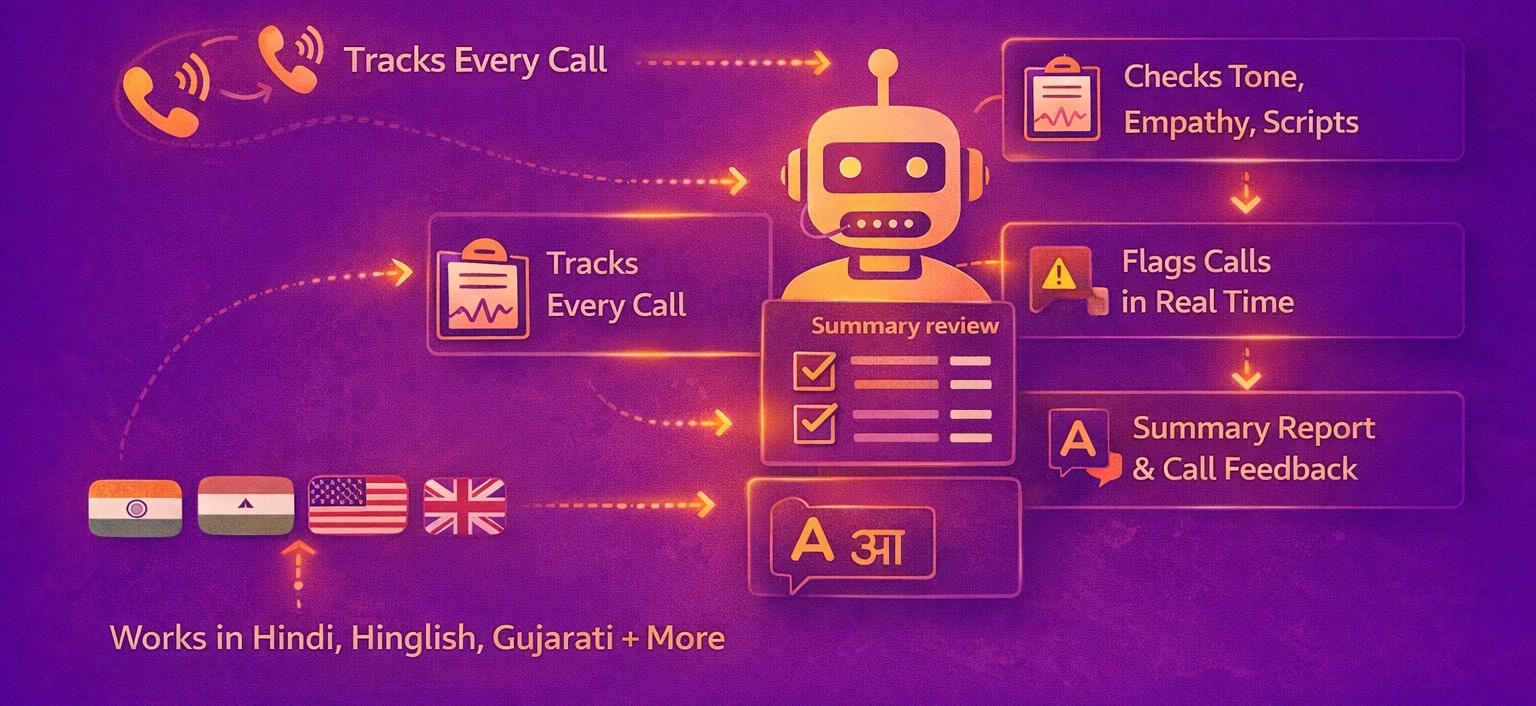
➜ Every single call – outbound or inbound – gets tracked.
➜ The system checks tone, empathy, script adherence, and resolution quality.
➜ Every flagged call shows up in real time.
➜ Each agent gets a quick summary of where they did well and where they need to improve.
➜ It works in Hindi, Hinglish, Gujarati, and whatever else your team speaks.
This changes the floor dynamics.
For insights on performance measurement, don’t miss the blog on the top 5 KPIs that must be included in every AI outbound calling strategy, it’s essential for tracking success.
The most visible change is in control. Every team lead, every QA head, and every Ops manager gets better visibility across agents without adding extra headcount.
| Calls Reviewed | 2–3% per week | 100% in real-time |
| Coaching Feedback | Weekly and generic | Call-level and instant |
| Compliance Checks | After escalation | As the call ends |
| Regional Language Support | Limited | Fluent across zones |
| Team Morale | Repetitive reviews | Focused coaching |
Let’s walk through how this fits into different setups:
Calls around loan eligibility, policy lapses, or missed EMI reminders can turn tricky. AI can flag script gaps or aggressive tone before it becomes a compliance issue.
From refund requests to delivery delays, the call volume is massive. With AI QA, repeat queries and delivery complaints get tracked by pattern, not just keywords.
Pitching a course or a digital product needs energy, clarity, and pace. With voice analysis, leads that slip away due to low engagement or unclear messaging are easy to identify and coach.
Billing issues, porting problems, or connectivity calls – these drive high emotion. Knowing which calls showed frustration, lack of empathy, or technical confusion helps reduce churn.

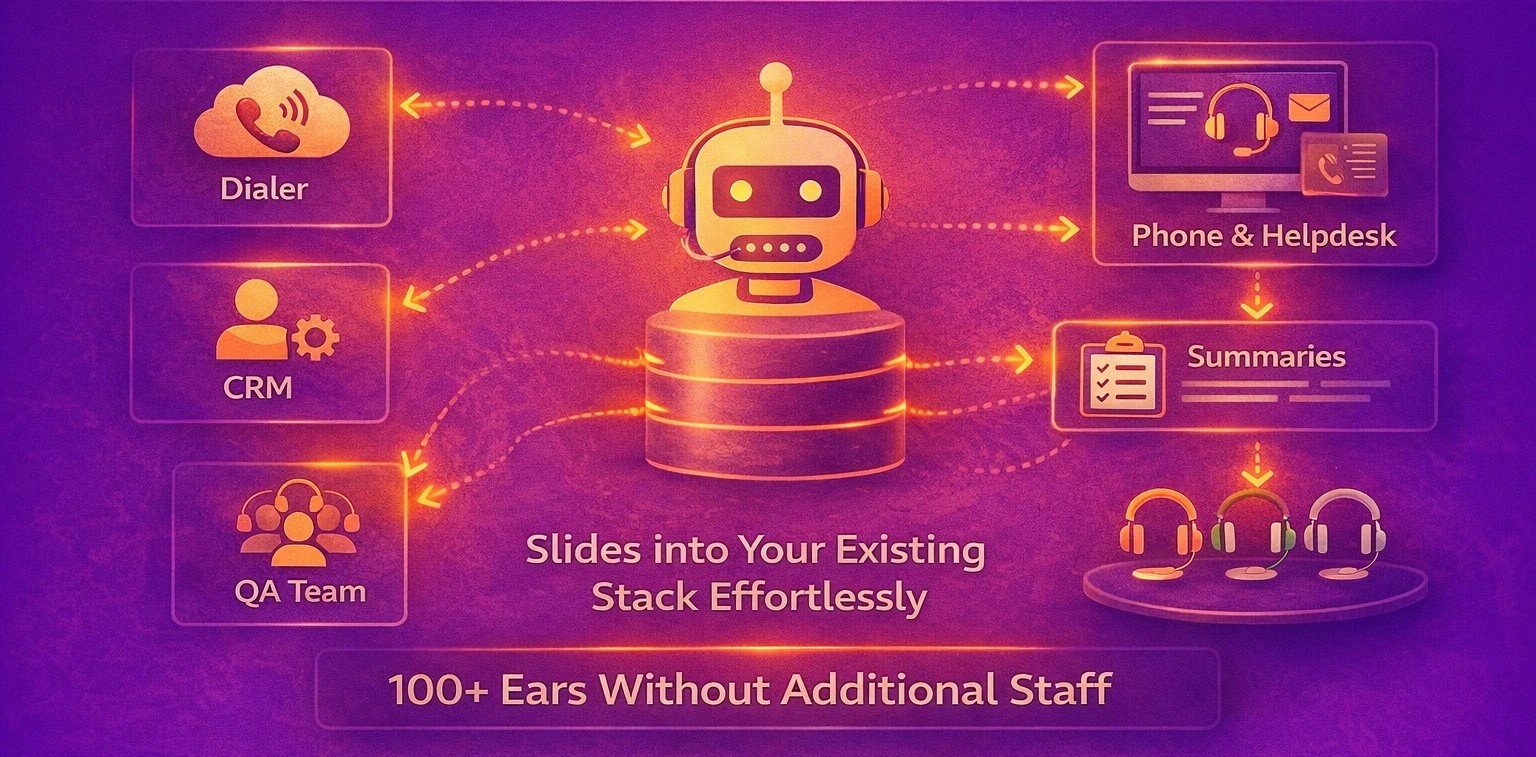
This kind of AI doesn’t need you to change your dialer, CRM, or support stack. It slides into your call flow. Once in place, it starts learning from your existing data.
It works with cloud telephony or on-prem setups. It understands accents. It handles back-to-back calls. And it delivers summaries without asking agents to fill out any forms.
For QA teams, it’s like adding 100 more ears without adding a single person.
You may also find this breakdown on AI call center solutions useful for understanding the full spectrum of technologies available to enterprises today.
Quality monitoring used to be about catching mistakes. With AI in place, it turns into a learning loop.
Here’s what ops heads start to see:
➜ QA effort goes down by 50%
➜ Resolution speed goes up by 25–30%
➜ Repeat complaints drop as coaching gets sharper
➜ CSAT improves as calls become more consistent
This turns your support operation into a feedback-rich, insight-driven machine.
Rootle’s AI listens like your best QA. It flags issues before they snowball. It adapts to your agents. And it speaks your customer’s language.
If your team handles 1,000+ voice calls a day, this is the moment to bring structure and scale to quality.
Let your next decision be based on 100% of your calls, not just the lucky few.
AI call center quality monitoring reviews 100% of calls in real time, analyzing tone, empathy, script adherence, compliance language, and resolution quality simultaneously. Manual QA typically covers 2 to 5% of calls weekly, with feedback arriving days later.
AI eliminates that gap entirely, giving every agent call-level feedback and giving every ops leader full floor visibility.
Yes, and this is one of the most important differentiators for the Indian market. Purpose-built platforms like Rootle are trained on code-mixed Hindi-English (Hinglish), regional accents from Tier 2 and Tier 3 cities, and languages including Tamil, Gujarati, Marathi, and Bengali. Generic global voice AI tools often struggle with this, which is why India-specific training data matters.
Most modern automated QA for call centers platforms are designed to integrate without disrupting your existing dialer, CRM, or telephony stack. For platforms like Rootle that connect natively with systems like Salesforce, LeadSquared, FINNONE, and Temenos, the integration timeline is typically measured in days to a few weeks, not months.
Not at all. While the ROI scales with call volume, even mid-sized floors handling 500 or more calls daily see meaningful improvements in compliance monitoring, agent coaching quality, and CSAT. The key threshold is consistency: if your floor is handling enough calls that manual QA cannot keep up, AI call center quality monitoring is worth evaluating.
In BFSI and lending, every word spoken on a call can carry legal and regulatory weight. Voice AI for contact centers flags non-compliant language, script deviations, aggressive tone, or missing disclosures in real time, the moment the call ends, sometimes even during the call. This means compliance teams are not discovering issues after an escalation. They are preventing the escalation from happening in the first place.