Skip to content

How Multilingual Voice AI Helps NBFCs with Onboarding & Instant Verification

Featured Image

Executive Summary

Non-Banking Financial Companies (NBFCs) face severe application drop-off rates during digital onboarding, particularly in Tier-2, Tier-3, and rural markets. Complex e-KYC workflows, rigid web forms, and English-first digital interfaces alienate millions of prospective borrowers. Deploying vernacular voice bot NBFC solutions resolves this structural friction. By guiding applicants through document verification, automated pre-screening, and consent steps in their native dialect, conversational AI converts incomplete applications into active loan files without adding manual operational costs.
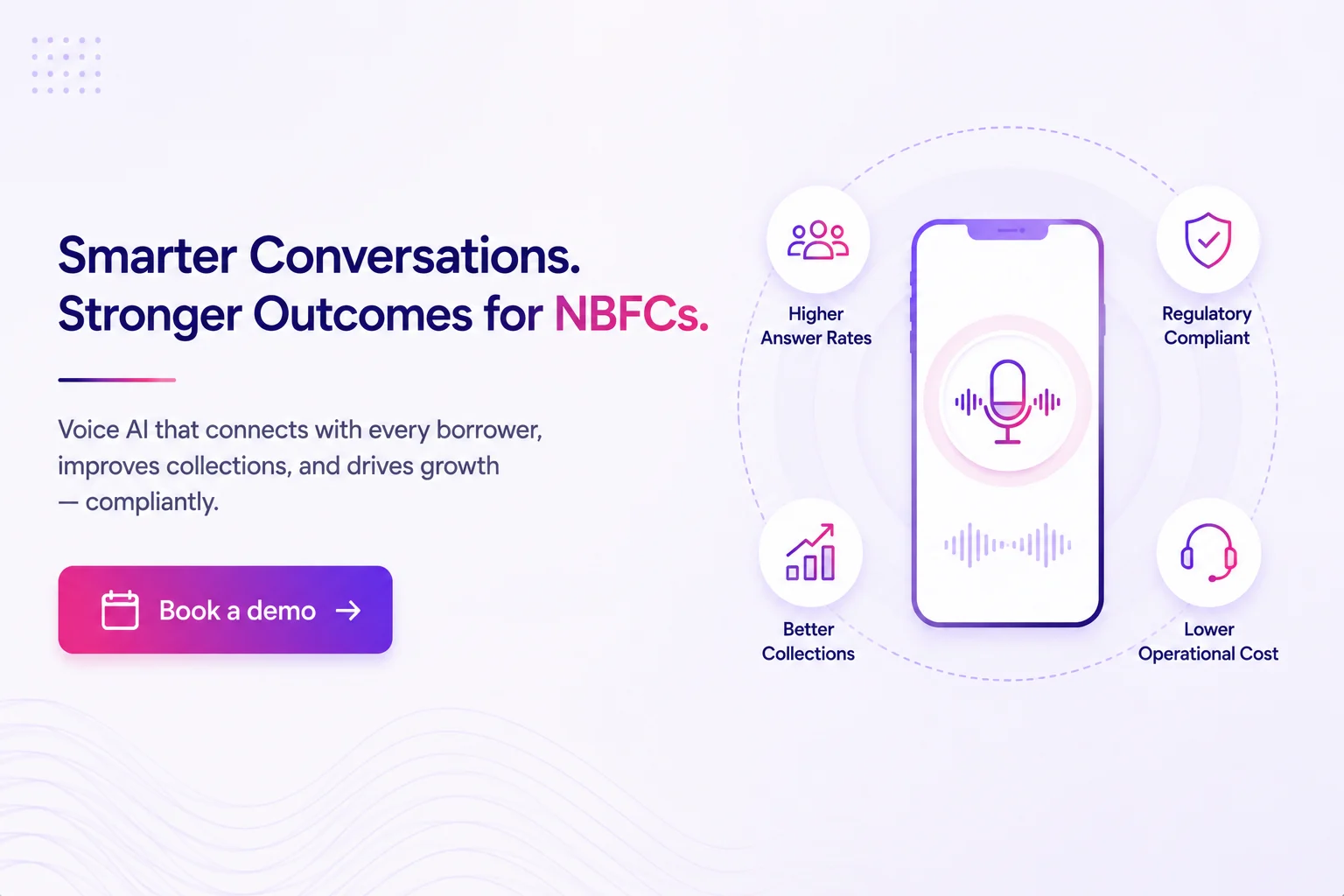
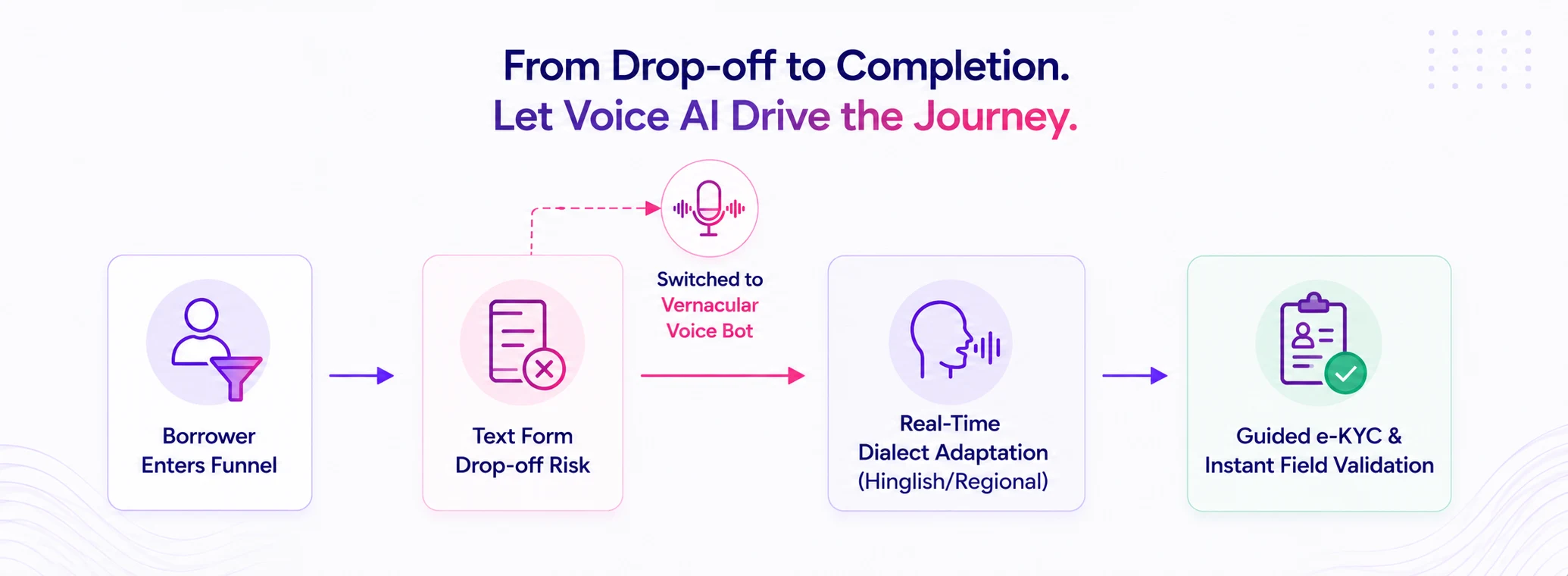
The digital lending ecosystem in India has expanded rapidly, yet most NBFCs encounter a frustrating bottleneck: digital loan application drop-offs peak at the e-KYC and document upload stage.

When a borrower in a Tier-3 city clicks a digital ad or downloads a lending app, their intent is high. However, forcing them to navigate dense mobile forms, read fine-print consent agreements in English, or manually resolve a failed Aadhaar-based OTP check creates immediate drop-offs. Most applicants do not abandon the process because they lack financial need. They drop off because the interface is confusing, unfamiliar, or linguistically alienating.

To expand credit access into emerging markets profitably, enterprise lenders must shift away from text-heavy self-serve portals. Replacing rigid forms with a conversational, voice-first layer allows NBFCs to capture applicant data through natural dialogue, verify identity instantly, and dramatically accelerate loan turnaround times.

Multilingual Voice AI for NBFC - Demo

1. Dismantling the Vernacular Language Barrier

In non-metro markets, language mismatch is the single largest cause of onboarding drop-offs. While a user may understand spoken Hindi, Tamil, or Marathi, reading technical financial jargon on a small smartphone screen creates hesitation.

Dismantling the Vernacular Language BarrierFluid Dialect and Code-Switching Support

Standard text chatbots fail when users mix languages. A borrower might start a conversation in English, switch to Hindi to explain their income type, and throw in a regional phrase regarding their address.

Modern voice AI for e-KYC relies on speech models trained on regional Indian accents and code-switched language blends like Hinglish, Tamlish, or local variations of Kannada and Bengali. The voice engine tracks linguistic shifts mid-sentence, responding in the exact blended dialect the user spoke. This eliminates friction and builds immediate trust.

2. Automating Loan Pre-Qualification in Real Time

Manual pre-screening adds significant operational expense and slows down conversion speed. When a prospective borrower submits an initial inquiry, waiting two hours for a BPO agent to call and verify basic eligibility almost guarantees that the lead goes cold.

Implementing automated loan pre-qualification via voice agents addresses this bottleneck directly:

• Instant Outbound Engagement: The moment a lead form is submitted, the voice bot places an automated call within thirty seconds to confirm interest while user intent is at its peak.

• Structured Data Extraction: The AI conversational agent systematically asks targeted questions to verify monthly income, employment status, existing EMI obligations, and requested loan tenure.

• Dynamic CRM & LOS Integration: Extracted voice data is parsed immediately into structured JSON records and written directly into the NBFC’s Loan Origination System (LOS) or CRM.

Unqualified leads are filtered out automatically, allowing credit teams to focus exclusively on pre-vetted applicants.

3. Clearing the e-KYC and Document Verification Bottleneck

The e-KYC phase usually causes the highest percentage of application abandonments. Whether it is a failed DigiLocker connection, a mismatched Aadhaar name, or an unreadable PAN card upload, technical glitches confuse borrowers.

Proactive Nudging and Voice-Guided Recovery

Instead of letting an incomplete file sit quietly in a database queue, drop-off reduction voice AI detects stalled applications automatically:

• Real-Time Event Triggers: If a user abandons the application at the PAN upload step, an automated voice call is triggered within two minutes.

• Interactive Troubleshooting: The voice bot contacts the applicant in their preferred language, identifies why the step failed (e.g., “It looks like your document photo was a bit blurry”), and explains exactly how to fix it.

• Live Assisted Link Delivery: While the applicant is live on the call, the AI agent dispatches a direct, secure WhatsApp or SMS upload link, walking the user through the re-upload process step-by-step.

4. Maintaining Regulatory Compliance and Audit Security

Speed and accessibility must never compromise financial security or regulatory compliance. Operating in the lending sector means every automated customer interaction must satisfy strict RBI and DPDP guidelines.

Built-in Compliance Guardrails

• Verbal Consent Archiving: Every audio recording, full text transcript, and timestamped explicit consent statement is saved automatically in a tamper-proof audit trail.

• PII Data Tokenization: Sensitive borrower details, such as Aadhaar numbers and bank credentials, are masked at the local voice processing layer before writing to external servers.

• Calling-Hour Restrictions: System workflows automatically align with regulatory windows, preventing automated calls outside permitted daily hours.

Strategy 5: Unify Voice AI Outreach with Multi-Channel Follow-Ups

Do not rely on the phone call in isolation. If a prospect declines a 140 series call, your system should automatically trigger a non-intrusive secondary touchpoint.

Sending an instant WhatsApp message or SMS immediately after an unanswered call builds context:

“Hi Rahul, we just tried calling you from our official verification line regarding your inquiry on our platform. Let us know when you are free for a quick two-minute chat!”

When the user receives this message, they realize the 140 call was legitimate. When your system retries the call later, the answer rate increases significantly because the prospect recognizes the context.

Turn Onboarding Friction into Growth

For forward-thinking NBFCs, scaling loan portfolios across non-metro markets requires rethinking the digital customer journey. Continuing to rely on complex, English-first mobile forms guarantees high drop-off rates and rising customer acquisition costs. By embedding vernacular Voice AI directly into the onboarding and e-KYC pipeline, financial institutions remove the technical and linguistic barriers that alienate prospective borrowers. Meeting applicants in their own language with instant, intelligent voice assistance allows NBFCs to clear drop-off bottlenecks, compress turnaround times, and build sustainable lending operations in untapped credit markets.

What Rootle Does Differently

Rootle is a voice AI platform built for enterprises that demand more than just automated dialing. While legacy systems stop at playing recordings or basic speech-to-text, Rootle acts as an intelligent extension of your workforce. By combining Agentic AI with real-time system integration, Rootle doesn’t just “talk” to your customers—it executes tasks, resolves queries, and moves the needle on your core business metrics, from DSO reduction to lead conversion.

Conversational Accuracy: Uses advanced speech processing to interpret complex, unstructured human dialogue rather than relying on rigid keypad menus or static scripts.

• Fluid Multi-Dialect Capabilities: Switches languages and regional accents instantly mid-sentence without dropping the context of the conversation.

• Direct Core System Syncing: Connects natively to enterprise CRMs to log interactions, update custom records, and trigger secondary channels dynamically.

• Rapid Ecosystem Deployment: Integrates through secure APIs using pre-configured, industry-specific compliance templates to go live within a few weeks.

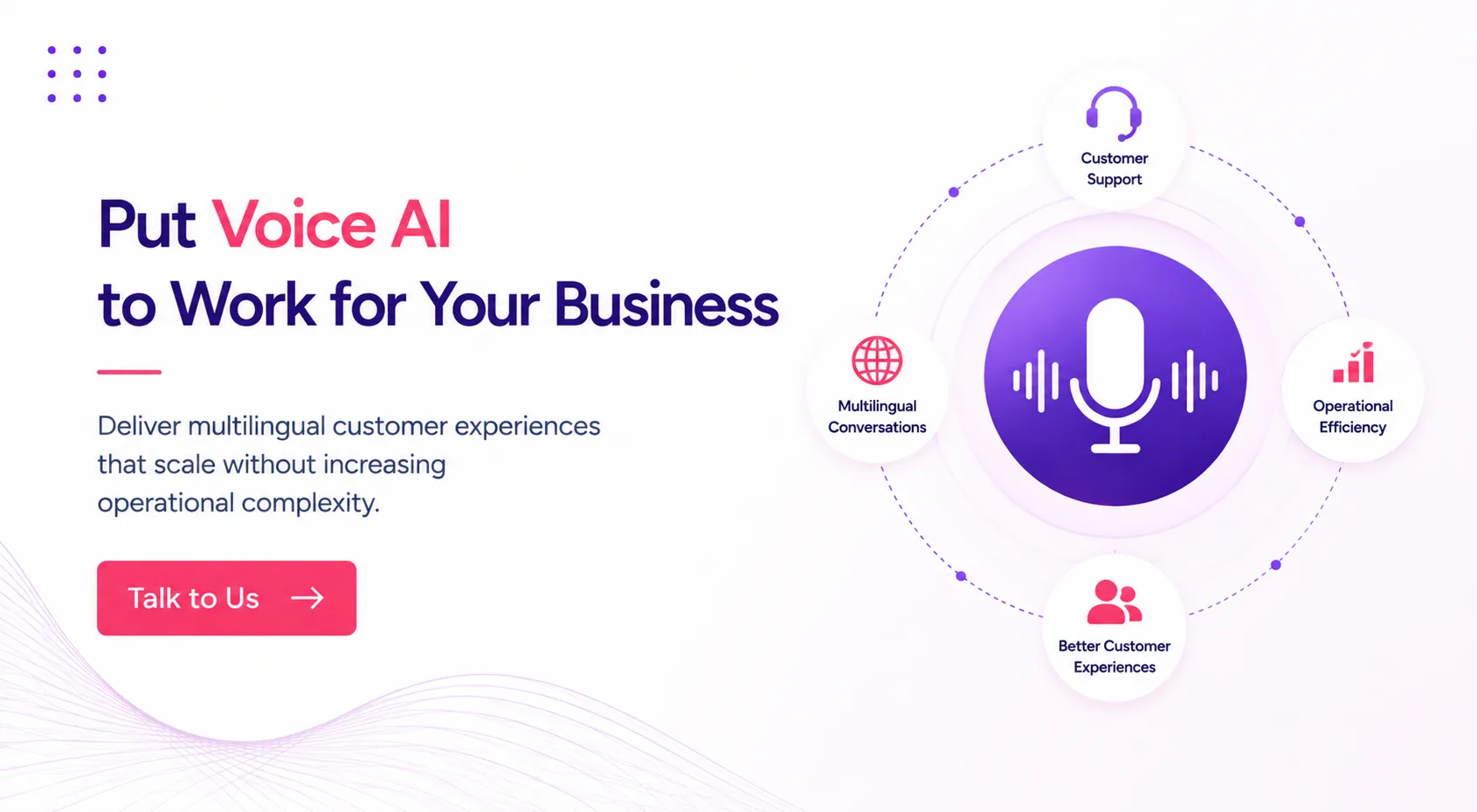
Hero banner promoting Voice AI for business, with a central purple microphone and circular icons for Support, Multilingual Conversations, Operational Efficiency, and Better Customer Experiences.

FAQs: Voice AI Compliance

1. How does deploying a vernacular voice bot reduce loan drop-off rates compared to traditional SMS or email reminders?

Traditional follow-up channels like SMS, WhatsApp, or email are fundamentally passive. A borrower who got confused by an e-KYC upload form is unlikely to click a generic text link sent hours later. A vernacular voice bot creates an active, real-time feedback loop. By calling the applicant within moments of an application stall, the AI agent addresses the friction point directly in the borrower’s spoken dialect. It answers questions, removes confusion, and provides direct assistance while the user is actively holding their phone, driving significantly higher completion rates than passive text messaging.

2. What happens if a borrower speaks a highly localized regional dialect or switches between two languages during an onboarding call?

Advanced Voice AI platforms are explicitly trained on real-world Indian speech datasets characterized by code-switching and heavy regional accents. If a borrower starts an onboarding call answering in formal Hindi, transitions to English to state their company name, and ends with regional phrases to explain their residential address, the acoustic engine processes this continuous linguistic shift without crashing or losing conversational context. The system adapts its vocabulary dynamically, maintaining a smooth, natural conversation that makes the borrower feel supported rather than misunderstood.

3. How long does it take an NBFC to integrate Rootle's voice engine into an existing Loan Origination System (LOS)?

Rootle operates as a fully managed, low-code platform layer, eliminating the need for internal IT teams to build complex natural language processing infrastructure from scratch. A standard enterprise integration typically takes between 8 to 10 days to go live in production. During the initial setup phase, deployment teams configure secure REST APIs and webhooks to connect Rootle directly with your current LOS, CRM, and e-KYC databases. This enables real-time data exchange, instant lead qualification logging, and automated workflow triggers without disrupting existing tech stacks.

4. How does Rootle ensure that automated voice calls for loan onboarding remain compliant with data privacy laws?

Rootle includes enterprise-grade compliance guardrails built specifically for regulated financial institutions. During onboarding conversations, the system captures explicit, timestamped verbal consent before initiating any verification step or pulling credit data. All voice interactions generate full machine-readable transcripts, audio logs, and structured audit files that sync directly into your compliance repository. Furthermore, sensitive Personally Identifiable Information (PII) is encrypted and tokenized locally, ensuring full alignment with DPDP and RBI regulatory mandates.

5. Can a Voice AI agent handle complex loan eligibility calculations during a live conversation?

Yes. Modern Voice AI engines do not rely on static pre-recorded audio files; they operate via high-speed API integrations with back-end business logic. When a borrower states their monthly salary, existing debt commitments, and desired loan amount, the voice bot streams these variables instantly to your credit decisioning engine. Within sub-second latency thresholds, the system receives the calculated eligibility parameters and speaks them back to the caller in natural language. This allows the bot to offer instant conditional pre-approvals on the live call, significantly boosting borrower conversion velocity.

Rahul Desai
Rahul Desai
Client Growth Manager

Rahul Desai is a client growth and sales professional with extensive experience driving strategic partnerships and revenue growth. At Rootle.ai, he focuses on expanding market reach, enabling enterprises to leverage multilingual voice AI for intelligent customer engagement and automated conversational experiences.

Recent Blogs

Voice AI for debt collection.