Skip to content

How to Calculate the Real ROI of Voice AI in Contact Centers

Featured Image

TL;DR

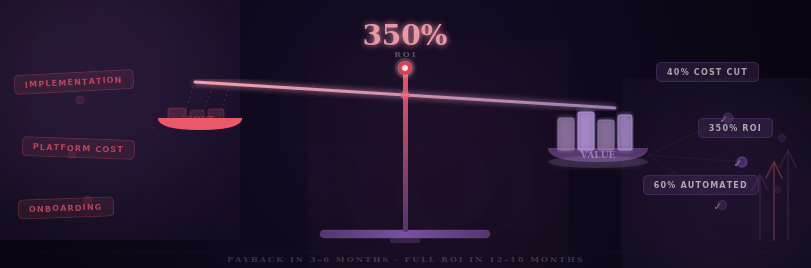
This guide breaks down exactly how to calculate the real ROI of Voice AI in modern contact centers using clear metrics, formulas, and financial impact areas. Traditional ROI methods often underestimate Voice AI because they only consider cost savings. The truth: Voice AI boosts both operational efficiency and revenue outcomes, making it one of the highest-return automation investments today.

If you’re evaluating Voice AI, want to understand the numbers behind call automation ROI, or need a framework to measure contact center ROI, this blog gives you a complete, practical breakdown.

Understanding Voice AI ROI Beyond Cost Savings

Most contact centers know that Voice AI can reduce call volumes and speed up service. But calculating true ROI goes far deeper than counting the number of automated calls. Real ROI comes from operational efficiency, improved customer experience, better agent performance, and long-term scalability. When evaluated correctly, Voice AI becomes one of the highest-impact investments a modern contact center can make, especially when powered by a no-code platform like Rootle.

Below is a detailed, structured breakdown of the seven key elements that influence Voice AI ROI, rewritten in the paragraph-based format you requested, following your preferred structure.

How to Calculate the Real ROI of Voice AI in Contact Centers 1

Identify the Real Cost per Human-Handled Call

Before calculating Voice AI ROI, you must know the actual cost of a human-handled call. This includes wages, overhead, onboarding, handle time, and after-call work. Most businesses underestimate how expensive each interaction truly is.

→ Include agent salary, overhead, and training cost
→ Add AHT + after-call work to calculate true cost
→ Compare this with automated call cost to measure savings

Calculate How Much of Your Call Volume Is Automatable

Not every call needs a human, and Voice AI can automate simple to moderately complex workflows with high accuracy. Understanding your automatable percentage reveals how much time and cost you can reduce immediately.

→ Categorize calls into simple, moderate, and complex
→ Identify repetitive workflows such as FAQs and verification
→ Estimate automation potential (40–90% depending on industry)

Measure the Time Saved Per Call With Voice AI

Voice AI eliminates the slow, manual steps that usually stretch call duration, typing delays, long verification processes, hold times, and agent handoffs. These efficiencies make every call faster and more consistent. When multiplied across thousands of customer interactions each month, the accumulated time saved becomes one of the strongest contributors to overall ROI.

→ Track verification time, data collection time, and routing delays
→ Compare average handle time before and after Voice AI
→ Multiply saved seconds per call by monthly call volume for real savings

Even saving 15–20 seconds per call leads to major operational savings annually. This reduction directly lowers workload pressure and increases the number of calls your system can handle without expanding headcount.

Calculate Staffing, Hiring, and Training Savings

Voice AI significantly reduces the dependency on large agent teams by absorbing repetitive, high-volume tasks. When fewer human agents are required to manage peak traffic or routine inquiries, businesses save on salaries, recruitment, onboarding, and ongoing training. This is especially impactful for contact centers with fluctuating seasonal demands.

→ Measure seasonal hiring needs before and after automation
→ Estimate training and onboarding costs saved
→ Include reduction in overtime and peak-hour staffing

By stabilizing workload and minimizing labor expansion, Voice AI becomes a long-term cost reducer. Over time, businesses see tangible savings as their human teams shift toward high-value, specialized tasks instead of repetitive call handling.

Identify Revenue Gains from Higher Conversion & Fewer Missed Calls

Revenue impact is where Voice AI creates exponential value. With instant responses and 24/7 availability, no lead is lost due to long queues, agent shortages, or time-of-day limitations. Faster qualification, smoother routing, and uninterrupted availability lead to noticeably higher conversion rates and fewer abandoned inquiries.

→ Track missed call numbers before and after Voice AI
→ Measure conversion uplift from faster response times
→ Calculate revenue generated from qualified leads Voice AI captures

The increase in captured leads and conversions compounds month after month. Even a small boost in conversion rate can generate substantial revenue, making Voice AI not just a cost saver, but a revenue engine.

Calculate Long-Term Compounding ROI

Voice AI becomes more efficient the longer it runs. It learns from real call patterns, improves intent detection, reduces errors, and delivers smoother workflows over time. This creates a compounding ROI effect, where your automation capabilities continue to grow without increasing operational costs.

→ Track automation rate improvement month-on-month
→ Review analytics insights and use them to optimize workflows
→ Measure reduction in errors, repeats, and escalations over time

As performance improves, call automation increases and operational dependency on human agents decreases. This long-term compounding effect makes Voice AI one of the few technologies where ROI strengthens year after year.

The increase in captured leads and conversions compounds month after month. Even a small boost in conversion rate can generate substantial revenue, making Voice AI not just a cost saver, but a revenue engine.

Why ROI Calculations for Voice AI Matter More Than Ever in 2026

As contact centers shift from traditional automation to intelligent voice-led systems, measuring ROI has become more critical, and more multidimensional, than ever before. It’s no longer just about reducing call volume or lowering agent workload. Modern Voice AI impacts speed, accuracy, staffing, customer experience, and even revenue generation.

To capture its true value, businesses must look beyond surface-level metrics and measure how Voice AI transforms every layer of their operations. A clear ROI framework ensures you understand not just what Voice AI saves, but what it unlocks.

Rootle: The Easiest Way to Use No-Code Voice AI Like a Pro

Rootle is designed to help business owners use Voice AI at a professional level without facing any technical challenges. Instead of juggling multiple tools or worrying about setup, Rootle gives you a fully managed platform where everything is ready from day one.

Voice AI significantly reduces the dependency on large agent teams by taking over repetitive, high-volume calls. As routine work gets automated, businesses no longer need to scale their support staff aggressively during peak seasons or operational surges. This directly lowers hiring costs, onboarding time, and continuous training expenses.

The impact becomes even stronger when Voice AI is deployed through no-code systems that accelerate setup and adoption, something we explored in our article on How No-Code Voice AI Reduces Time-to-Value for Enterprise Teams.

✅ Ready to use workflows with no coding required
✅ Natural human sounding voices in over 20 languages
✅ Real time insights and intelligent call handling

Rootle also supports natural, human-like voices in more than twenty languages, making it easy to connect with customers across regions. Its real-time insights help you understand how conversations flow, what customers ask, and where improvements can be made.

For beginners, Rootle removes all the friction. For growing teams, it delivers the speed, scale, and intelligence needed to operate like a modern business.

How to Calculate the Real ROI of Voice AI in Contact Centers 2

Recent Blogs

Hindi voice AI Support and Boosts Efficiency
Tamil Voice AI Improves Enterprise Customer Support and Enhances User Experience Across South India
Voice AI Automates Order Taking, Reservations
Why Real Estate Companies Are Using Voice AI to Build Trust Before Visits blog