See why high-volume teams get the highest ROI from Voice AI. Learn how automation cuts costs, prevents missed calls, boosts...
3 December 2025
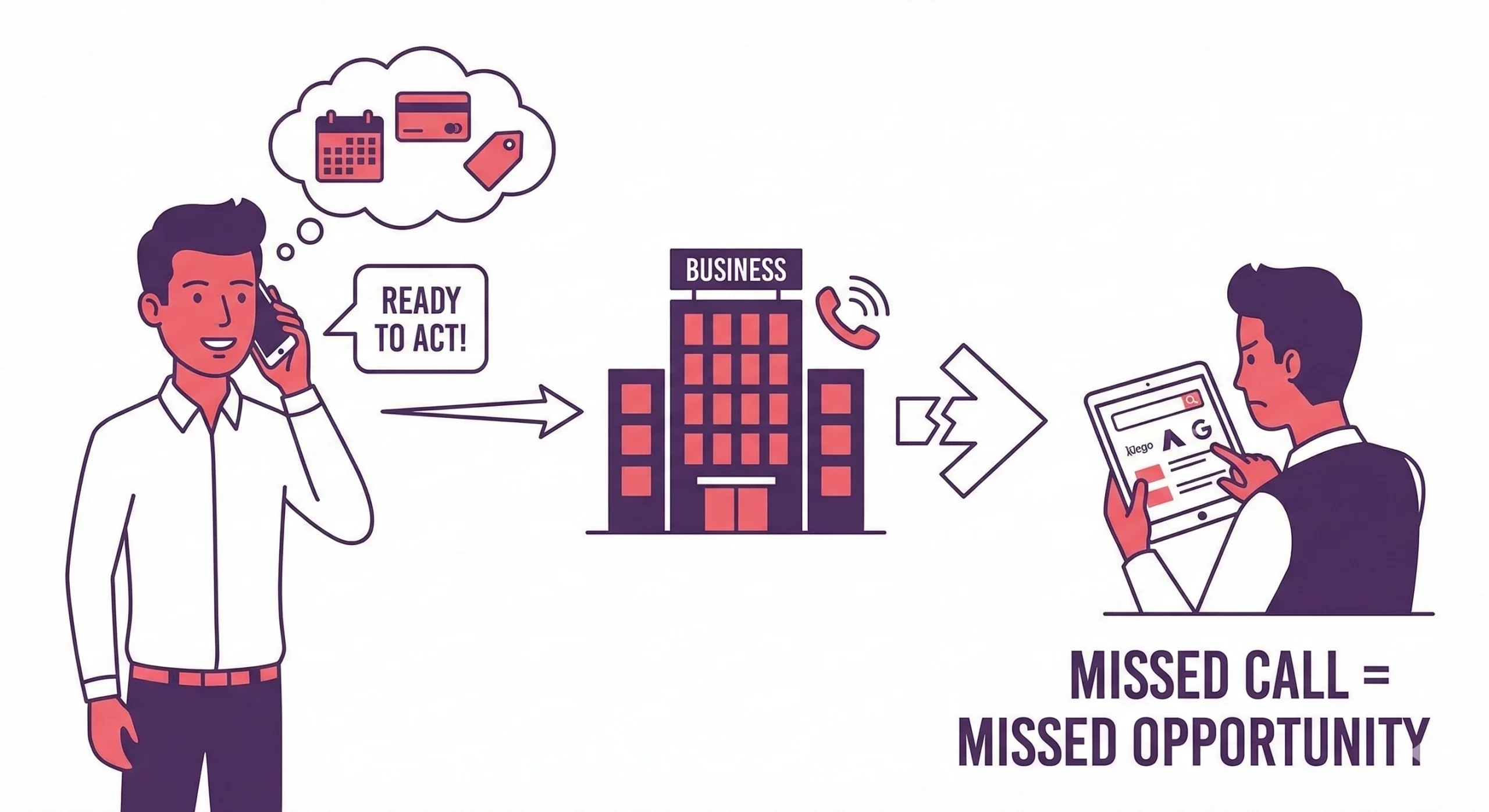
Many businesses miss customer calls despite having full teams on the floor. The problem is rarely headcount. It is structural limitations in traditional call handling, unpredictable call spikes, inefficient routing, and human bottlenecks. As call volumes grow, teams struggle to answer every call in time, leading to lost opportunities, frustrated customers, and declining CX.
Modern voice AI missed calls solutions change this dynamic by answering every call instantly, routing intent intelligently, and supporting agents instead of overloading them. With AI voice call handling, businesses ensure no call goes unanswered, even during peak demand, without burning out teams or increasing operational costs.
On paper, many organisations appear well-resourced. They have trained agents, supervisors, and call centre infrastructure. Yet customers still hear busy tones, long hold music, or unanswered rings. The issue lies in how calls arrive and how humans handle volume.
Customer calls do not arrive evenly. Marketing campaigns, payment cycles, service outages, and seasonal demand trigger sudden surges. When multiple callers dial in at once, human teams hit hard limits. Even a short delay creates abandoned calls, and each missed call represents lost trust or revenue.
Traditional call handling systems rely entirely on availability. If all agents are occupied, calls wait or drop. No amount of staffing guarantees perfect coverage at every moment.
Customer call traffic rarely grows in a smooth, predictable way. Most missed calls happen during sudden, short-lived spikes caused by campaigns, outages, billing cycles, or urgent announcements. These spikes overwhelm systems before teams have time to respond.
→ Agents get overwhelmed within minutes
→ Queues form instantly
→ Call abandonment rises sharply
Even highly trained teams struggle to absorb sudden surges, making missed calls almost inevitable during peak moments.
Human agents, regardless of skill or experience, are bound by physical limits. Each agent handles one conversation at a time, creating a hard ceiling on call capacity when demand increases unexpectedly.
→ Calls stack up during peak periods
→ Wait times increase rapidly
→ Customers hang up before speaking
This structural limitation is a key reason voice AI missed calls remain common in traditional call handling models.
Not every inbound call requires human attention, yet many systems route all calls the same way. Simple queries reach agents, while complex issues wait longer in queues.
→ Agents spend time on repetitive queries
→ Complex calls wait longer
→ Overall call throughput drops
When routing is inefficient, even available teams fail to answer calls on time, increasing missed-call rates.
Sustained call pressure takes a toll on human performance. As fatigue sets in, response speed slows, focus drops, and handling times increase across the board.
→ Agents rush conversations
→ Errors increase
→ More calls spill into queues
Fatigue compounds missed calls, especially during extended peak hours or back-to-back call surges.
AI voice call handling removes the concept of limited availability. Every inbound call is answered the moment it connects, regardless of how many calls arrive simultaneously.
→ No waiting queues
→ No hold music
→ No abandoned calls
Instant responses set the foundation for better CX and eliminate first-touch missed calls entirely.
Unlike human teams, AI scales digitally. Each caller is handled independently, without competing for attention or resources.
→ Thousands of simultaneous calls supported
→ No performance degradation
→ Consistent experience for every caller
This scalability directly addresses the core cause of voice AI missed calls.
Traditional systems were built for predictable traffic and linear growth. Modern businesses operate in volatile environments.
AI voice call handling adapts instantly. It scales during demand spikes, contracts during quiet periods, and maintains consistent service quality throughout.
This shift explains why many organisations are moving away from legacy call centres altogether.
To understand this transition in depth, explore our related blog: Why Voice AI Is Replacing Traditional Call Handling Systems, which explains how AI-first architectures outperform human-only call models across speed, cost, and customer experience.
Rootle is designed specifically to ensure businesses never miss customer calls, even with lean or fully occupied teams. As a fully managed, done-for-you Voice AI platform, Rootle delivers intelligent, empathetic conversations across critical CX touchpoints.
Rootle combines AI voice call handling, intent detection, telephony, CRM sync, and analytics into one unified stack, ensuring every call is answered, understood, and resolved.
✅ Answers every inbound call instantly
✅ High concurrency with low latency
✅ Human-like, emotion-aware voice models
✅ Smart inbound and outbound call handling
✅ Built-in intent detection and sentiment analysis
✅ Seamless human handoff with full context
✅ Multilingual support across 20+ local languages
✅ Voice, chat, WhatsApp, and analytics in one place
✅ Predictable pricing with no surprise AI costs
With Rootle, businesses no longer lose customers to missed calls. They replace reactive call handling with proactive, always-on engagement that scales effortlessly.
See why high-volume teams get the highest ROI from Voice AI. Learn how automation cuts costs, prevents missed calls, boosts...
Repetitive calls burn out sales and support teams. Learn how voice AI for sales teams and AI voice automation reduce...
Discover how Real Estate Voice AI helps property companies respond faster, communicate clearly, and build trust before site visits.
Learn how Voice AI improves delivery coordination, confirms addresses, updates customers, and helps logistics teams reduce failed orders and boost...